
Last updated November 2, 2026
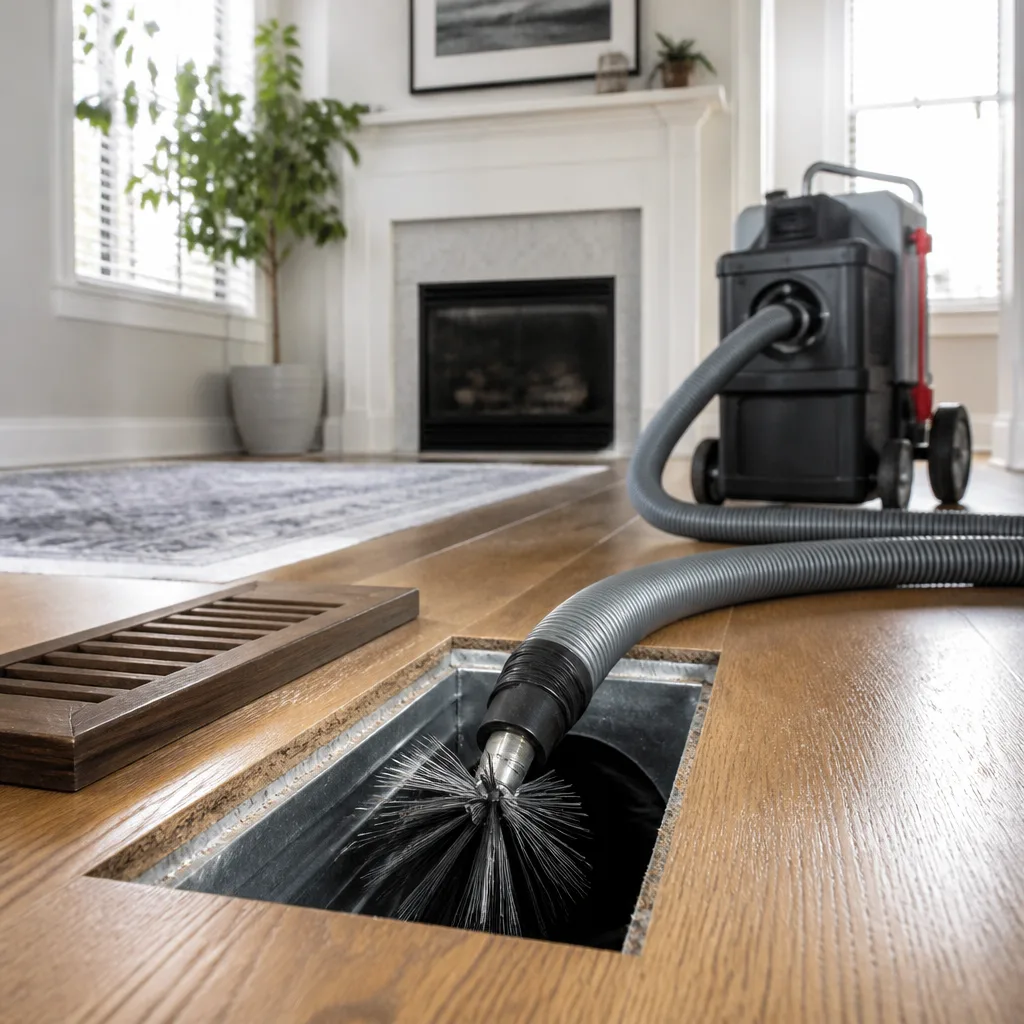 Whole-home duct cleaning
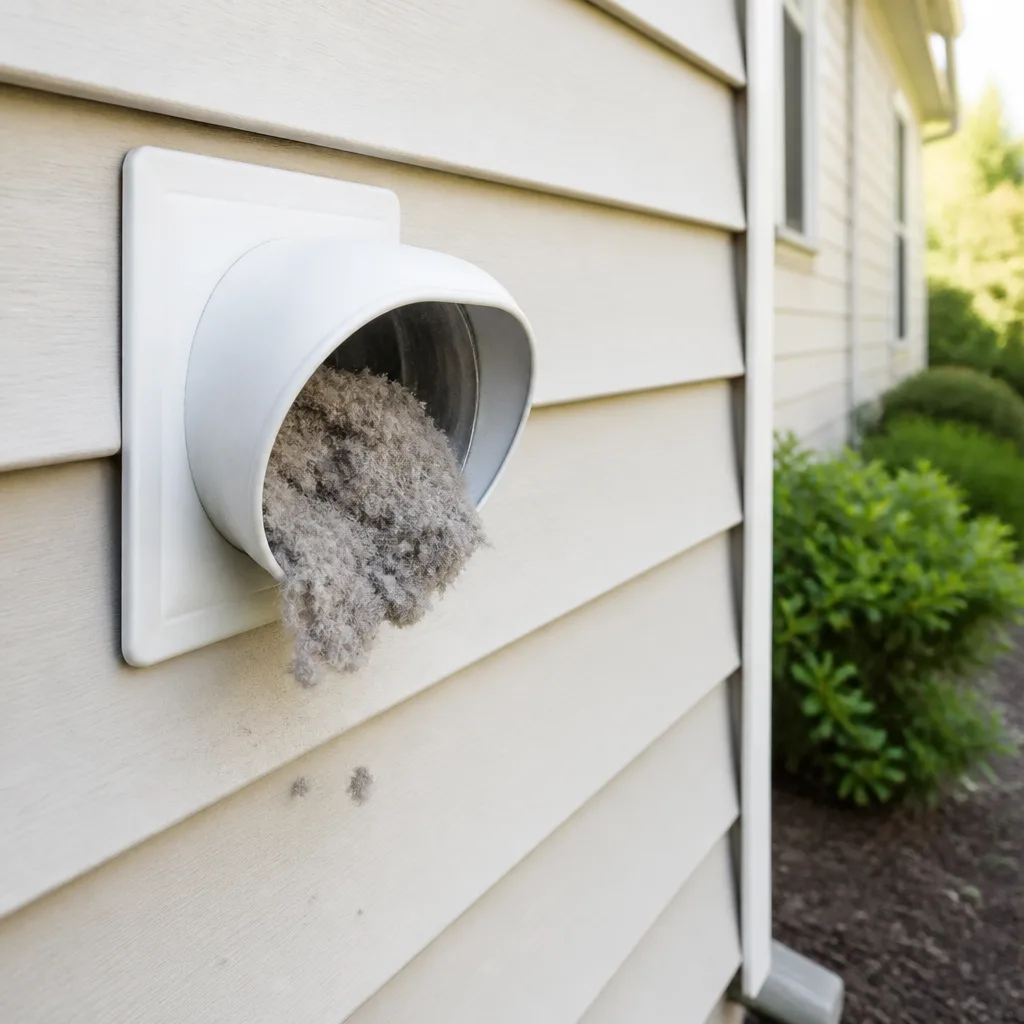 Dryer vent cleaning
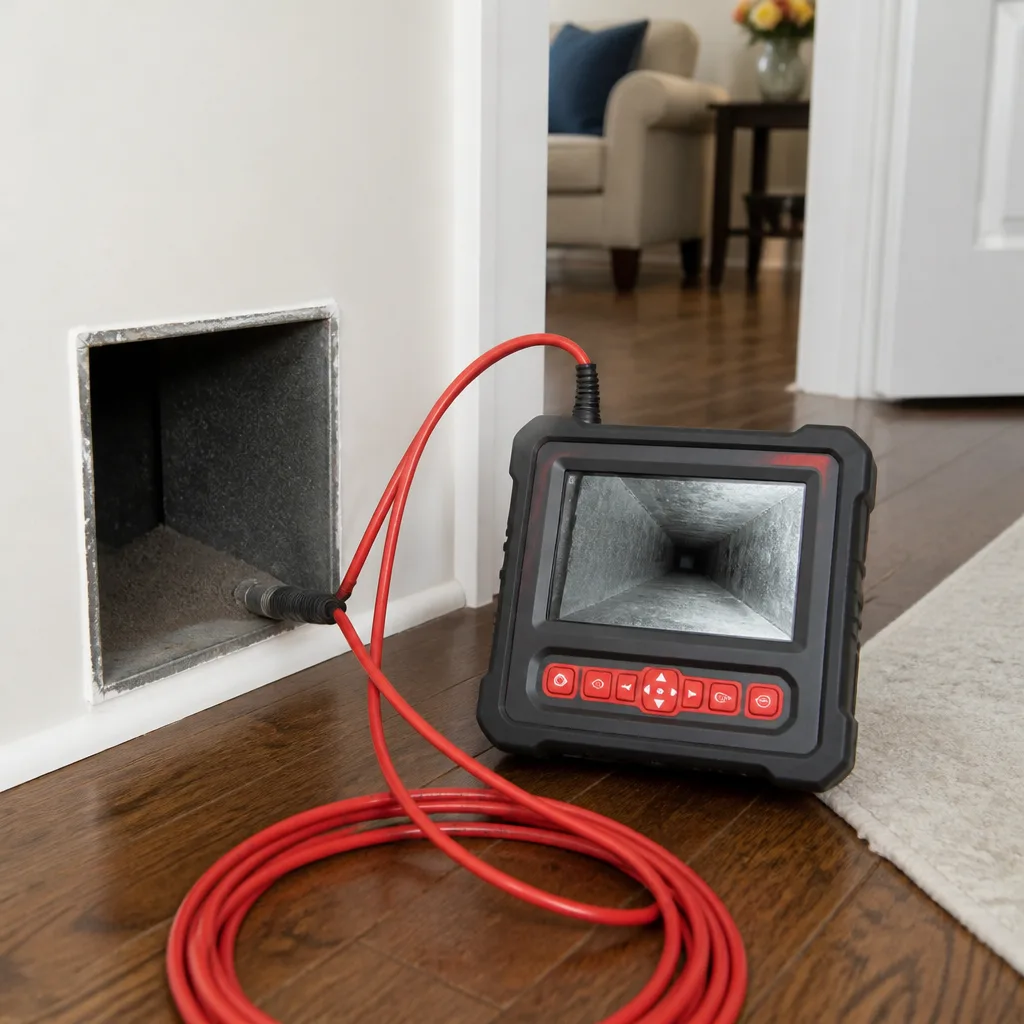 Camera inspection
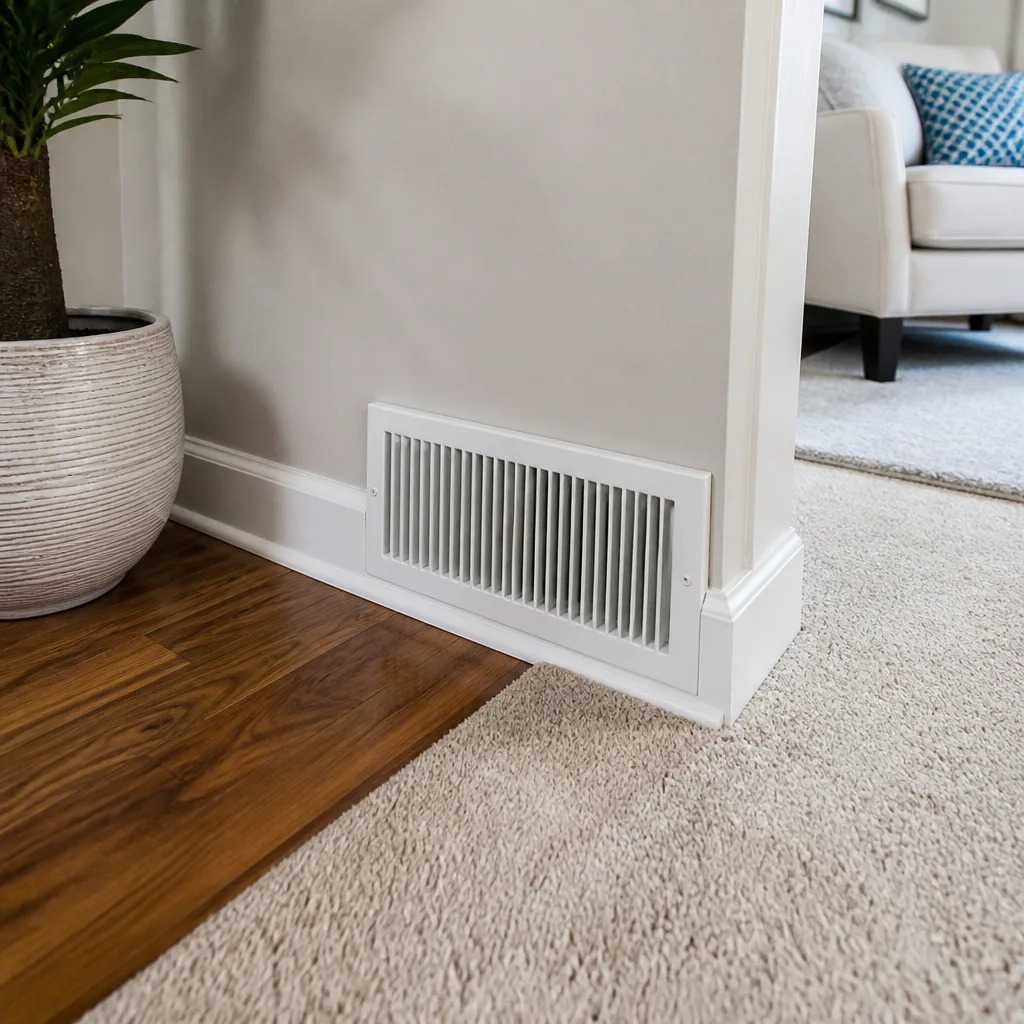 Sanitizing & deodorizing
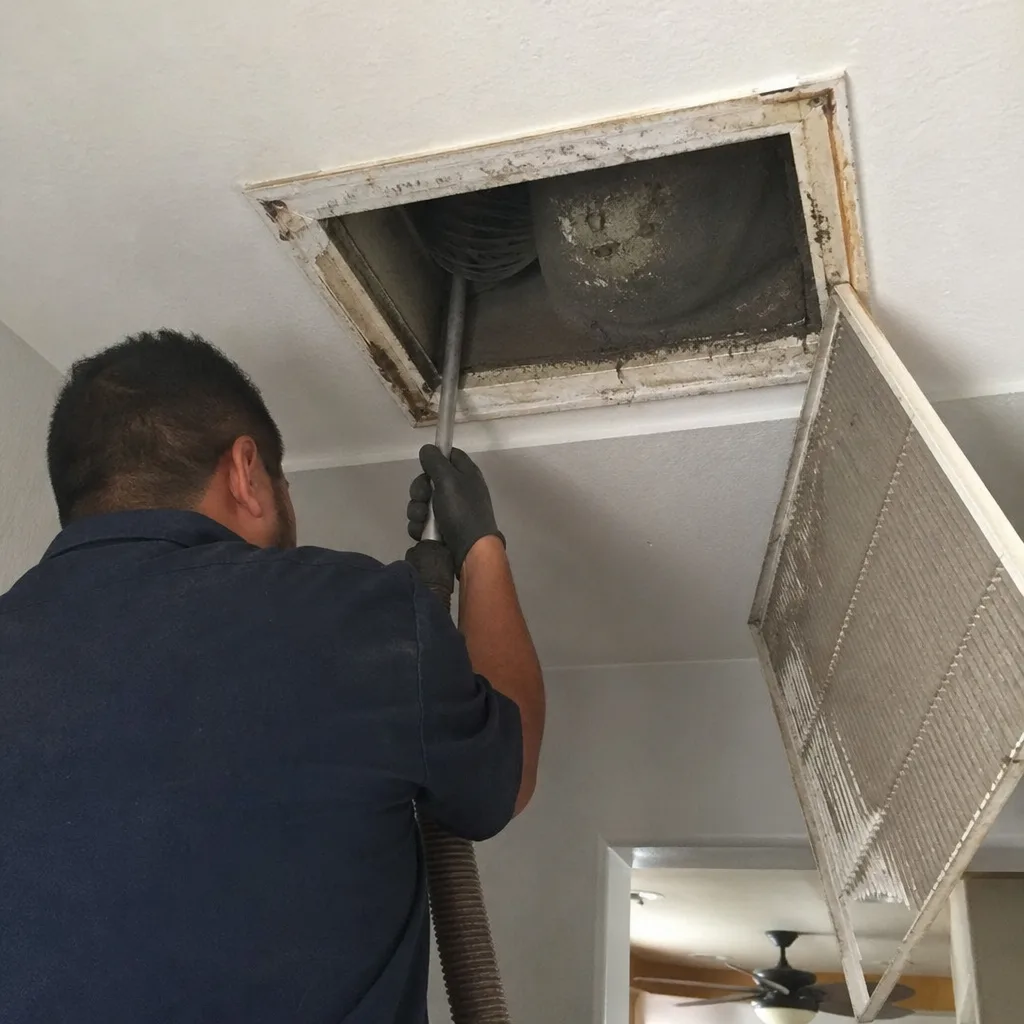
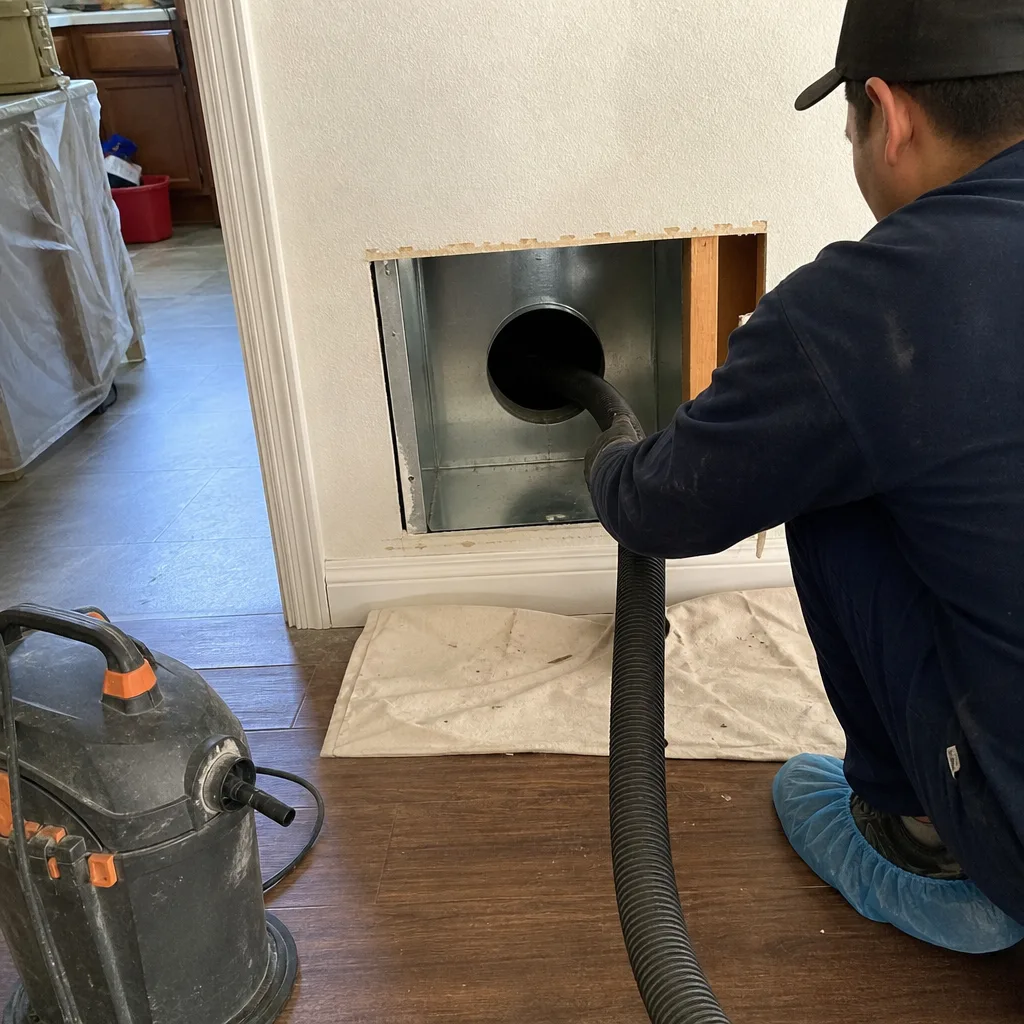
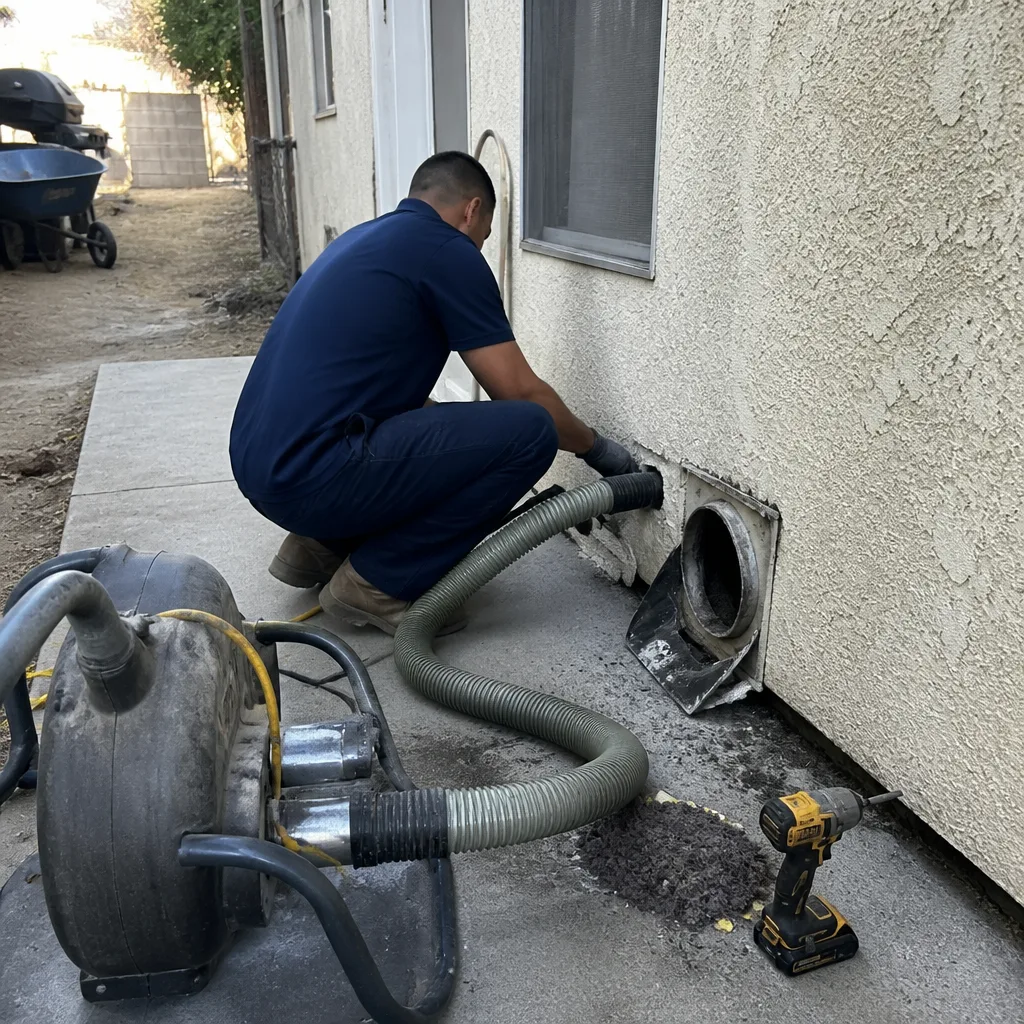
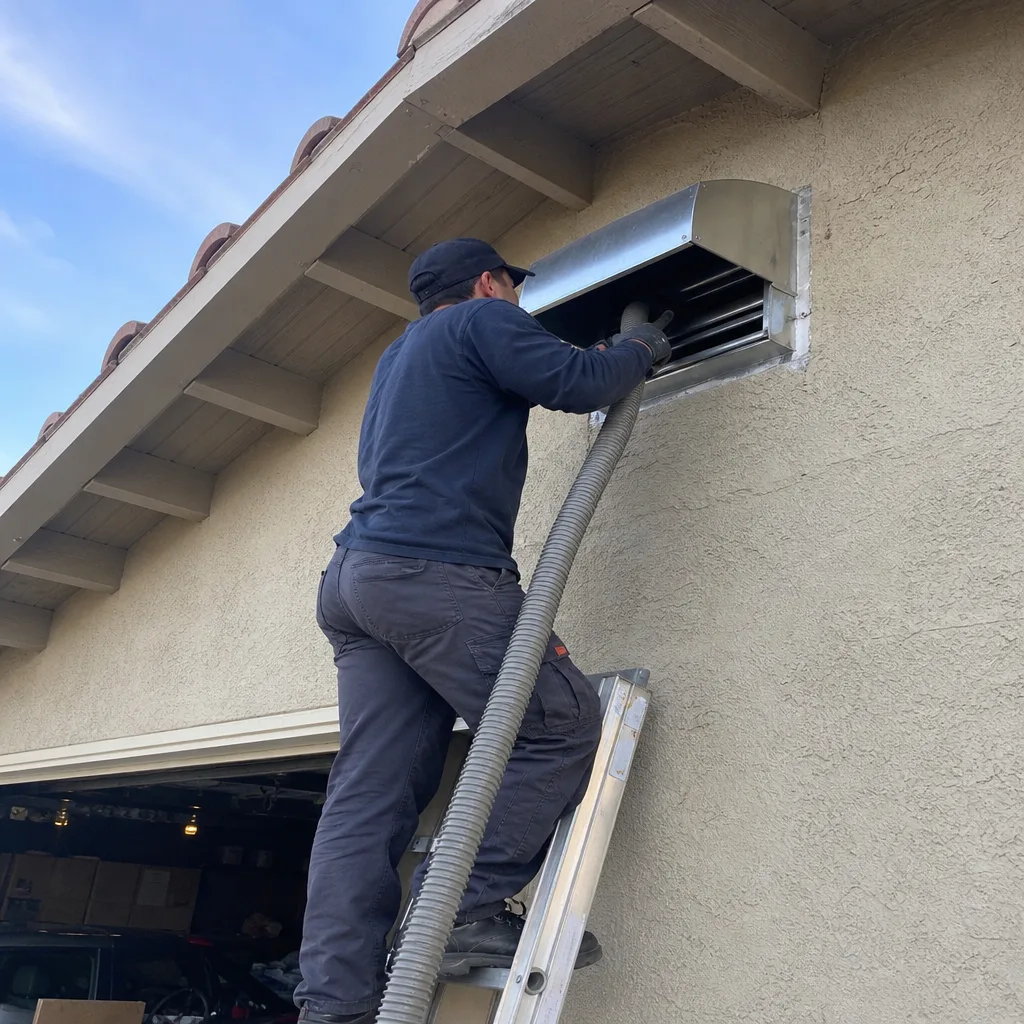
Whole-system duct and dryer vent check with before-and-after photos - you see exactly what came out of your vents
That "$99 whole-house special" is a bait ad - the real number appears once they are in your hallway, or the "clean" is a shop-vac at the register. We photograph the inside of your ducts before and after instead.
Choosing the Right Air Duct Cleaning Brand: A Buyer’s Guide for San Bernardino
Walk down any residential street in San Bernardino on a Tuesday morning and you might see three different trucks from three different duct cleaning companies, all claiming to do the same job. One crew unloads a Rotobrush system with a HEPA-filtered negative air machine. Another carries a shop vac with an extended hose and a drill attachment. Both will hand you an invoice that says “air duct cleaning.” The difference in what actually gets removed from your ductwork, and what gets left behind to keep circulating through your home, is not marginal. It is the entire job. This guide will teach you how to evaluate duct cleaning companies in San Bernardino based on what actually matters: the equipment they bring, the certifications they hold, and whether they can fix a problem when they find one. For a deeper dive, see The Complete Air Duct Cleaning Guide for San Bernardino Homeowners.
Styles & brands we work with
- Whole-home duct cleaning
- Dryer vent cleaning
- Camera inspection
- Sanitizing & deodorizing
Quick Answer
The right air duct cleaning brand in San Bernardino is one that arrives with professional-grade equipment designed for HVAC systems (Rotobrush or Nikro systems, not consumer-grade shop vacuums), holds verifiable NADCA certification, and can repair damaged ductwork rather than just clean past it. Ask every company what specific equipment they use before booking, verify their certification on NADCA’s public database by company name, and require before-and-after camera footage in writing. Companies that hesitate on any of those three points are not selling duct cleaning. They are selling a van visit.
Table of Contents
- The Equipment Baseline Test: What to Ask Before Booking
- Why NADCA Certification Is the Primary Credential to Verify
- What “Full-Service” Actually Means in Duct Cleaning
- How to Evaluate Before-and-After Documentation
- Questions That Separate Specialists from Generalists
- San Bernardino-Specific Considerations: Dust, Heat, and Older Duct Systems
- Common Mistakes to Avoid
- When to Call a Professional
- Frequently Asked Questions
- The Bottom Line
The Equipment Baseline Test: What to Ask Before Booking
Most homeowners in San Bernardino choose a duct cleaning company the way they choose a pizza: whoever has the best reviews and the lowest price wins. But reviews do not tell you what machine is going to touch your HVAC system. Price definitely does not tell you that. The single most important question you can ask any duct cleaning company before booking is: “What specific equipment do you use, by brand name?”
Here is why that question works. The air duct cleaning industry has a wide, unregulated middle ground. On one end, there are companies that bring professional systems like Rotobrush and Nikro, the same brands used by certified HVAC and restoration contractors across the country. On the other end, there are operators who show up with an unidentified machine and a story. If a company will not name their equipment, or calls it “proprietary,” or tells you “it’s a commercial-grade system” without a manufacturer name, that is a red flag. Professional equipment has a manufacturer. It has a model number. It has a spec sheet.
Here is the baseline test in four questions:
- What brand of duct cleaning equipment do you use? Acceptable answers include Rotobrush, Nikro, or another recognized professional brand. Vague answers do not pass.
- Is the system truck-mounted or portable? Both can work, but the distinction matters. Portable systems must be brought into the home, which affects setup and the level of containment possible.
- Does the setup include negative-air capability? Negative air machines, like those from Abatement Technologies, create a contained vacuum environment inside the duct system. This is the difference between removing debris and just loosening it. Equipment with true negative-air methodology is remediation-grade, not surface-level.
- What filtration level does the system use? HEPA filtration, or filtration rated at a comparable efficiency, is the standard for legitimate indoor air quality work. If the answer is “a good filter,” keep shopping.
In our experience, San Bernardino homeowners who ask these four questions on the phone often eliminate half their list before the first truck ever pulls up. That is not a bad thing. It means the companies left standing are the ones worth comparing. For additional tips, explore more guides & resources.
Why NADCA Certification Is the Primary Credential to Verify
There are dozens of acronyms in the indoor air quality world. Most of them mean nothing to a homeowner. NADCA, the National Air Duct Cleaners Association, is the one that matters. NADCA sets the technical standards for HVAC system cleaning in North America. Its members must follow a specific code of practice and pass certification exams. If you are going to verify one credential before hiring a duct cleaner in San Bernardino, verify NADCA membership.
The good news: NADCA makes verification easy. It operates a public member database on its website. You type in a company’s name, and the database tells you whether that company is a current member in good standing. No phone call required. No relying on a logo pasted onto a website, which is extraordinarily easy to fake.
Here is how to check NADCA certification in three steps:
- Go to NADCA’s website and find the “Find a Professional” or member directory search.
- Type in the exact company name as it appears on the website or invoice.
- Confirm the company appears as an active member. If the search returns nothing, ask the company directly why their name is not in the public database.
One caution: NADCA certification applies to the company, not to the nice person who answered the phone. A legitimate certification is specific and checkable. If a company claims certification but does not appear in the public database, do not accept “it’s under a different name” without seeing documentation. Or better yet, move on to a company that shows up when you search.
Certification matters because duct cleaning is one of those trades where the barrier to entry is a van and a magnet. San Bernardino has legitimate, certified contractors. It also has people who bought a machine last month and are now marketing themselves as specialists. NADCA membership is not a guarantee of great service, but it is the clearest available signal that a company has invested in professional standards.
What “Full-Service” Actually Means in Duct Cleaning
Most people think air duct cleaning is a single service: brush the ducts, vacuum the dust, write the invoice. But any technician who has actually opened up old ductwork in San Bernardino knows that cleaning often reveals damage. Disconnected sections. Loose joints. Crushed flex duct. Separated liners. Sometimes, the previous installation was done poorly. Other times, age and heat have simply done their work.
What happens when a cleaning company finds those problems? That is where the difference between a duct cleaner and a duct specialist becomes clear.
A full-service duct company can repair what it finds. That means:
- Sealing separated joints with proper mastic or metal tape rated for HVAC use, not duct tape from a hardware store
- Reattaching disconnected sections so the system functions as one continuous pathway instead of leaking conditioned air into the attic or crawlspace
- Replacing crushed or collapsed flex duct that is restricting airflow in specific rooms
- Liner repair or replacement where duct lining has deteriorated to the point that cleaning alone can no longer restore it
Companies that offer air duct repair as a standalone service are signaling something important: they carry the materials and the skills to actually fix a system, not just run a brush through it. The majority of standalone duct cleaning companies do not offer repair at all. When their technician finds a broken section, they make a note on the invoice, collect payment, and drive away. The homeowner is left with a cleaner but still-broken system.
When you are comparing companies in San Bernardino, ask this direct question: “If your technician finds damage during cleaning, can you repair it same-visit, or do I need to call a separate HVAC company?” The answer tells you whether you are hiring a cleaning service or a duct specialist.
This matters economically, too. A cleaning visit followed by a separate handyman visit followed by another HVAC visit costs far more than hiring one company with air duct cleaning capability and repair skill in the first place. The full-service option is not just more thorough. It is often less expensive in the aggregate when repair work is needed.
How to Evaluate Before-and-After Documentation
Every duct cleaning company in San Bernardino will tell you they did a great job. Some of them actually did. The problem is that ductwork is largely invisible. It runs through walls, attics, and crawlspaces. You cannot stand beneath it and admire the result. You either take the technician’s word for it, or you get documentation.
Legitimate professional duct cleaning companies provide visual proof. That proof comes in the form of camera footage or photographs taken inside the ducts before and after the cleaning. This is not a special request. It is standard practice among certified contractors.
But there is documentation, and then there is documentation that actually proves something. Here is how to evaluate what a company promises:
- Camera footage with timestamps. A photo album of “after” shots from an unknown duct in an unknown home proves nothing. Require before and after images of your ductwork, captured during your job, with timestamps. If the company is hesitant, that tells you something.
- Written confirmation of scope. Before the job starts, get in writing which ducts will be cleaned, what method will be used, and what equipment is involved. After the job, get in writing what was found and what was done. If a company will not put its promises in writing, the promises are not worth much.
- Photo documentation of problem areas. If the technician finds damage, they should show you the damage. Not describe it. Show it. On the camera, in real time, while the duct is open. A specialist wants you to see what they see, because what they see justifies the work.
- No verbal-only confirmations. “Looks great in there now, trust me” is not documentation. If that is all you get, you have no idea what happened inside your walls.
Ask for documentation in writing before you book the job, not after. If a company offers camera verification as a standard part of the service, good. If they seem confused by the request, that is also information.
In our experience, San Bernardino homeowners who insist on camera documentation almost never regret their choice of company. The companies that provide it are the ones that have nothing to hide. The ones that resist are the ones that usually should.
Questions That Separate Specialists from Generalists
Beyond equipment and certification, there are a handful of technical questions that instantly reveal how deep a duct cleaning company’s knowledge actually goes. These are not trick questions. They are operational details that any trained specialist should be able to answer immediately. A generalist will pause, pivot, or change the subject.
Here are the questions to ask, and why each one matters:
1. “Do you clean the coils separately?”
The evaporator coil is part of the HVAC system, not part of the ductwork, but it sits directly in the airflow path. If the coil is dirty, air passes over that dirt before it enters the ducts. A professional duct cleaning company should either clean the coil as part of the service or clearly explain why it needs separate attention. A company that has no answer to this question does not fully understand the system it is cleaning.
2. “Do you seal registers during cleaning?”
Sealing supply registers during the cleaning process creates the negative pressure environment that lets professional equipment actually extract debris rather than just blow it around. If a company does not seal registers, ask how they are controlling debris. The answer should involve a technical explanation. “We’re really careful” is not a technical explanation.
3. “What happens if your tech finds mold?”
This is the big one. Mold in ductwork is a legitimate health concern, and the chemistry used to address it matters. A professional company should be able to explain their mold protocol: what they treat with, what chemistry is involved, what safety procedures are followed, and when they recommend bringing in a separate mold remediation specialist. A company that says “we just spray some stuff” is not a professional. A company that panics at the word “mold” is not either. Ask the question and listen to the quality of the answer.
4. “What brands of HVAC equipment are you comfortable working around?”
San Bernardino homes contain a wide range of HVAC systems, from older gas furnaces to newer high-efficiency heat pumps, paired with IAQ additions from brands like Honeywell and Aprilaire. A duct cleaning company should be familiar with these systems and able to work around them without disrupting the settings or the components. If a company has never heard of Aprilaire or does not know what a Honeywell media cabinet is, that is a signal about their breadth of experience. At Lionheart Air Duct Cleaning, our team works across major HVAC and IAQ brands, including Honeywell and Aprilaire, because San Bernardino homes do not all use the same gear.
These questions take about three minutes to ask. They will save you from hiring a company that is learning on your dime.
San Bernardino-Specific Considerations: Dust, Heat, and Older Duct Systems
Duct cleaning is not the same job in every city. San Bernardino has a specific climate, specific housing stock, and specific air quality conditions that change what a duct cleaning professional should be looking for. A company that treats San Bernardino like it treats Scottsdale or Sacramento is missing local context.
The first factor is dust. San Bernardino sits in the Inland Empire, where dry conditions, Santa Ana winds, and the surrounding geography produce airborne particulate levels that routinely run higher than coastal areas. That dust does not stay outside. It gets drawn into HVAC systems through the return air, settles in ductwork, and recirculates through the home. Homeowners in San Bernardino who run their systems regularly are, in many cases, breathing air that has passed over several years of accumulated particulate. A thorough cleaning here is not maintenance theater. It is a response to a real, local condition.
The second factor is heat. San Bernardino summers are long and hot, which means air conditioning runs for a large portion of the year. Every HVAC cycle moves air through the ducts. More cycles mean more dust collection, faster filter loading, and more strain on components. Ducts in San Bernardino see more annual use than ducts in milder climates. That use cycle shortens the practical interval between cleanings.
The third factor is age of housing stock. Large portions of San Bernardino were built in the post-war decades, and many of those homes still have their original or early-generation ductwork. Some of that ductwork was installed well. Some of it was installed to 1960s standards. It may be undersized, poorly sealed, or constructed from materials that have degraded over time. An experienced technician in San Bernardino knows this. They will look for signs of leakage, separation, and deterioration specific to older construction. A company with no local experience will run a brush through and call it done.
When you are evaluating a duct cleaning company, ask whether they have experience with San Bernardino housing stock specifically. The answer should reference local conditions, not generic talking points. The right company knows that a 1963 rancher in the north end has different duct challenges than a 2005 tract home on the south side. If they do not know the difference, they have not done enough work here.
Common Mistakes to Avoid
- Choosing based on the lowest bid. Duct cleaning companies that quote aggressively low prices are typically economizing on equipment, labor, or both. You do not get professional-grade results from a company that is trying to fit a job into a sub-$200 price point. In San Bernardino, the bait-and-switch pattern is well documented: the low coupon gets the truck to your door, and the actual bill is less friendly.
- Believing the price-per-vent model. This pricing structure is engineered to grow the invoice once the technician is inside your home. The vent count gets negotiated upward, the “additional services” appear, and suddenly the great deal is not. Reputable companies quote a system price, not a per-opening price.
- Assuming all certifications are equal. Anyone can print “Certified” on a website. NADCA certification is the one that can be independently verified on a public database. If a company cannot point you to verifiable evidence of certification, the word on their website means nothing.
- Accepting verbal confirmation of completed work. If a duct cleaning company cannot show you before-and-after camera footage of your ducts, you have no evidence the work was done. Written documentation and timestamped images are standard industry practice. Demand them.
- Ignoring the repair question. Hiring a company that cannot repair duct damage is like hiring a mechanic who cannot replace parts. If the technician finds a problem and cannot fix it, you have paid for cleaning and still need a separate repair visit. Full-service capability should be a baseline requirement, not a bonus.
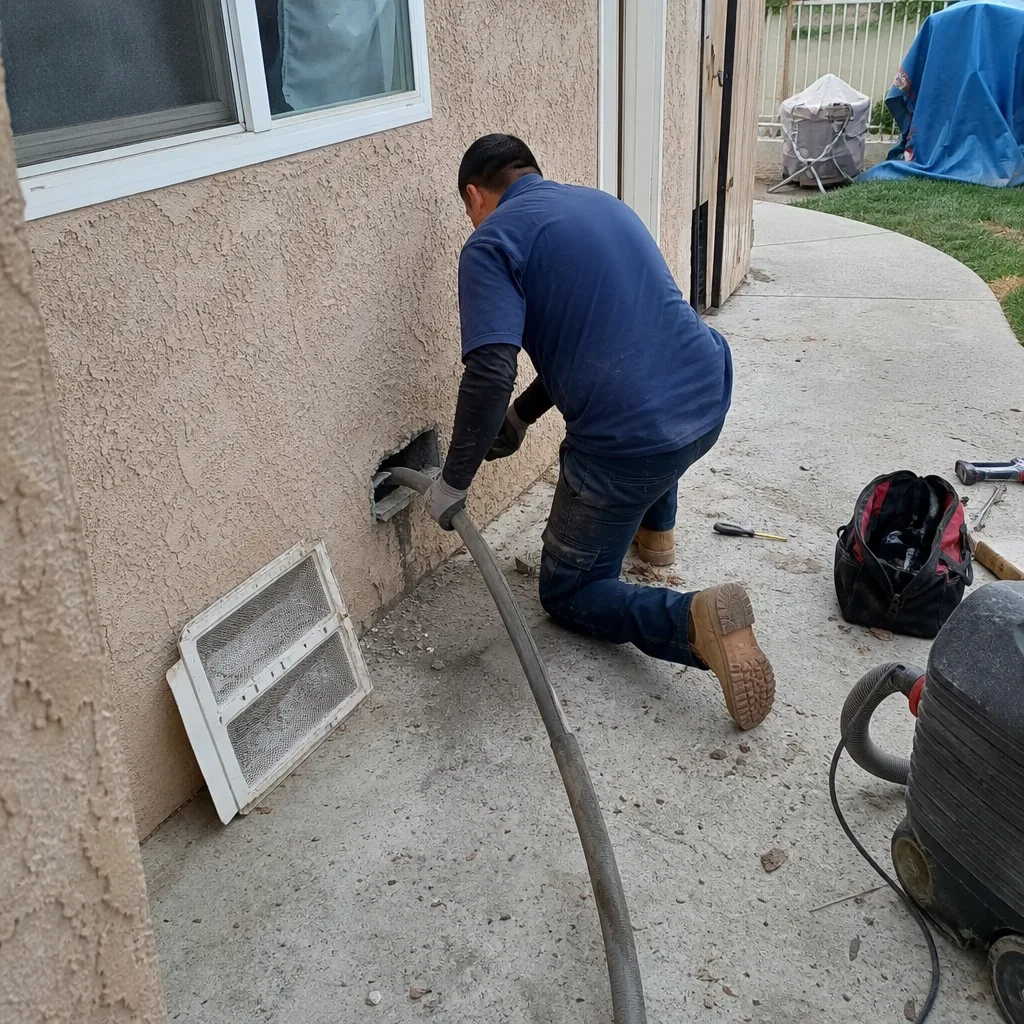
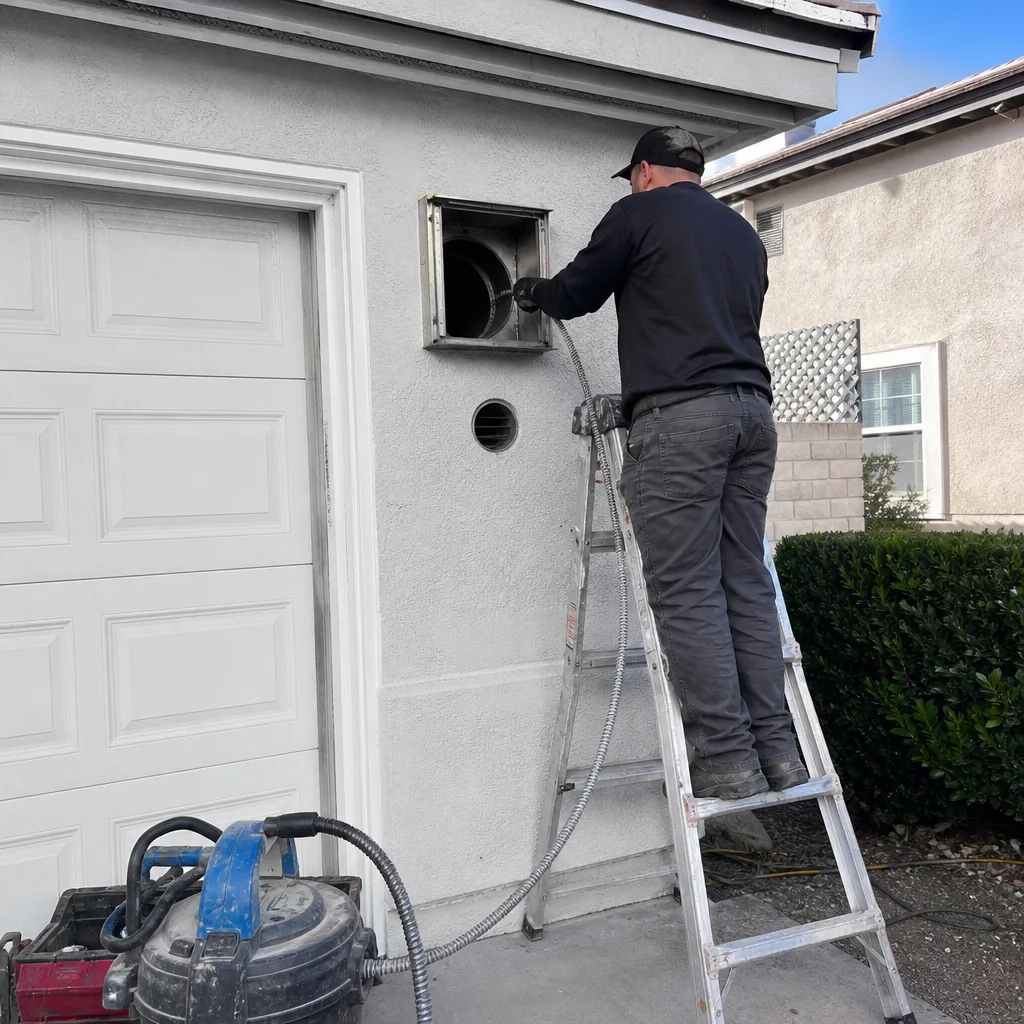
- Treating dryer vents as an optional add-on. Lint buildup in dryer vents is a documented leading cause of residential structure fires. Dryer vent cleaning is a safety service, not an upsell. In the dry climate of San Bernardino, where lint dries quickly and becomes highly flammable, this is not a place to save money.
- Skipping the phone call. Booking entirely through online forms means you never ask the questions that separate professionals from marketers. Call the company. Ask the questions from this guide. The way someone answers the phone and discusses their equipment tells you more than any website ever will.
When to Call a Professional
Some home maintenance projects reward a DIY attempt. Duct cleaning is not one of them. If you have never seen the inside of your ductwork, if you have lived in your San Bernardino home for more than three years without a cleaning, or if you are noticing dust accumulation on surfaces shortly after cleaning, those are signs that the system needs professional attention. The same applies if you have recently completed a renovation, had a pest issue in the attic, or cannot remember the last time the dryer vent was cleared. These are not conditions that resolve themselves. Lionheart Air Duct Cleaning offers free estimates in San Bernardino. Call (855) 356-4382 and we will help you determine whether your system needs attention now or can wait.
Frequently Asked Questions
Whole-home air duct cleaning in San Bernardino typically runs between $350 and $700 for an average single-family home, depending on the number of systems, the accessibility of the ductwork, and the level of buildup present. Prices below $200 are generally either loss-leader pricing designed to generate add-on sales or a signal that professional-grade equipment is not being used. Reputable companies quote a system price agreed before work starts, not a per-vent figure that can grow at the technician’s discretion. Call (855) 356-4382 for an exact quote based on your home’s specific layout.
Every 3 to 5 years is a reasonable interval for most San Bernardino homes, though local dust conditions and heavy AC usage may shorten that to every 2 to 3 years for homes with pets, allergy sufferers, or recent renovation history. Homes near open fields, construction, or busy roadways in the Inland Empire tend to accumulate particulate faster than homes in less exposed locations. A professional inspection can tell you where your specific system stands.
Cheaper quotes almost always reflect cheaper equipment and a narrower scope of work. A company running a professional Rotobrush or Nikro system, with negative-air capability and properly trained technicians, has real costs per job. A company using consumer-grade equipment and paying day labor does not. The low quote is not the same service at a better price. It is a different service entirely, and the difference shows up in what is left behind in your ducts. If a quote seems too low to support professional equipment and trained staff, it is.
Require before-and-after camera documentation with timestamps, captured inside your own ductwork during the job. Legitimate professional companies provide this as standard practice. If a company will not commit to timestamped camera verification in writing before the job begins, choose a company that will. Verbal confirmation is not documentation.
Duct cleaning removes accumulated particulate that recirculates through your home every time the HVAC system runs, which can reduce the airborne load for allergy sufferers. It is not a medical treatment and will not eliminate allergens that enter the home through open windows or on clothing. But for San Bernardino residents dealing with the region’s persistent dust, removing years of accumulated particulate from the air pathway is a meaningful step toward cleaner indoor air.
It depends on the company. Full-service duct specialists can repair separated sections, seal joints, replace crushed flex duct, and address liner deterioration as part of their scope. Many standalone duct cleaning companies cannot repair anything at all and will simply note the damage on the invoice. Always ask about repair capability before booking. If the answer is no, you may end up paying for two service visits instead of one.
The Bottom Line
Choosing the right air duct cleaning company in San Bernardino comes down to three verifiable factors: the equipment on the truck, the certification on record, and the willingness to document and repair what the job uncovers. Ask for brand names. Check NADCA’s public database. Require camera verification in writing. If a company answers every question directly, offers dryer vent cleaning as a safety service rather than an add-on, and treats repair work as part of the job rather than a surprise, you are talking to the right people. If they hesitate, pivot, or lean on price, keep looking. Your ducts will be there either way. What you want is them cleaned properly.
Written by the team at Lionheart Air Duct Cleaning, serving San Bernardino since 2013.
See the difference
 Before
 After
 Before
 After
 Before
 After