
Last updated November 2, 2026
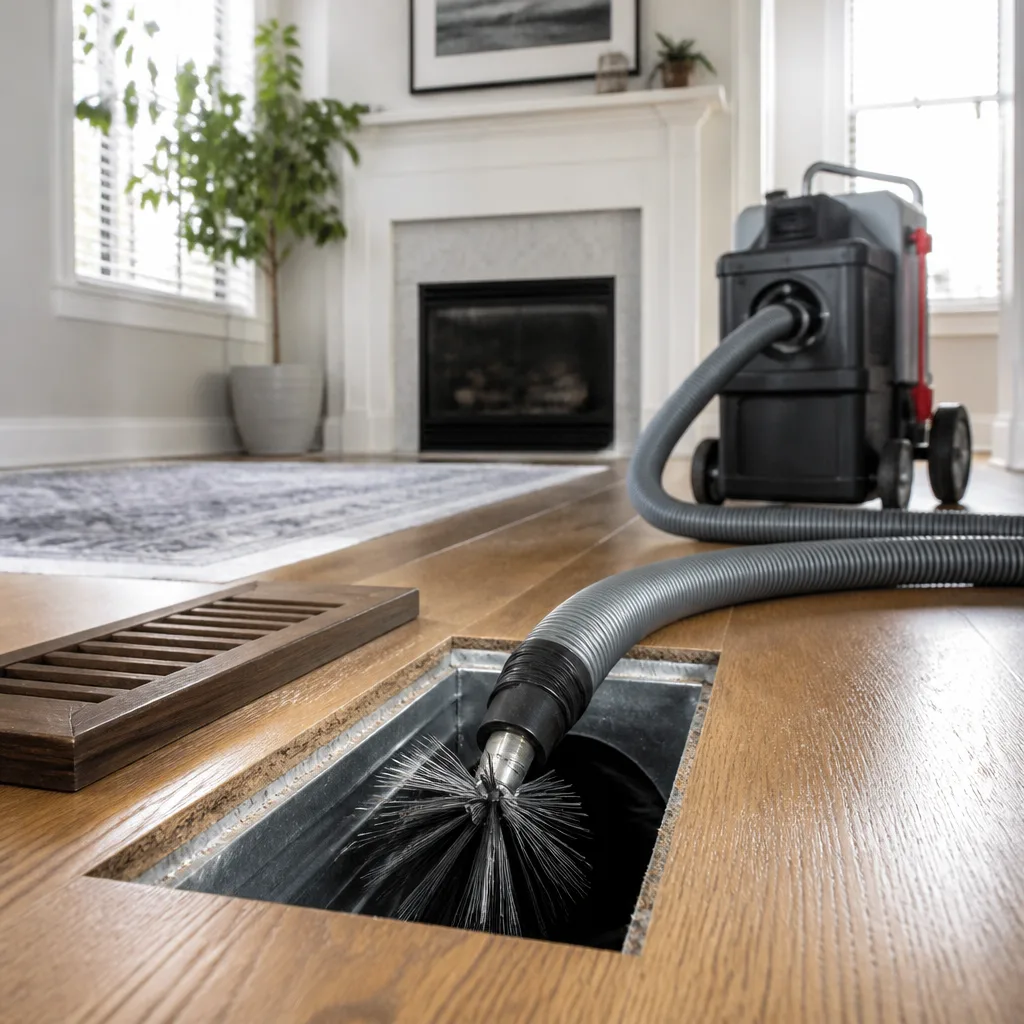 Whole-home duct cleaning
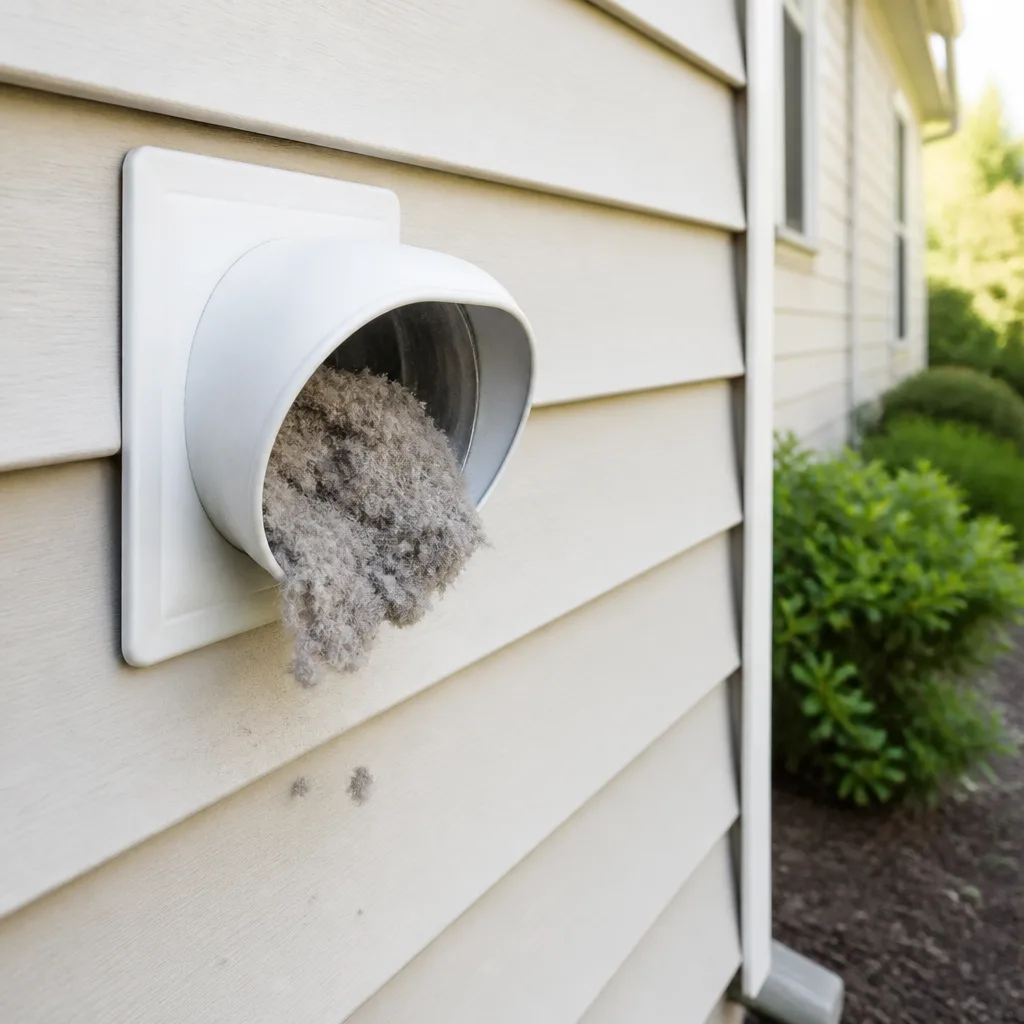 Dryer vent cleaning
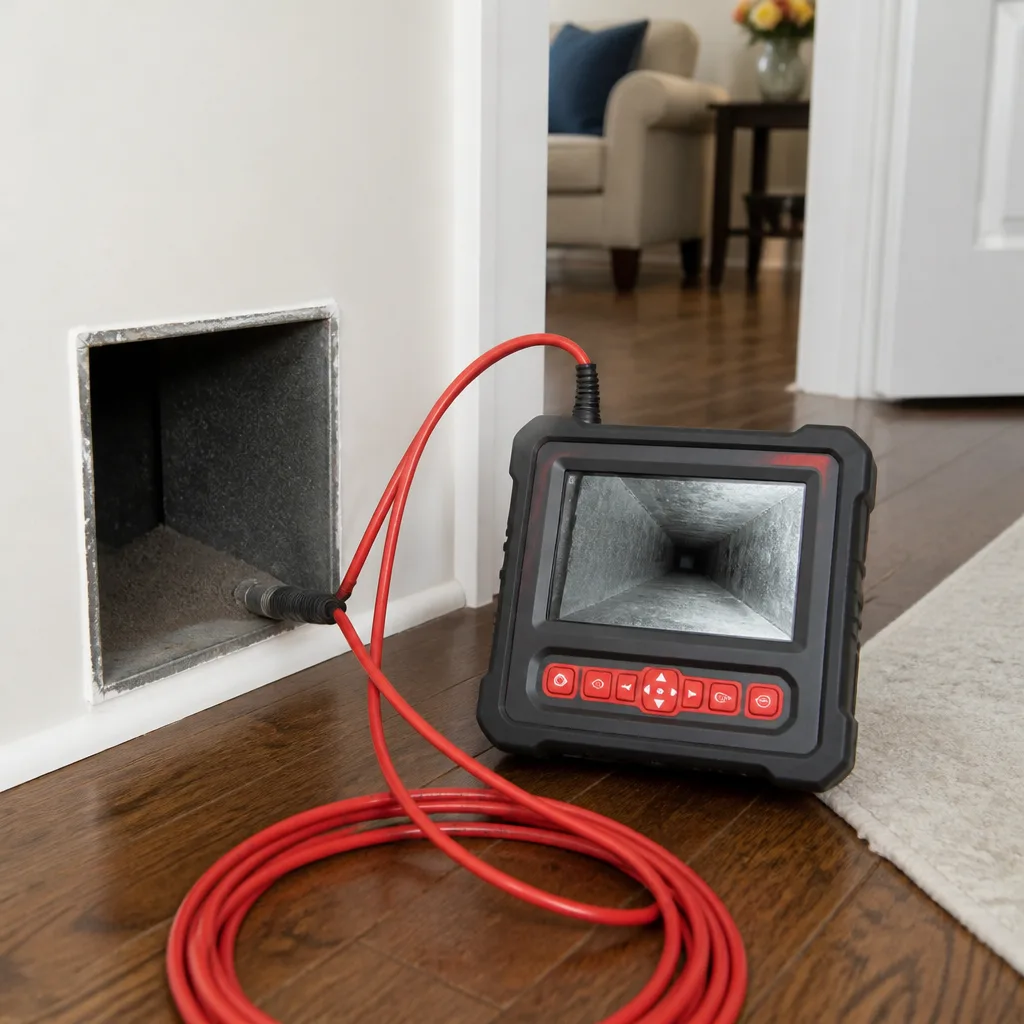 Camera inspection
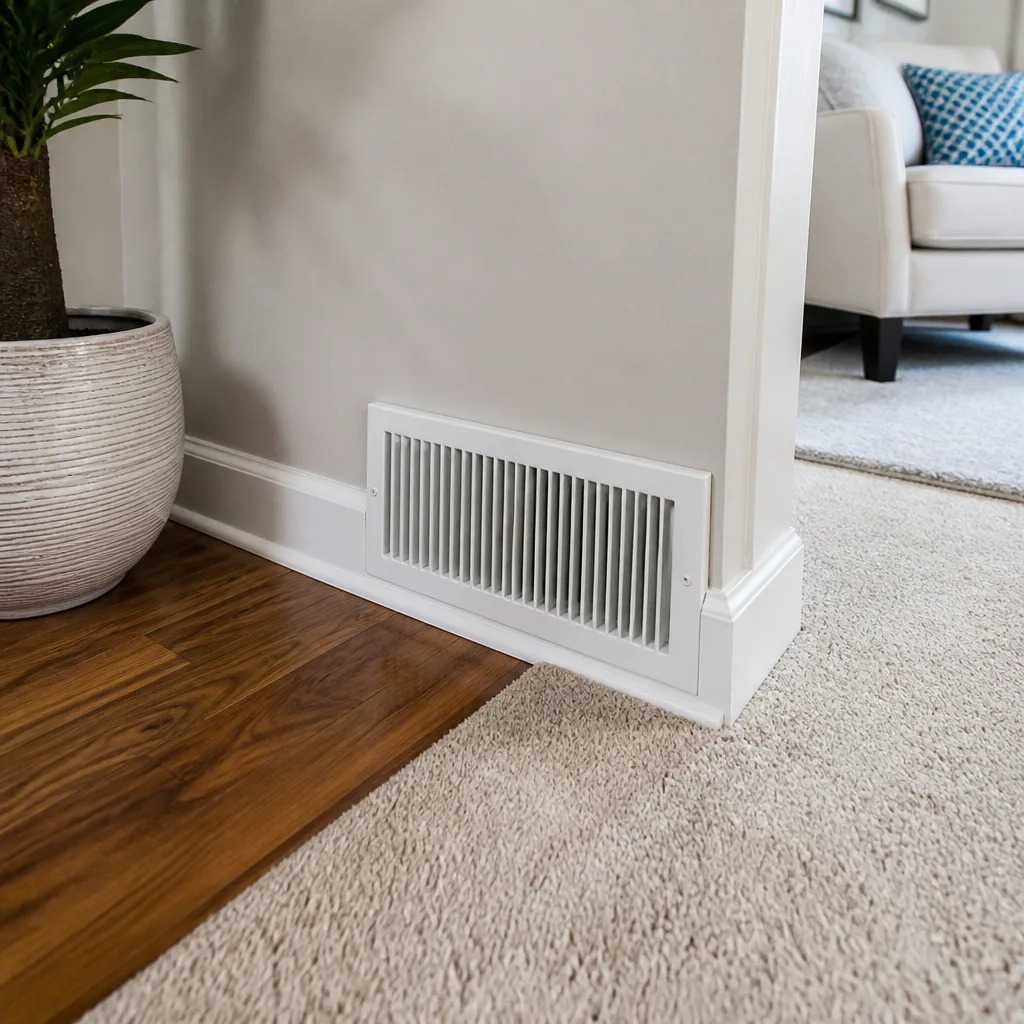 Sanitizing & deodorizing
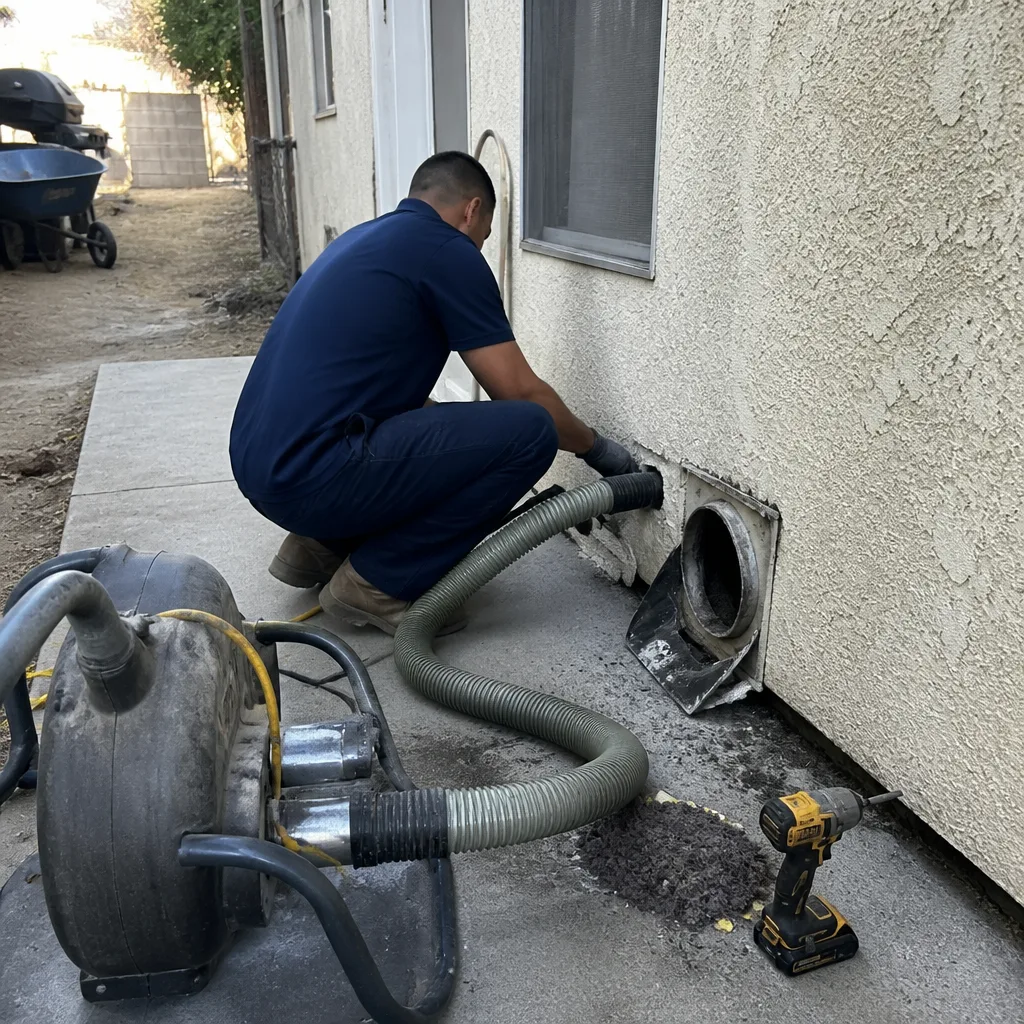
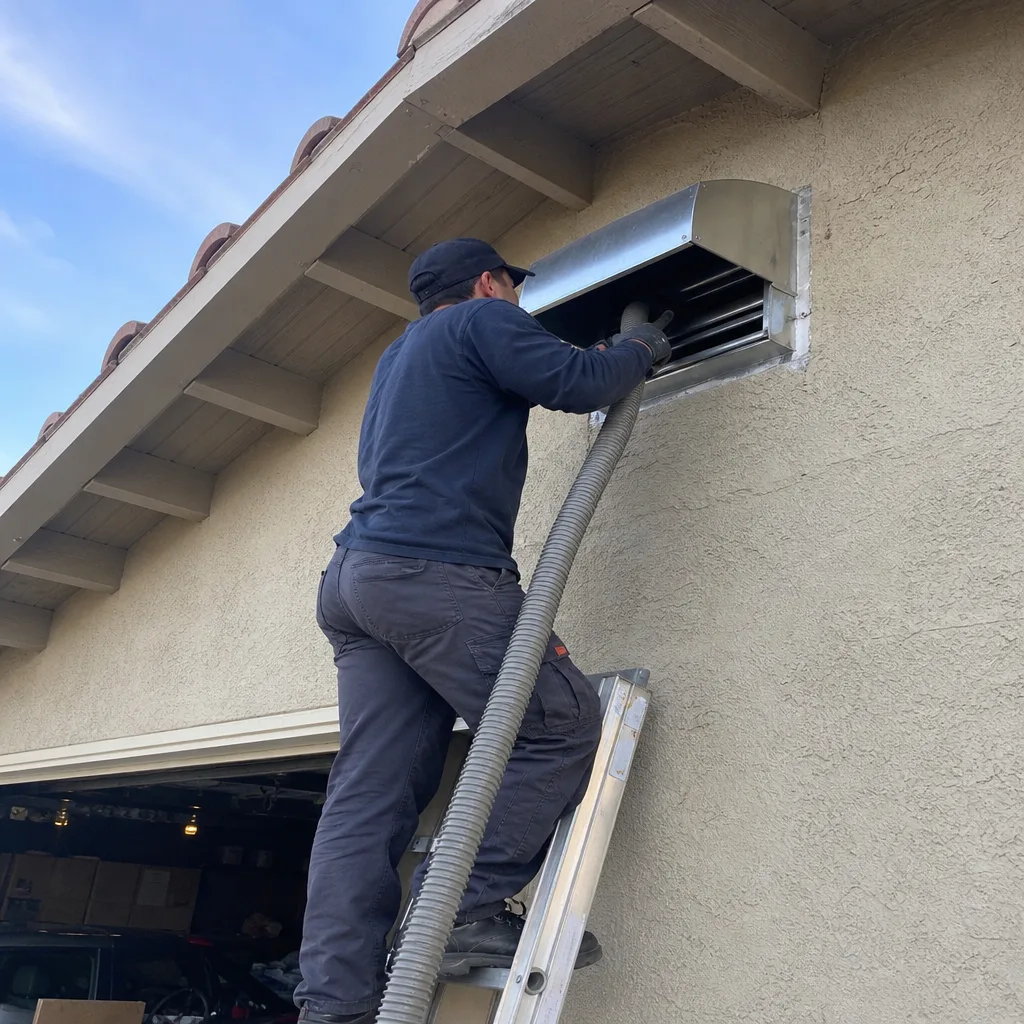
Whole-system duct and dryer vent check with before-and-after photos - you see exactly what came out of your vents
That "$99 whole-house special" is a bait ad - the real number appears once they are in your hallway, or the "clean" is a shop-vac at the register. We photograph the inside of your ducts before and after instead.
DIY vs Professional Air Duct Cleaning: The San Bernardino Homeowner’s Decision Guide
Here’s a fact most DIY duct cleaning tutorials won’t tell you: the consumer drill-powered brushes sold on Amazon generate positive pressure inside the duct during use. That means they push debris further into the system and into your living spaces rather than extracting it. It’s not a minor inefficiency. It’s the opposite of remediation. This guide draws the hard technical line between legitimate homeowner maintenance in San Bernardino and work that genuinely requires professional equipment; for more guides & resources on maintaining your system, explore our blog, because the difference isn’t effort. It’s physics, containment, and verification.
Styles & brands we work with
- Whole-home duct cleaning
- Dryer vent cleaning
- Camera inspection
- Sanitizing & deodorizing
Quick Answer
Professional air duct cleaning in San Bernardino is the right call when ducts contain fine particulate, mold, rodent contamination, or post-wildfire smoke residue, because only negative-pressure source removal actually extracts debris. DIY is genuinely appropriate for register vacuuming, filter replacement, grille cleaning, and accessible dryer vent clearing. If you’re reaching deeper than your arm can go with a household vacuum, you’re not cleaning anything. You’re stirring it up.
Table of Contents
- What DIY Can Actually Do (and What It Can’t)
- The Physics of Negative-Pressure Source Removal
- San Bernardino Risk Scenarios Where DIY Is Especially Dangerous
- What Professional Equipment Actually Does Inside the Duct
- The Honest Cost-Benefit Calculation
- Step-by-Step: What Homeowners Can Safely Do Themselves
- Common Mistakes to Avoid
- When to Call a Professional
- Frequently Asked Questions
- The Bottom Line
What DIY Can Actually Do (and What It Can’t)
Let’s be honest about what a homeowner with a shop vac and a brush can physically reach. In a typical San Bernardino home, you can access maybe 18 to 24 inches of ductwork from each register opening. That’s it. The average duct run extends 15 to 40 feet through walls, floors, and attic spaces. The math doesn’t work in your favor.
Here’s what DIY maintenance genuinely accomplishes:
- Register and grille vacuuming: Removing visible dust from the metal or plastic registers where air exits the duct. This is surface-level but genuinely useful for keeping visible dust down.
- Filter replacement: Swapping a clogged HVAC filter for a new one. In San Bernardino’s dusty climate, filters load up within 30 to 60 days during summer months when AC runs constantly. This is the single highest-impact thing a homeowner can do.
- Grille cleaning: Washing removable register covers with warm soapy water. They collect a film of dust and cooking residue if your kitchen is nearby.
- Accessible dryer vent clearing: Removing lint from the first 2 to 3 feet of dryer vent pipe where it connects to the dryer and the wall. This reduces immediate fire risk but doesn’t address the full run.
What DIY cannot do: reach the middle of the duct run, agitate debris that has adhered to duct walls over years of air movement, filter the air being disturbed, contain what gets kicked up, or verify the result with a camera. The limitation isn’t effort. It’s geometry and equipment.
We’ve seen the inside of enough duct systems in San Bernardino and surrounding areas to know that the debris you can see at the register is maybe 10 percent of what’s in there. The rest is deeper, finer, and more settled.
The Physics of Negative-Pressure Source Removal
Professional duct cleaning works on a principle called source removal under negative pressure. The system creates a vacuum that pulls air backward through the ductwork toward a collection point. Agitation tools then dislodge debris from duct surfaces, and the airflow carries that debris toward the extraction equipment rather than away from it.
DIY tools reverse this. A spinning brush on a drill pushes air outward in all directions. The brush loosens debris, but nothing collects it. The loosened debris follows the path of least resistance, which means some of it settles back into the duct when you stop, some drifts into the room through the register opening, and some gets pushed further down the duct where you’ll never reach it without professional tools.
Why this matters for San Bernardino homeowners specifically: our air quality issues aren’t abstract. Wildfire smoke residue contains fine particulates that settle inside ducts. Dust from the high desert and construction activity infiltrates homes through negative pressure zones. Allergens from native vegetation blow through open windows and get pulled into the return system. When you agitate these fine particles without extraction, you aerosolize them, which means you breathe them.
Mold spores make this worse. If there’s any moisture history in your ducts, say from a condensate issue or a past roof leak, dormant spores can sit in the duct lining. Brushing without containment releases those spores into your living space at concentrations far higher than they’d be if left undisturbed. Professional negative-pressure systems pull those spores toward a HEPA-filtered collection unit before they enter your air.
The takeaway: the direction of airflow determines whether you’re cleaning or contaminating. Professional equipment pulls debris toward extraction. DIY tools scatter it. That single difference is the entire argument.
San Bernardino Risk Scenarios Where DIY Is Especially Dangerous
San Bernardino’s geographic position creates some specific risk factors that make DIY duct cleaning a genuinely bad idea in certain situations.
Post-Wildfire Smoke Exposure
When wildfires burn in the San Bernardino National Forest or the surrounding mountains, the smoke carries fine particulate matter that works its way into homes through air intakes, gaps, and open doors. This particulate is incredibly fine, often under 2.5 microns, and it settles into ductwork where normal air movement doesn’t dislodge it. Brushing these ducts with consumer tools aerosolizes this particulate directly into your home. Even with a mask on, the particles stay airborne and settle back into the duct system and your furnishings. Professional extraction removes this material under negative pressure with HEPA filtration at the collection point. If your home has been through a smoke season, this isn’t the time to experiment with a drill brush.
Suspected Rodent Activity
Roof rats and mice are a genuine issue in San Bernardino’s older housing stock. When rodents nest in ductwork or die in the system, you’re dealing with biological contamination: droppings, urine, nesting material, and decomposing matter. Hantavirus is a real concern in this region. Disturbing rodent-contaminated ducts without full containment, which means negative air pressure and appropriate PPE, puts you and your family at direct health risk. This is remediation work, not cleaning, and it requires Abatement Technologies negative-air equipment and containment methodology that no homeowner can replicate.
Visible Mold Growth
San Bernardino homes built before modern ventilation standards often run humid during certain times of year, and any duct system that’s shown condensation or moisture intrusion can develop mold inside the duct lining. Mold inside ducts is a health issue, not a cleanliness issue. Brushing it without containment spreads spores throughout the home. The correct response is professional assessment and cleaning or, in some cases, Air Duct Repair in Rialto if the contaminated section needs replacement. Lionheart Air Duct Cleaning handles both.
Older Duct Systems
Many San Bernardino homes date from the mid-20th century and have original or decades-old ductwork. Old metal ducts with deteriorating seals and separated joints behave differently from modern sealed systems. Aggressive DIY brushing can further damage already-compromised joints and connections. If your ducts predate the Reagan administration, don’t take a power tool to them.
What Professional Equipment Actually Does Inside the Duct
The equipment gap between consumer tools and professional systems isn’t a matter of degree. It’s a category difference. Here’s what actually happens inside a duct during professional cleaning with Rotobrush and Nikro systems.
Agitation at the Source
Rotobrush systems use a spinning brush head attached to a vacuum hose. The brush mechanically agitates debris that has adhered to duct walls, while the integrated vacuum extracts it simultaneously. This matters because years of air movement pressure-bakes fine dust onto duct surfaces. It doesn’t just sit there waiting to be vacuumed. It has to be physically dislodged. Nikro equipment works the same way with pneumatic agitation tools that scrub the duct interior while under negative pressure.
A homeowner’s vacuum attachment moves air across the surface. It doesn’t unstick what’s stuck. Rotobrush and Nikro tools physically remove it.
HEPA Filtration at the Collection Point
Professional systems filter extracted air through HEPA filtration before it returns to your home environment. This is the difference between removing particulate and recirculating it. Your household vacuum, even a good one, lacks HEPA-grade filtration on the exhaust side. That fine dust you vacuumed out of the register? Some of it’s blowing back into the room through the vacuum exhaust.
Camera Verification
No legitimate professional leaves your home without showing you what was in the ducts and what they look like afterward. Camera inspection before and after cleaning verifies that the work actually happened. We’ve used this process on hundreds of homes in the San Bernardino area, and it eliminates the industry’s biggest problem: paying for work you can’t see and can’t verify. If a company won’t show you before-and-after footage of your own ducts, you don’t know anything was cleaned at all.
Negative-Air Containment in Remediation Scenarios
For contamination situations involving mold, rodent activity, or heavy particulate loads, Abatement Technologies negative-air machines create a controlled pressure differential that prevents contaminated air from escaping into the living space during cleaning. This is containment-capable methodology that most residential duct cleaners don’t carry. It signals a different category of operation, one closer to restoration contracting than routine maintenance. Lionheart maintains this capability for situations that require it.
That’s the equipment answer. The agitational tool physically removes bonded debris. The extraction system carries it out under negative pressure. The filtration captures it before it re-enters your air. The camera verifies the result. No consumer tool replicates any of those four functions, let alone all of them together.
The Honest Cost-Benefit Calculation
Let’s run the numbers without the marketing fog. Professional whole-home air duct cleaning in the San Bernardino market typically runs $400 to $700 depending on system size, number of returns, contamination level, and whether repairs are needed. A DIY kit costs $30 to $80 plus your time.
At face value, DIY wins on cost. But the calculation changes when you account for what DIY actually produces. If you spend a Saturday pushing a brush through your ducts and all you accomplish is loosening surface debris, you’ve saved money but accomplished nothing meaningful. If you spread mold spores or wildfire particulate into your living space, you’ve created a remediation problem that now costs more than the original cleaning would have.
We’ve been called to homes in San Bernardino after DIY attempts that made things worse. The pattern is consistent: the homeowner tried to save money, aerosolized contamination, and then paid for professional cleaning plus sometimes duct repair or additional indoor air quality work. The DIY attempt didn’t just fail to save money. It added cost.
Here’s the honest breakdown:
- Legitimate DIY maintenance saves money: Filter replacement every 30 to 60 days during heavy-use seasons in San Bernardino’s dusty climate. Register vacuuming when you see visible accumulation. Grille cleaning twice a year. Accessible dryer vent clearing. This work is genuinely yours to do and doing it reduces the frequency of professional cleaning needed.
- DIY “deep cleaning” risks costing more than it saves: Any attempt to clean beyond reachable surface areas without extraction equipment risks spreading contamination that then requires professional remediation. The math only works if you assume the DIY attempt doesn’t make anything worse, and with the wrong tools, it often does.
- Professional cleaning’s value is in what you can’t do: Agitation at the source, negative-pressure extraction, HEPA filtration, camera verification. You’re paying for a physical process you cannot replicate, not for labor you’re unwilling to perform.
Here’s a simple decision rule: if you can reach it with your arm, do it yourself. If you can’t, call someone whose equipment can.
Step-by-Step: What Homeowners Can Safely Do Themselves
This is the full list of duct maintenance tasks that are legitimately in the homeowner’s lane. Do these regularly and your professional cleanings will be less frequent and less expensive when they do happen.
1. Replace Your HVAC Filter
Check it monthly during summer and winter when your system runs hardest. In San Bernardino, summer is the big one. A clogged filter restricts airflow, makes your system work harder, and sends more dust through your home. Use a pleated filter rated MERV 8 to 13 for best balance of filtration and airflow. Note: if you run a Honeywell or Aprilaire whole-home filtration system, match the replacement filter to what that system specifies rather than guessing.
2. Vacuum Accessible Registers and Grilles
Remove each register cover and vacuum the visible interior with a hose attachment. Do this every 2 to 3 months. This removes the debris you can physically reach without disturbing anything deeper in the system. Wash removable grilles in warm soapy water, dry completely, and reinstall.
3. Clear the First Few Feet of Dryer Vent
Pull the dryer away from the wall, disconnect the vent hose, and clear accessible lint with a shop vacuum. Reconnect the hose securely with a proper clamp, not duct tape. This reduces immediate fire risk from the most lint-dense section of the vent run. Note: this addresses only the accessible portion. Dryer Vent Cleaning in Rialto addresses the full run, which is where fires actually start when lint accumulates in the wall cavity or attic section.
4. Inspect What You Can See
Look into each accessible return and register with a flashlight. What you’re checking for: visible mold, rodent droppings, excessive dust accumulation, or disconnected duct sections. If you see any of these, stop DIY work and call a professional. These are contamination and integrity issues, not maintenance issues.
5. Keep Air Moving
Run your system’s fan periodically even when heating or cooling isn’t needed. Air movement prevents stagnant pockets from forming inside the ductwork, especially during San Bernardino’s shoulder seasons when systems can sit idle for weeks.
That’s the full legitimate DIY list. If the task you’re considering isn’t on it, you’re probably about to spend a day making things worse with a drill brush and a shop vacuum.
Common Mistakes to Avoid
- Using a leaf blower in a duct opening. This creates massive positive pressure that forces duct debris toward your living spaces with no filtration at all. Every San Bernardino home we’ve seen after this trick has needed professional cleaning immediately.
- Drill-powered brushes without extraction. These agitate debris without collecting it. The loose debris either resettles or aerosolizes into your home. Either way, you haven’t cleaned anything.
- Reaching deeper than your arm can go. Once you’re threading a hose or brush past what you can see, you’re pushing debris further from the register where it becomes unreachable without professional equipment.
- Ignoring the dryer vent because “it’s just lint.” Lint accumulation is a documented leading cause of residential structure fires. Treat dryer vent cleaning as a safety service, because it is one.
- Using consumer duct cleaning products with water or chemical sprays. Introducing moisture or chemical residue into ductwork creates its own problems, including potential mold growth on the now-damp debris layer.
- Paying a bargain duct cleaner $49 and expecting professional results. The low-cost model depends on bait-and-switch invoicing or surface-level work. If the price sounds too low to support professional equipment and labor, it is.
When to Call a Professional
Call a professional if you see visible mold in or around your registers, if you’ve had rodent activity in the duct system, if your home has been exposed to wildfire smoke, if anyone in the home has unexplained allergies or respiratory irritation that worsens when the HVAC runs, or if your ducts haven’t been cleaned in more than five years. These are conditions that require negative-pressure extraction, HEPA filtration, and in some cases containment. Lionheart Air Duct Cleaning services offers free estimates in San Bernardino. Call (855) 356-4382 to talk through what you’re seeing.
Frequently Asked Questions
Professional whole-home air duct cleaning in San Bernardino typically runs $400 to $700 depending on system size, number of returns, and contamination level. Homes with extensive contamination or needed repairs land higher. Call (855) 356-4382 for a free estimate based on your actual system.
Cheap quotes typically come from operators using consumer-grade vacuums instead of professional extraction equipment. Their cost model depends on either upselling once they’re in your home or doing surface-level work that doesn’t actually clean the duct interior. Professional equipment, trained operators, and camera verification cost more for a reason.
Request before-and-after camera footage of your duct interiors. Legitimate professional operations document the work because they want you to see what was extracted and what the ducts look like afterward. If a company can’t show you what your ducts looked like before and after, you have no way to verify the work happened.
Every 3 to 5 years for most San Bernardino homes, sooner if you have pets that shed heavily, recent renovation work, wildfire smoke exposure, or family members with significant allergies or respiratory conditions; check our Seasonal Air Duct Cleaning Care for San Bernardino: Year-Round Homeowner’s Guide for timing tips. Homes with good filter discipline and regular DIY register maintenance can stretch toward the longer end of that range.
A shop vacuum reaches only the first 18 to 24 inches from each register and lacks the agitation capability to dislodge debris bonded to duct walls. It doesn’t create the negative-pressure extraction that removes debris from the full duct run, and without HEPA filtration, it recirculates fine particulate back into your living space. Shop vacuum at the registers is fine as routine maintenance. It’s not duct cleaning.
A Rotobrush system agitates debris with a brushing head while simultaneously extracting it under vacuum through a HEPA-filtered collection system, all within sealed ductwork. A drill brush agitates debris and pushes it outward in all directions with no extraction and no filtration. One removes debris. The other scatters it.
The Bottom Line
The DIY versus professional decision comes down to reach and physics. You can reach the first 18 inches from each register, and the maintenance you do in that zone is genuinely valuable. You cannot reach the rest of the duct run, and the tools sold for that job scatter contamination rather than removing it. San Bernardino’s dust, wildfire smoke, and older housing stock make these differences more pronounced, not less. Do the DIY work that’s yours. Then call a professional for the rest, because real duct cleaning requires the right tools and the willingness to fix what’s broken, not just brush past it. Lionheart Air Duct Cleaning home offers free estimates. Call (855) 356-4382.
Written by the team at Lionheart Air Duct Cleaning, serving San Bernardino since 2013.
See the difference
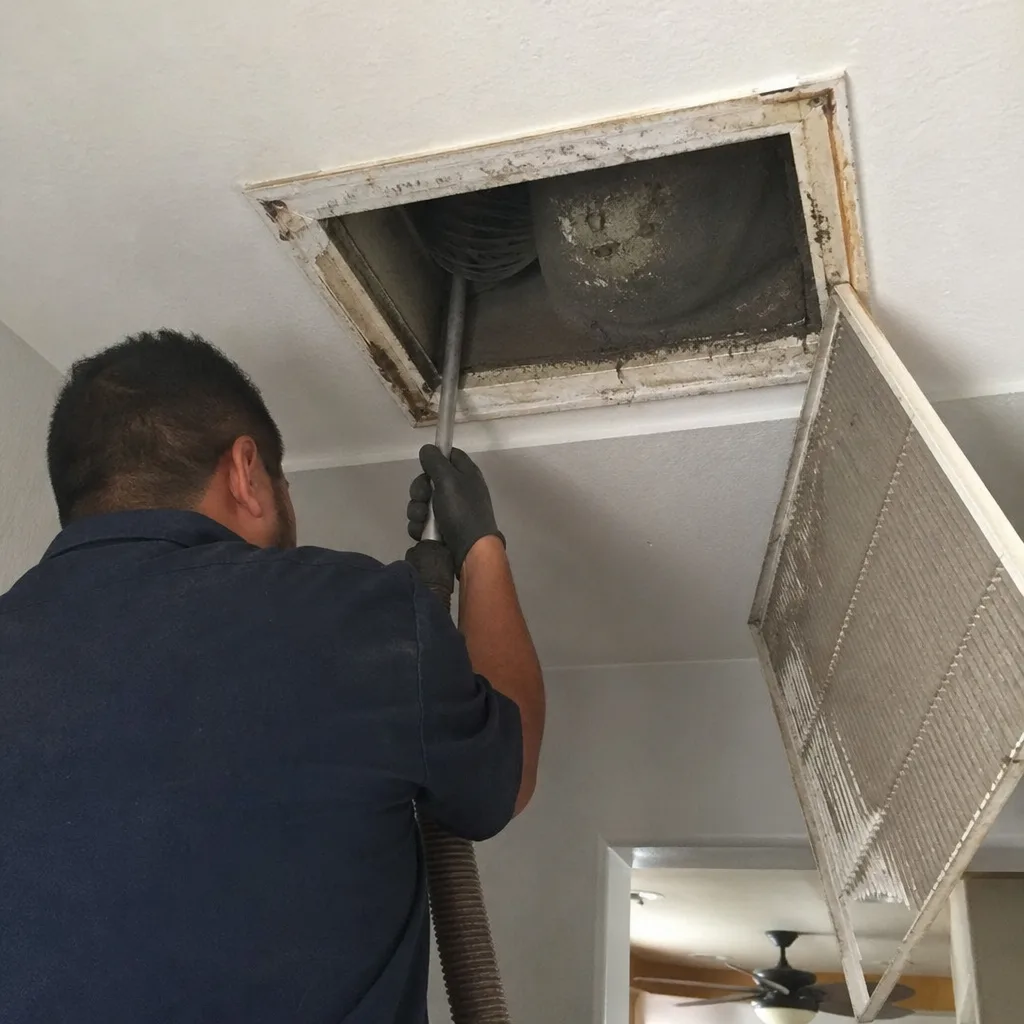 Before
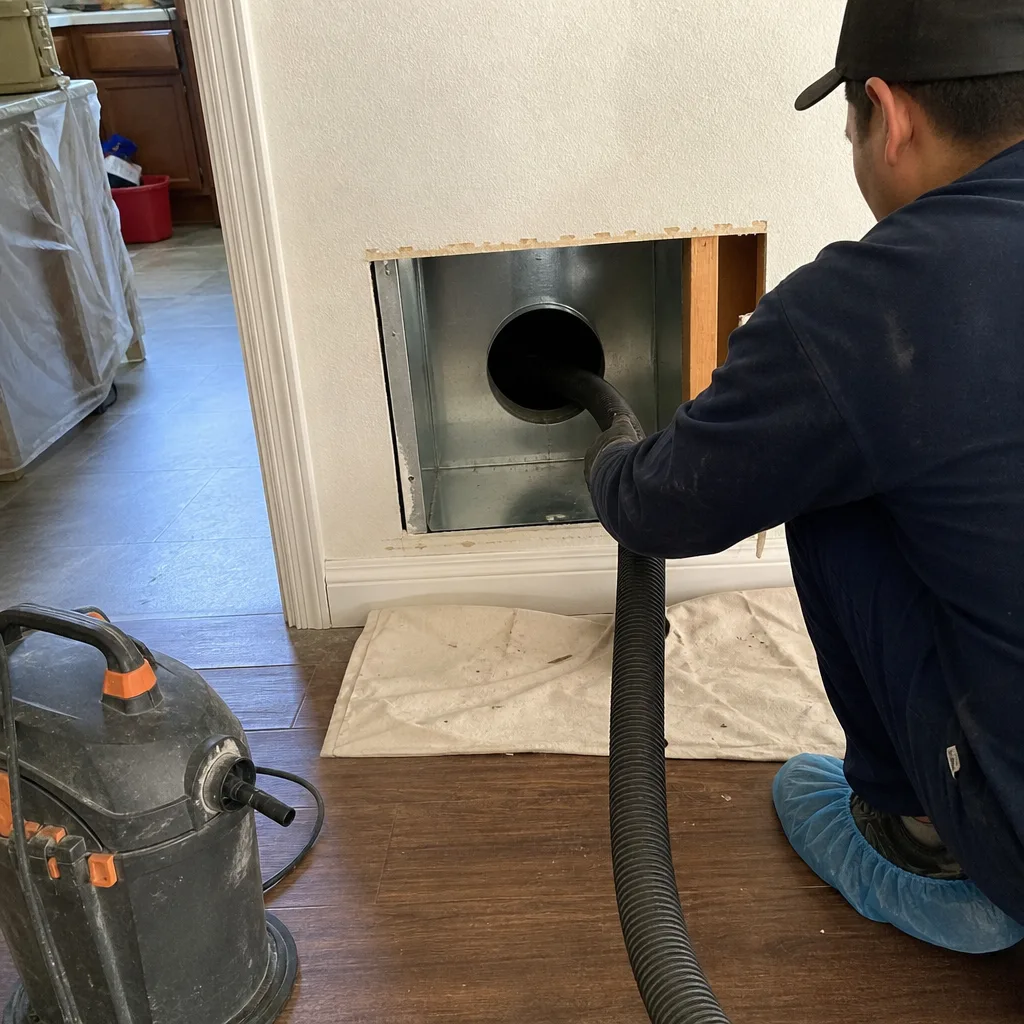 After
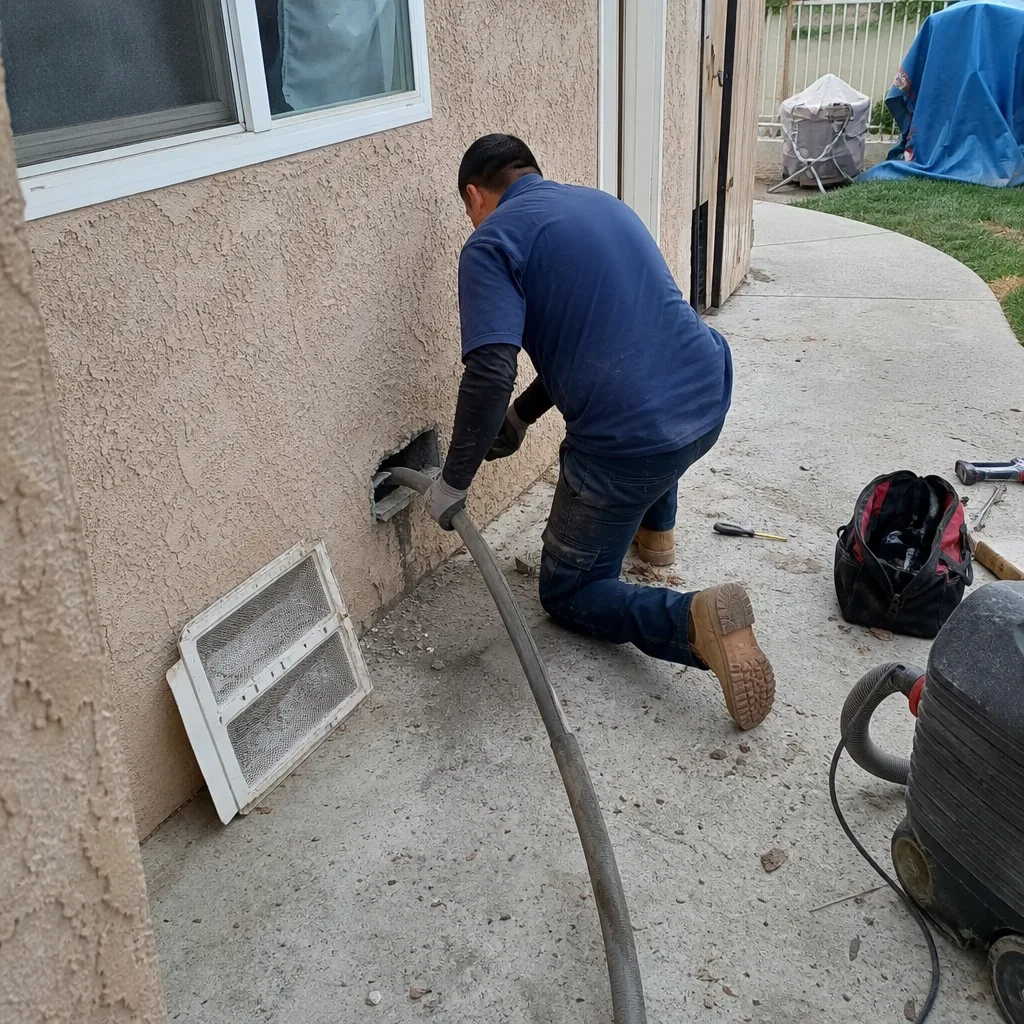 Before
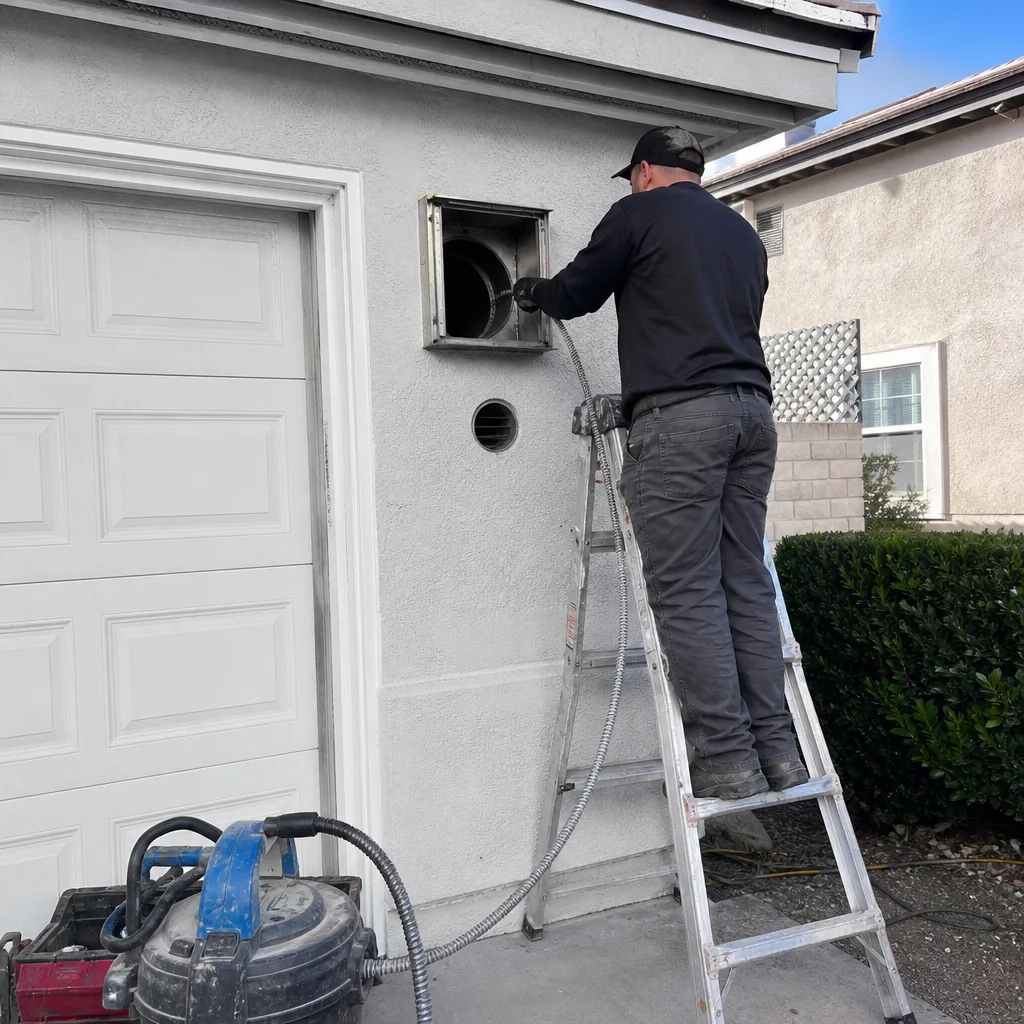 After
 Before
 After