
Last updated November 2, 2026
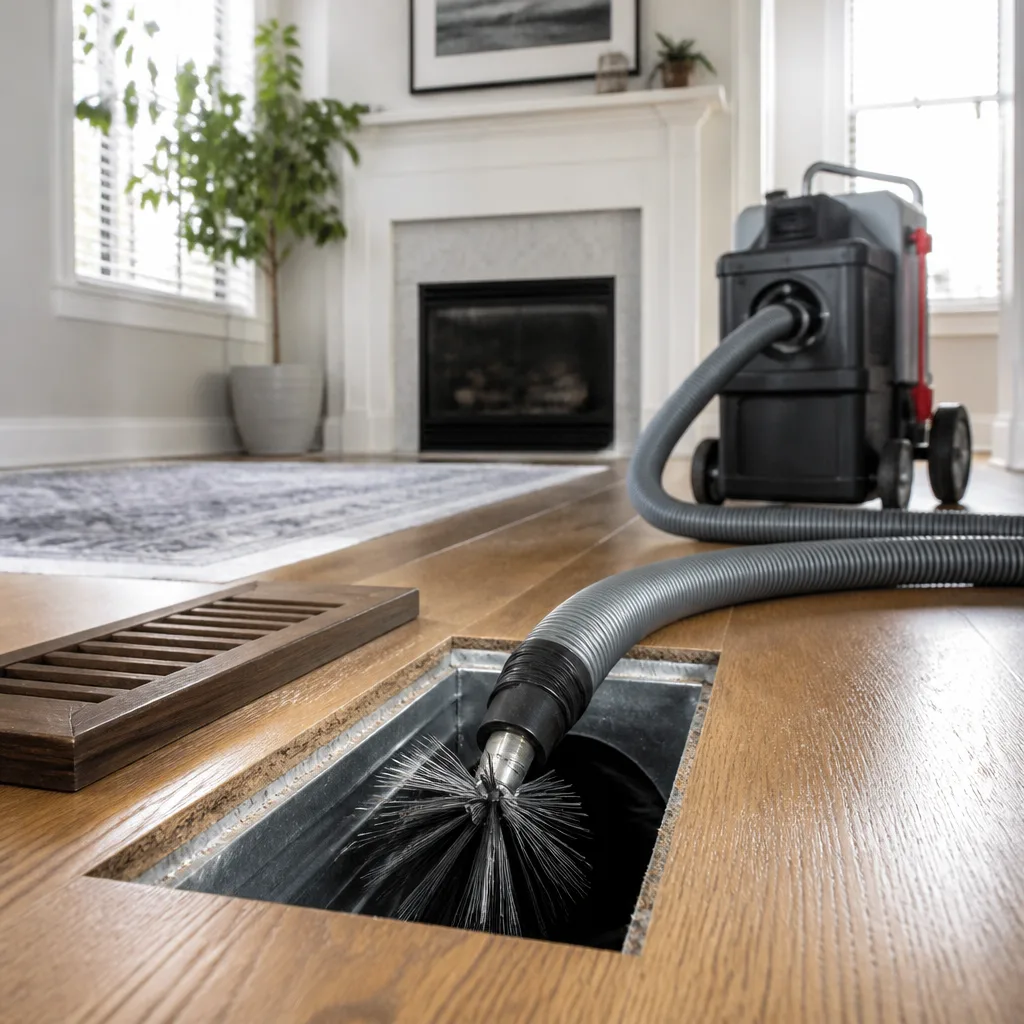 Whole-home duct cleaning
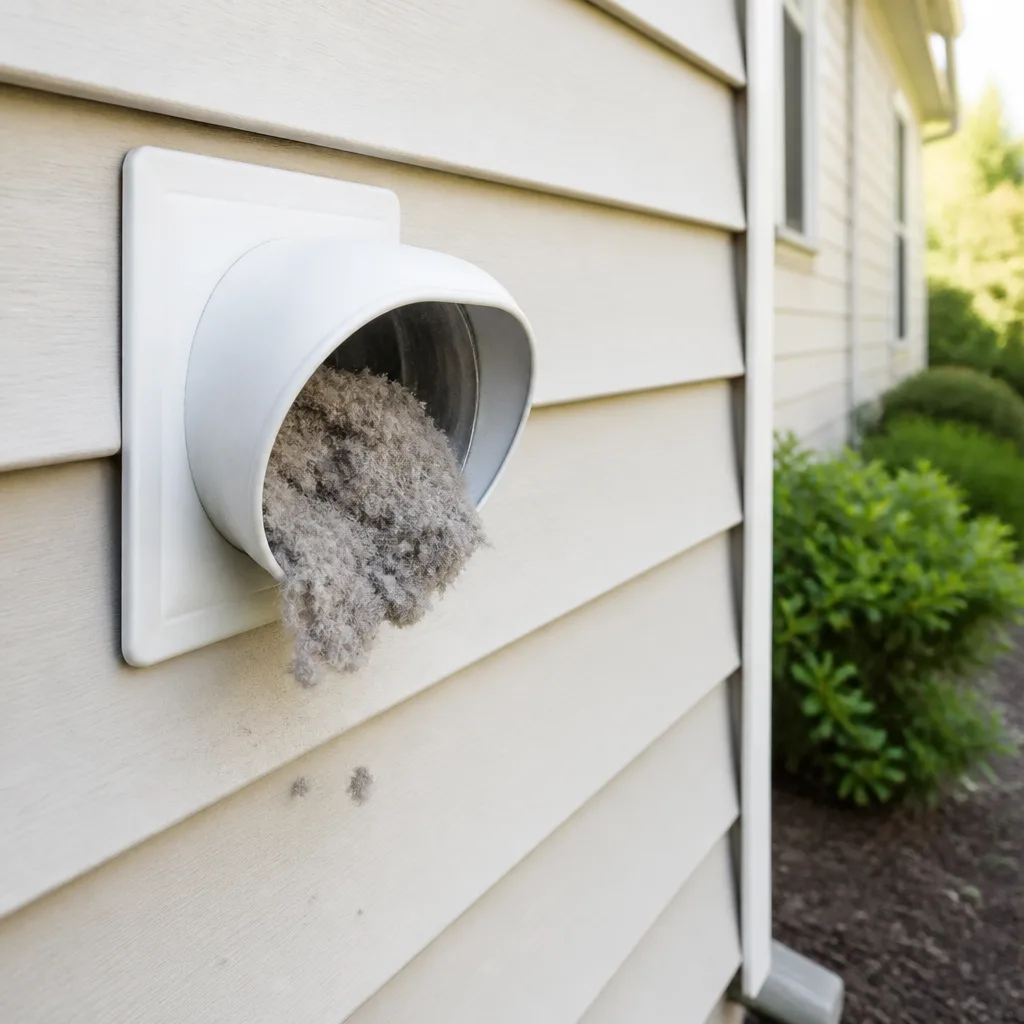 Dryer vent cleaning
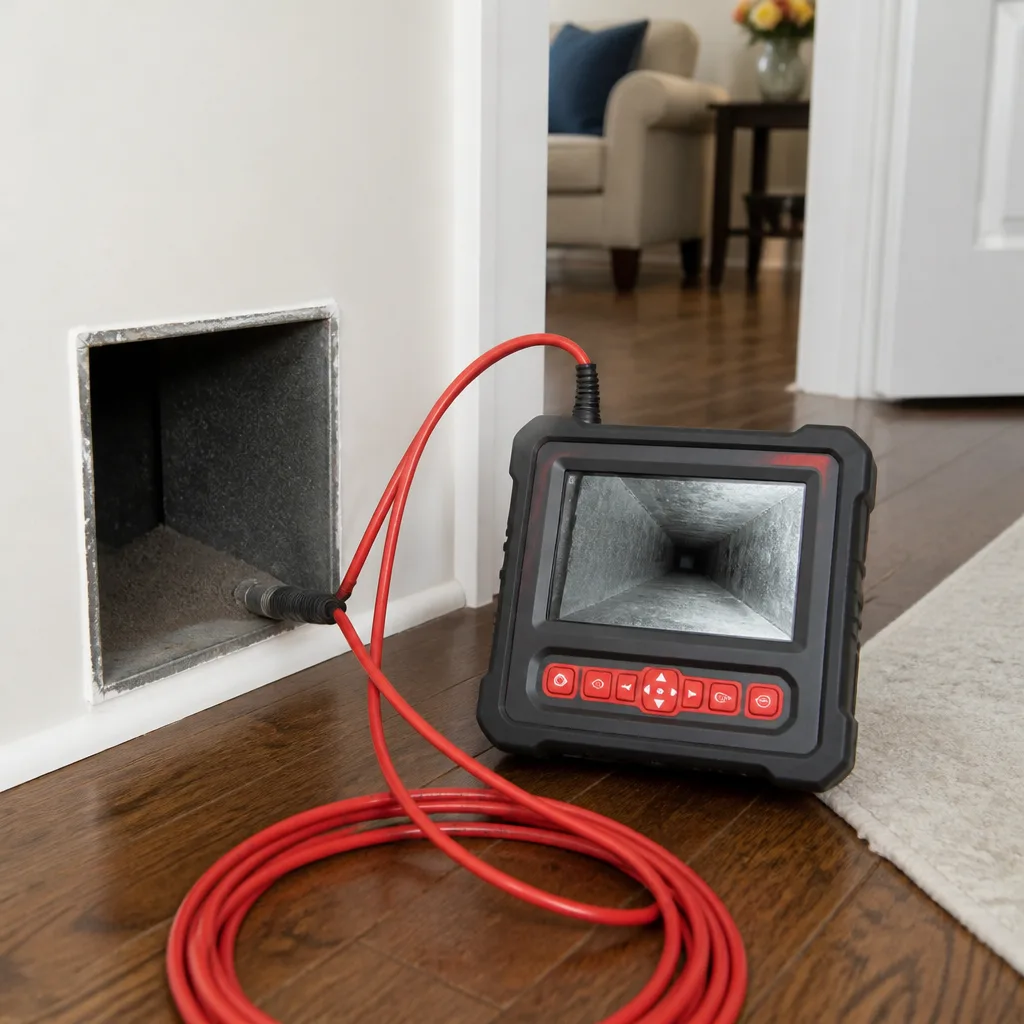 Camera inspection
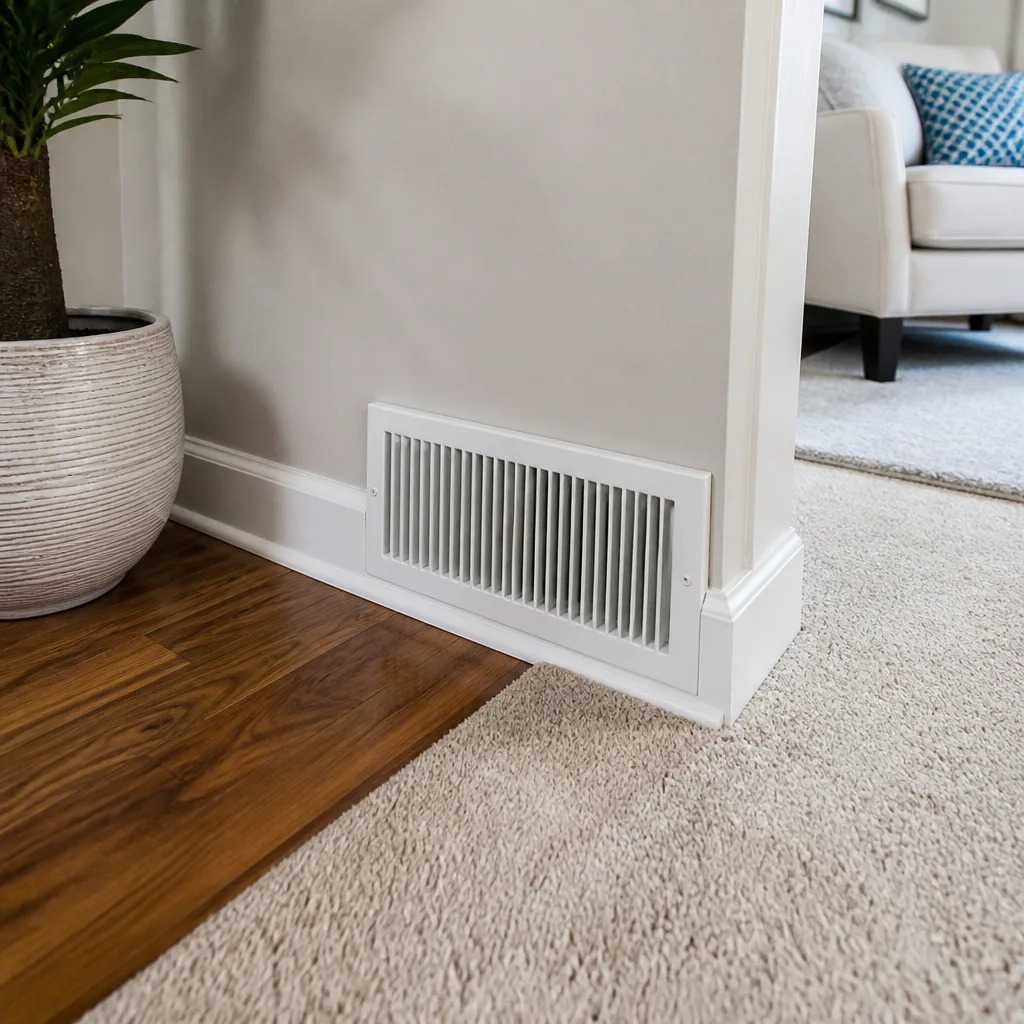 Sanitizing & deodorizing
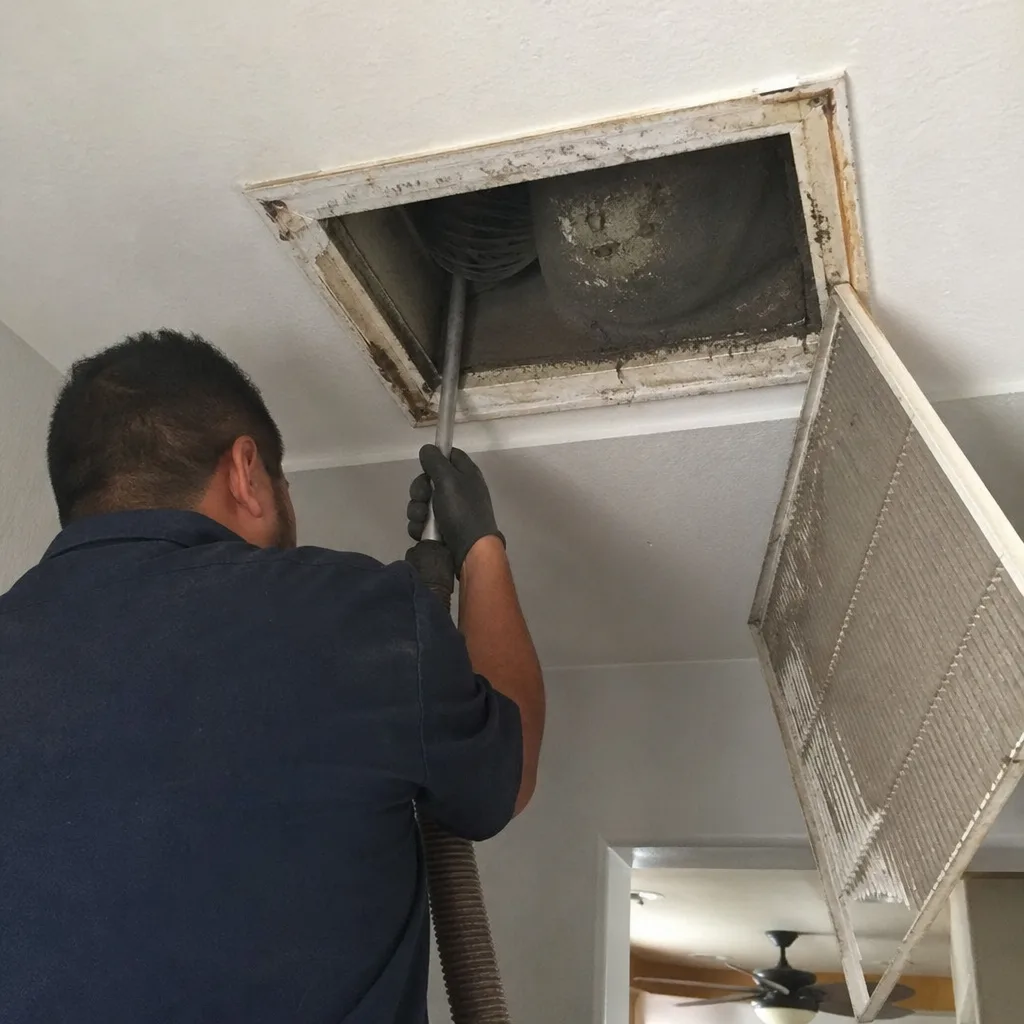
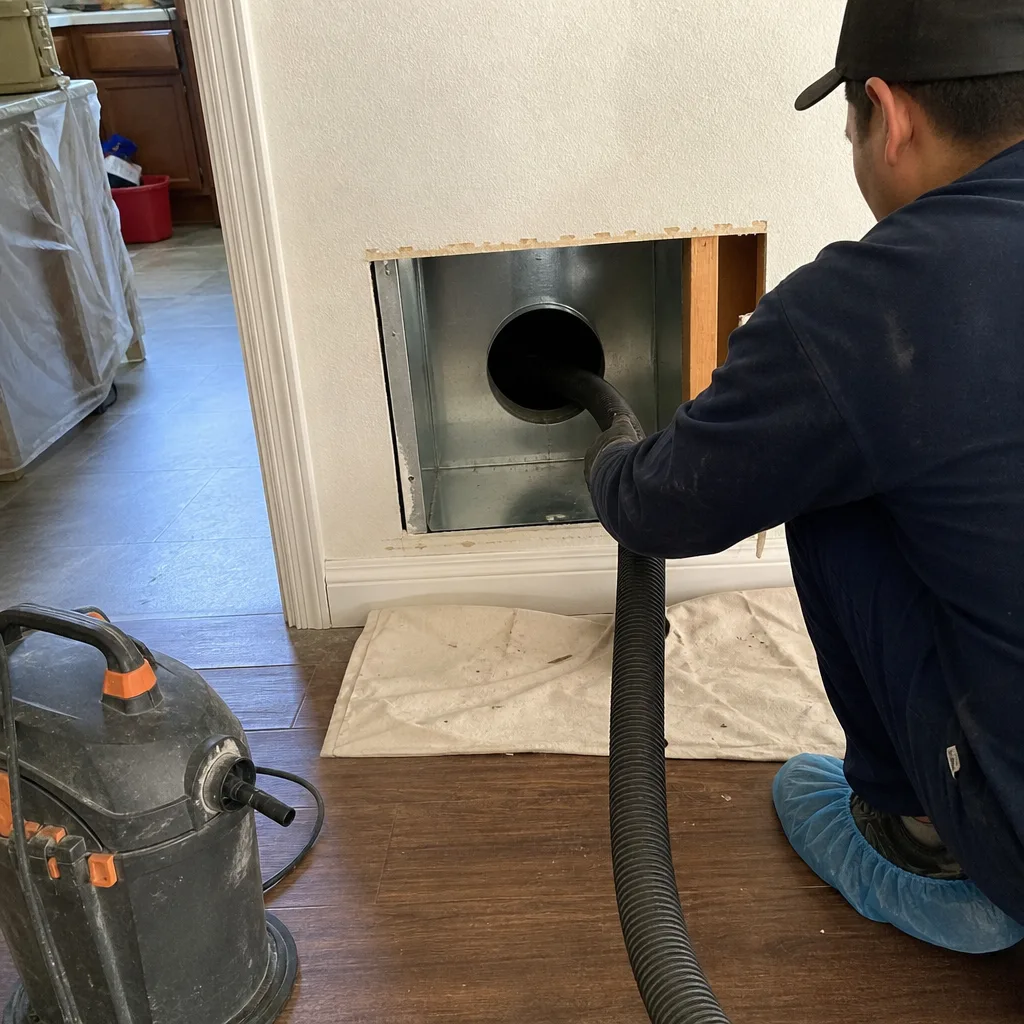
Whole-system duct and dryer vent check with before-and-after photos - you see exactly what came out of your vents
That "$99 whole-house special" is a bait ad - the real number appears once they are in your hallway, or the "clean" is a shop-vac at the register. We photograph the inside of your ducts before and after instead.
Air Duct Cleaning Troubleshooting: Common Problems and How to Fix Them
If your home still smells musty two weeks after a duct cleaning, the cleaner didn’t fail. They cleaned the symptom and left the source. The problem is almost always a breach, a disconnected boot, or a return cavity being used as a duct. Most homeowners in San Bernardino call for Air Duct Cleaning when the real issue is a failed duct component that no amount of vacuuming will resolve. This guide teaches you to diagnose the difference between a contamination problem and a structural duct problem before anyone picks up a vacuum. By the time you finish reading, you’ll know exactly what to check, what questions to ask, and when cleaning alone won’t produce the result you’re paying for.
Quick Answer
Air duct cleaning problems fall into two categories: contamination issues, which professional cleaning with Rotobrush or Nikro equipment can resolve, and structural duct failures like disconnected flex duct, breached return cavities, or collapsed liners, which require air duct repair before or alongside cleaning. If odors return within weeks, airflow stays uneven, or dust reappears immediately after a cleaning, the cause is almost always a duct integrity problem, not poor cleaning technique. Identifying which category you’re dealing with determines whether you need a vacuum, a repair crew, or both.
Styles & brands we work with
- Whole-home duct cleaning
- Dryer vent cleaning
- Camera inspection
- Sanitizing & deodorizing
Table of Contents
- Contamination vs. Structural: The Two Problems That Look Identical
- Persistent Odor After Cleaning: What It Actually Means
- Uneven Airflow: The Disconnected Flex Duct Problem
- Dust Return After Cleaning: Breaches and Return Cavities
- Mold in Ductwork vs. Dust Buildup: How to Tell the Difference
- Why Negative-Pressure Testing Catches What Visual Inspection Misses
- When Duct Sealing or Replacement Must Precede Cleaning
- The Dryer Vent Wildcard: A Separate Problem That Masquerades as Duct Trouble
Contamination vs. Structural: The Two Problems That Look Identical
Here’s the core distinction that most more guides & resources never make. A contamination problem means your ducts contain something that shouldn’t be there: dust, pet dander, construction debris, mold spores, or pest droppings. A structural problem means your ducts are physically compromised: they’re disconnected, crushed, breached, or leaking. Both produce similar symptoms. Both make your house dusty. Both can make rooms smell. But the fix for each is completely different, and treating a structural problem with cleaning equipment is like repainting a wall that has a hole in it.
In our experience working across Rialto and the wider San Bernardino valley, we regularly see homes where previous cleaners ran equipment through a system with a disconnected boot in the crawlspace. The homeowner paid for cleaning. The crawlspace kept feeding dust into the system. Two weeks later, the house looked exactly the same. The cleaning wasn’t the failure. The diagnosis was.
Here’s how to tell the difference before you spend money:
- Is the problem consistent across the whole house, or isolated to one room? Whole-house dust suggests contamination in the shared trunk line. One-room dust almost always points to a structural issue in that branch run.
- Did the problem develop suddenly, or gradually? Sudden onset after construction, remodeling, or pest activity suggests a breach or disconnection. Gradual buildup over months is more likely standard contamination.
- Does airflow feel weak in one specific vent even with the filter clean? That’s a structural red flag. Contamination rarely restricts airflow enough to notice; disconnections and crushed runs do.
Lionheart Air Duct Cleaning exists because this distinction matters. We clean it, we repair it, we stand behind it. Most duct cleaning companies only offer the first part.
Persistent Odor After Cleaning: What It Actually Means
A musty smell that returns within two to four weeks of a professional cleaning is the single most reliable indicator – one of several Air Duct Cleaning Warning Signs: A San Bernardino Homeowner’s Reference Guide – that the cleaning addressed surface contamination while leaving a source untouched. The source is usually one of three things, and none of them respond to vacuuming alone.
The #1 culprit: a return cavity being used as a duct. In many San Bernardino homes built between the 1960s and 1980s, the builder used the space between wall studs or floor joists as the return air pathway. These cavities are not sealed. They pull air from inside walls, crawlspaces, and attics. That air carries whatever lives in those spaces: rodent nests, mildew, decades of accumulated dust. A cleaner can vacuum the register and the visible return box, and the cavity continues feeding contaminated air into your system. The fix is lining or sealing the cavity, a repair that most cleaning companies don’t offer.
The #2 culprit: a breached or disconnected return duct in the crawlspace. If your return pulls from a vented crawlspace floor, any gap in that return run inhales crawlspace air. Crawlspace air in San Bernardino carries moisture, dust, and whatever has died down there. Cleaning the system without closing the gap means the odor returns as soon as the blower cycles.
The #3 culprit: microbial growth on the evaporator coil or blower housing. This is a contamination issue, but not one that responds to duct brushing. The coil sits in the air handler, and if it’s covered in biological growth, that’s what you smell every time the AC runs. Duct cleaning alone won’t touch it. The coil needs to be cleaned, and the underlying moisture problem needs correction.
Here’s the diagnostic sequence we walk customers through:
- Run the fan only, with the AC compressor off. If the odor appears, the source is in the ductwork or air handler. If the odor only appears with cooling, the evaporator coil is the prime suspect.
- If the odor appears with the fan only, check whether it’s worse immediately at startup. Startup odor that fades suggests standing moisture somewhere in the system.
- If the odor is constant with the fan on, the source is active contamination: a dead animal, active mold, or a cavity pulling from a contaminated space.
Uneven Airflow: The Disconnected Flex Duct Problem
If one bedroom in your San Bernardino home stays hot all summer while the rest of the house cools fine, you’re probably not looking at a balancing issue. You’re looking at a disconnected flex duct. Flexible ductwork is standard in California residential construction, and the connections at boots and trunk lines fail with surprising regularity. A duct that has pulled free of its boot dumps conditioned air into the attic or crawlspace instead of the room it’s supposed to serve.
Here’s what a disconnected flex duct looks like in practice: the room it served gets almost no airflow. The room next to it gets too much, because the system’s static pressure is now unbalanced. Your AC runs longer to satisfy the thermostat. Your energy bill climbs. And in summer, the attic around the disconnection gets a cold spot, which creates condensation, which creates mold on the insulation nearby. A disconnected duct is never just an airflow problem. It’s a moisture problem waiting to happen.
Signs of a disconnected flex duct:
- One room with dramatically reduced airflow while adjacent rooms blow hard.
- A new cold or hot spot on the ceiling directly above a supply register.
- Increased dust in the affected room, because the disconnected side of the run is now pulling attic air into the system on the return cycle.
- A whistling or flapping sound from inside a wall or ceiling cavity when the blower runs.
This is not a cleaning problem. Brushing a disconnected duct cleans a duct that isn’t even connected to the room it’s supposed to serve. The connection must be re-secured and sealed. A company that offers air duct repair in Rialto or San Bernardino can handle this on the spot. A cleaning-only company will run their equipment and leave the disconnection exactly where they found it, because they have no way to fix it.
Dust Return After Cleaning: Breaches and Return Cavities
You paid for duct cleaning. Three weeks later, you wipe a shelf and the cloth comes back gray. The natural assumption is that the cleaning was ineffective. Sometimes that’s true. More often, the cleaning removed what was in the ducts, and the ducts immediately refilled themselves from a source the cleaning couldn’t address.
The most common refill source in San Bernardino homes is a return-side breach. The return side of your HVAC system operates under negative pressure. That means any gap, crack, or disconnection on the return side actively sucks air from wherever the gap sits. If the gap is in a wall cavity, the return pulls dusty wall air. If it’s in a crawlspace, it pulls crawlspace dust. If it’s in an attic, it pulls insulation fibers. The return side is a vacuum cleaner running backward, and every unsealed joint is an intake port.
What makes this especially frustrating for homeowners is that return-side breaches are almost invisible from inside the house. The registers look fine. The filter looks fine. The system just keeps producing dust because it keeps ingesting dust from a space you can’t see.
There’s also the return cavity problem we touched on earlier, and it deserves emphasis here because it’s endemic to San Bernardino’s older housing stock. Builders in the 60s, 70s, and 80s frequently framed return air paths using stud bays and joist spaces. These cavities were never sealed. They’re connected to wall interiors, attic spaces, and in some cases the garage. Cleaning the visible return register does nothing to address the contaminated cavity behind it. The only real fix is lining the cavity or rerouting the return, which is precisely the kind of work most duct cleaners can’t perform.
If dust returns within a month of cleaning, ask the cleaning company one question: did you pressure-test the return side? If they don’t know what that means, you’ve found the problem, and it isn’t dust.
Mold in Ductwork vs. Dust Buildup: How to Tell the Difference
Every duct system with more than a few years of service has dust in it. Not every duct system has mold. But the two get confused constantly, and the confusion works in favor of companies that want to scare you into a bigger invoice. Here’s how to tell what you’re actually looking at, and what each condition actually requires.
Dust buildup is gray, tan, or brown. It’s dull and powdery. It sits in a thin, even layer or collects in the corners of rectangular ductwork. It has no odor when dry. It brushes away easily. If you look at a supply register and see a gray film that wipes off with a finger, that’s dust. It’s a cleaning issue. Rotobrush and Nikro systems, the same equipment used by certified HVAC and restoration contractors nationwide, are designed to remove exactly this.
Mold looks different. It’s typically black, green, or white and fuzzy or velvety in texture. It grows in patches, not even layers. It has an odor: earthy, musty, or sour. It doesn’t wipe away cleanly. It smears. And critically, mold requires sustained moisture. If the ductwork is dry, it’s almost certainly not active mold, because mold cannot grow without water. Dry ducts can have old, dead mold staining, which is a different problem than active growth.
The remediation paths are completely different, and this is where homeowners get misled:
- Dust: Professional duct cleaning with HEPA-filtered equipment resolves it. No chemicals required. No special containment required.
- Active mold: Requires identifying and fixing the moisture source first, then removing contaminated material or cleaning with appropriate antimicrobial treatment under containment. If the moisture source isn’t fixed, the mold returns no matter what product gets applied. Companies that use Abatement Technologies negative-air equipment, indicating containment-capable methodology, are equipped for this. Most residential duct cleaners are not.
If a company tells you they found mold and can clean it away with a standard duct cleaning package, ask them to show you the moisture source. If they can’t identify where the water is coming from, the mold is coming back, and you’ll be paying for the same service again next year.
Why Negative-Pressure Testing Catches What Visual Inspection Misses
Visual inspection catches what a camera can see. A disconnected duct hanging in an open attic is obvious. A five-inch tear on the top side of a trunk line, hidden behind insulation, is invisible. So is a boot that pulled away from the subfloor by two inches. So is a panned return cavity with gaps at every stud. The worst duct problems in San Bernardino homes are the ones you can’t see without opening walls or crawling into spaces nobody has entered in twenty years.
Negative-pressure testing works differently. When a high-powered vacuum unit is attached to the duct system, it pulls the entire system to a negative pressure state. Any breach in the system, return side or supply side, immediately becomes an intake point. The technician doesn’t need to see the gap. The gap announces itself by pulling air. With a smoke puffer or thermal imaging, the technician maps exactly where the system is leaking. The test reveals what the eye misses.
This matters because the most common post-cleaning complaint in San Bernardino, persistent dust, is almost always caused by a breach that was never identified. A cleaning crew that doesn’t pressure-test is cleaning a bucket with a hole in the bottom. The bucket fills during the cleaning and drains the moment the equipment leaves the driveway.
This is also why Lionheart runs professional-grade equipment on every job. Abatement Technologies negative-air capability indicates containment-grade methodology, which matters for both the cleaning itself and the diagnostic work that should accompany it. You can’t find a breach with a shop vacuum. You find it with serious negative-pressure equipment, and you fix it with the repair capability that most cleaning companies simply don’t carry.
When Duct Sealing or Replacement Must Precede Cleaning
There’s a sequence that produces lasting results, and it’s rarely followed: seal first, then clean. Most companies do the opposite because they can only do the second part. They clean your ducts, the breaches remain, and the system re-contaminates within weeks. The homeowner concludes that duct cleaning is a scam. The real problem is sequencing.
Here’s when sealing or replacement must happen before cleaning makes any sense:
- Collapsed flex duct. If a flex run is crushed under stored items, pinched by a strap, or torn, running a brush through it accomplishes nothing. The run needs replacement.
- Deteriorated duct board. Fiberglass duct board breaks down over time. The interior surface degrades, releases fibers into the airstream, and holds moisture. If the duct board is crumbling, cleaning accelerates the deterioration. It needs sealing or replacement, not brushing.
- Unsealed supply or return boots. A boot that isn’t sealed to the subfloor or drywall lets attic or crawlspace air enter the occupied space around the register. This is a common source of localized dust accumulation near vents. Caulk and mastic fix it in ten minutes. Cleaning never will.
- Active pest intrusion. If rodents have been in the ducts, you need exclusion first: find and seal the entry point, then clean. Clean first, and the next rodent returns to a freshly cleaned system.
The companies that can only clean will always recommend cleaning. The companies that can clean and repair will recommend the sequence that actually solves your problem, which is why Choosing the Right Air Duct Cleaning Brand: A Buyer’s Guide for San Bernardino matters. That’s the difference between a service that produces a month of improvement and one that produces years of it. Real duct cleaning requires the right tools and the willingness to fix what’s broken, not just brush past it.
The Dryer Vent Wildcard: A Separate Problem That Masquerades as Duct Trouble
Sometimes the problem isn’t in your HVAC ducts at all. Dryer vents are a separate system, but they share symptoms with duct problems: musty smells, excess humidity, lint in unexpected places, and longer equipment run times. Homeowners often call about their air ducts when the real issue is a clogged dryer vent, or vice versa.
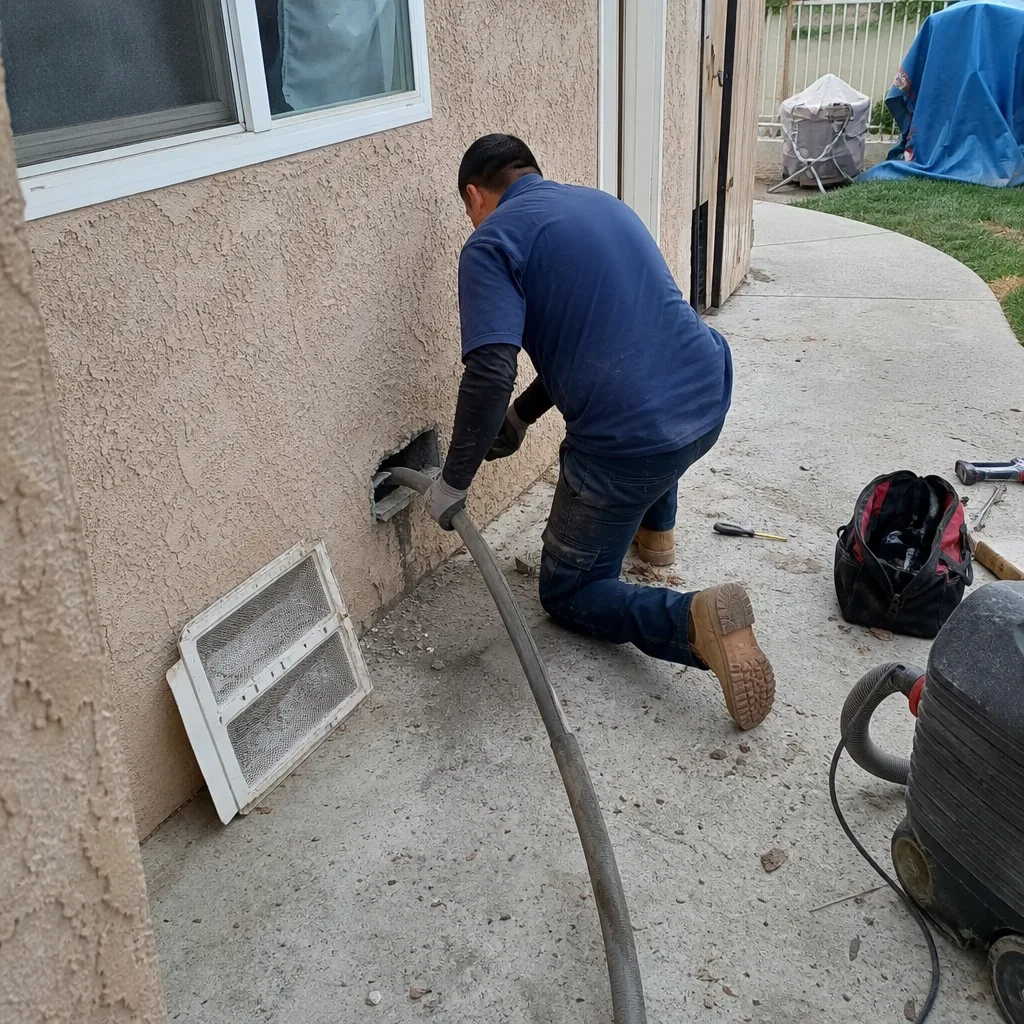
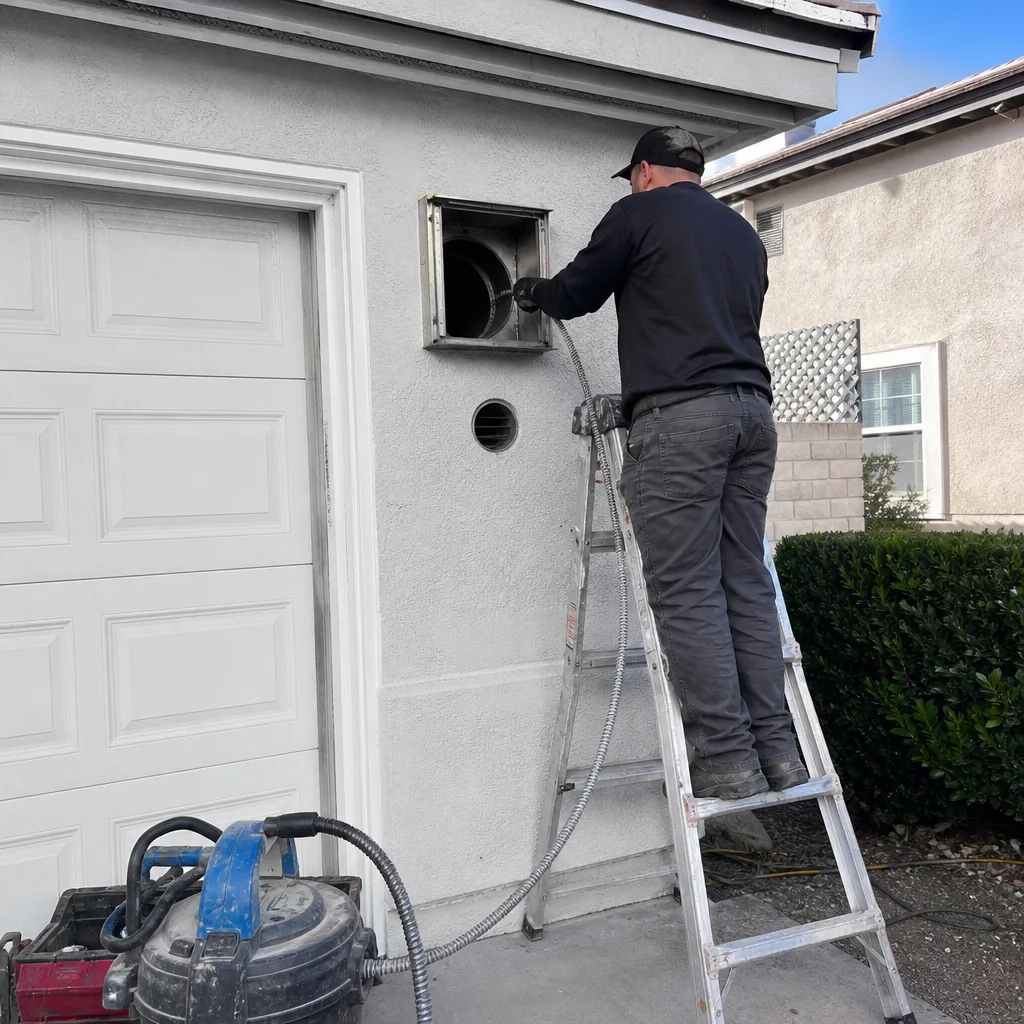
Here’s the thing about dryer vent cleaning in Rialto and San Bernardino: lint buildup is a documented leading cause of residential structure fires. The U.S. Fire Administration has flagged clothes dryer fires as a persistent risk, and the majority trace back to lint accumulation in the vent line. Dryer vent cleaning is a safety service. Treat it like one. It’s not an optional upsell. It’s a maintenance item that directly protects your home.
Signs you’re dealing with a dryer vent problem rather than an HVAC duct problem:
- The laundry room gets hot and humid when the dryer runs.
- Clothes take two or three cycles to dry fully.
- You see lint accumulating around the exterior vent hood.
- The dryer smells musty or hot when operating.
- It’s been more than a year since the vent was last cleaned.
These symptoms don’t respond to HVAC duct cleaning because the dryer vent is a separate run entirely. It connects your dryer to the exterior wall, and it requires its own attention. Lionheart offers dryer vent cleaning as a standalone service because we treat it as a fire-safety issue, not a happy-to-have add-on. If your dryer is running hot and your clothes aren’t drying, the problem is probably sitting in that vent line right now.
Common Mistakes to Avoid
- Hiring a cleaner without asking if they can repair. If the company can only vacuum, they’ll recommend vacuuming even when the problem is structural. Ask directly: do you offer air duct repair as a standalone service? If the answer is no, keep looking.
- Accepting a $49 whole-house special as a legitimate cleaning. San Bernardino homes average 10 to 20 vents. A genuine professional cleaning with Rotobrush or Nikro equipment takes hours and costs accordingly. The $49 special buys you a shop vacuum run through a few visible registers while the real contamination stays put.
- Ignoring the moisture source when mold is found. Mold in ducts is a moisture problem first and a mold problem second. Fix the water, then the contamination. Do it in reverse and you’ll be doing it again within a year.
- Treating dryer vents and HVAC ducts as the same system. They’re separate runs with separate failure modes. Clogged dryer vents cause fires, not air quality problems. HVAC duct issues cause air quality problems, not dryer fires. Clean both, but for different reasons.
- Skipping the post-cleaning verification. A legitimate cleaning should include before-and-after photos of your actual ducts. If the company can’t show you what was cleaned, you have no way to verify that anything was cleaned. In San Bernardino’s market, where low-cost operators dominate, verification is the difference between a receipt and a result.
- Waiting until symptoms get bad before calling. Disconnected ducts, return breaches, and collapsed runs get worse over time, not better. The longer a breach sits open, the more contaminated the system becomes and the more work it takes to correct. Early repair is cheaper than late remediation.
See the difference
 Before
 After
 Before
 After
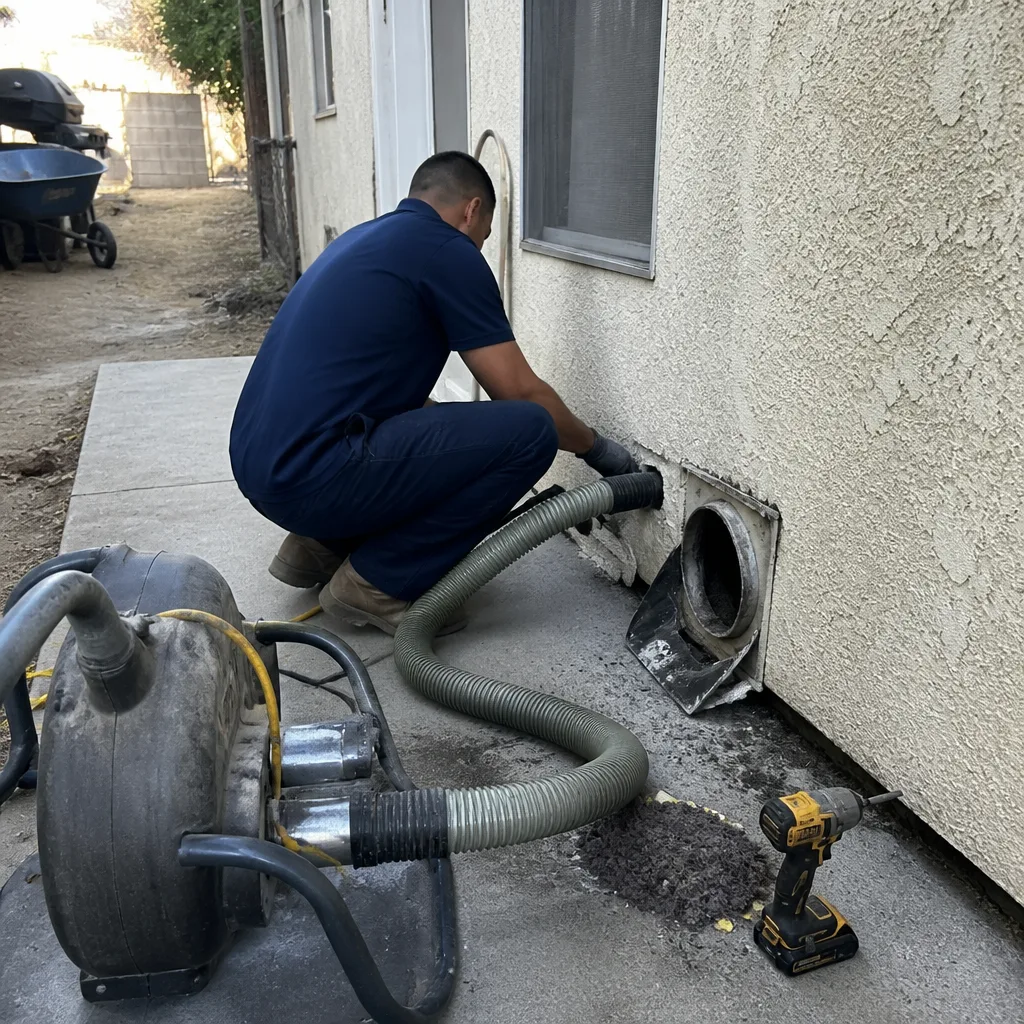 Before
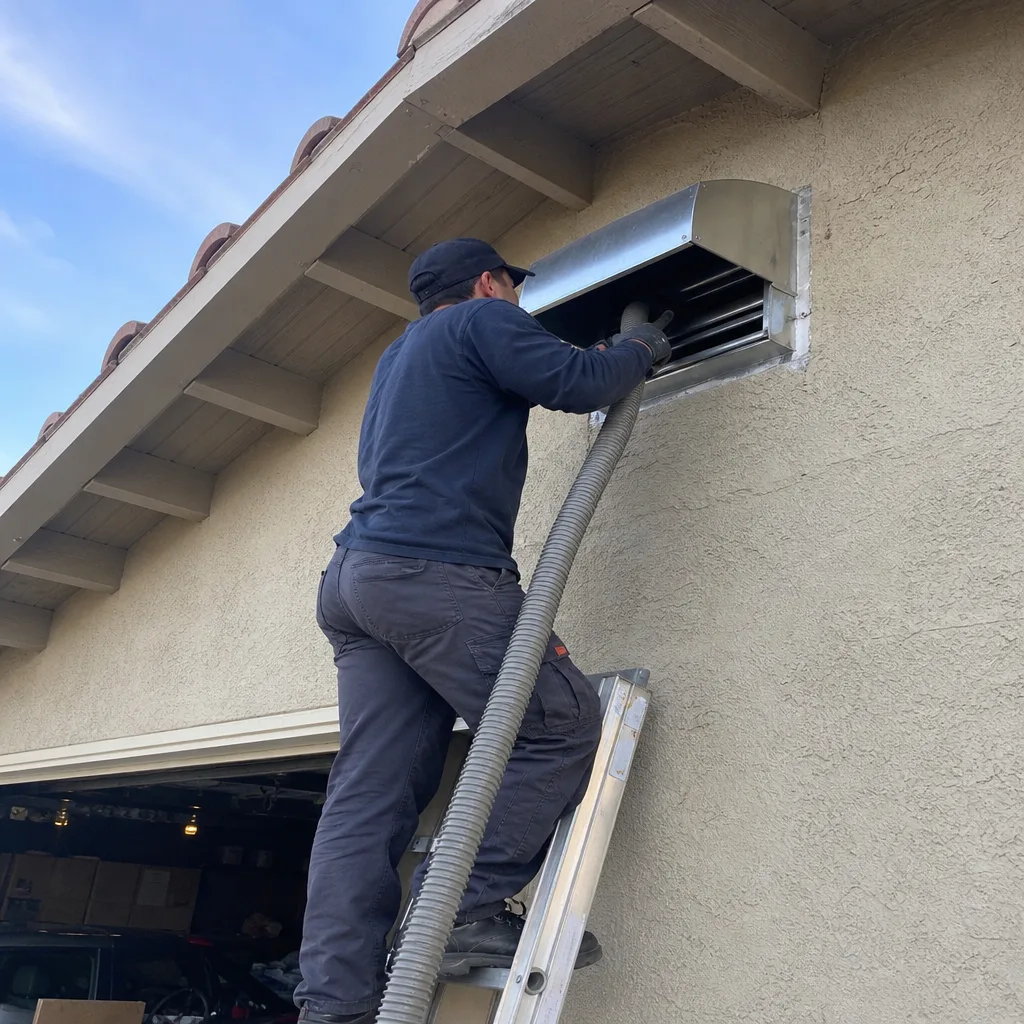 After
When to Call a Professional
Call a professional when you notice dust accumulating within weeks of a cleaning, persistent musty odor that survives filter changes, one room with dramatically different airflow than adjacent rooms, visible mold on register covers or inside visible duct surfaces, or a dryer that takes more than one cycle to dry clothes. These are structural and contamination issues that household fixes cannot address. A professional with negative-pressure diagnostic equipment can identify a breach in minutes that would take a homeowner days to find, if they ever found it at all. If you’re in San Bernardino and any of these symptoms sound familiar, Lionheart Air Duct Cleaning offers free estimates and can tell you whether you’re looking at a cleaning job, a repair job, or both. Call (855) 356-4382 and we’ll help you figure out exactly what you’re dealing with.
Frequently Asked Questions
Persistent musty odor after cleaning almost always means the cleaning addressed surface contamination while leaving a source untouched. The source is typically a return cavity used as an unsealed duct, a breached return pulling crawlspace or attic air, or microbial growth on the evaporator coil. None of these respond to duct vacuuming alone. If the odor returns within a month, pressure-test the system and inspect the return side before paying for another cleaning. Call (855) 356-4382 and we can walk you through the diagnostic process.
Professional air duct cleaning in San Bernardino typically runs $450 to $900 for a full system, depending on home size, number of vents, and accessibility. Prices below $200 almost always indicate a superficial cleaning that skips the trunk line and main return. A legitimate cleaning with professional equipment takes three to five hours. If the estimate doesn’t reflect that time commitment, the scope is probably incomplete. For an exact quote on your system, call (855) 356-4382. Estimates are free.
Cheap duct cleaning quotes usually reflect cheaper scope, not better pricing. A $49 or $99 special typically covers a handful of visible supply registers with a portable vacuum, while the trunk line, return ductwork, and air handler go untouched. That’s how the bait-and-switch works: the advertised price gets a crew to your door, and the upsell to a real cleaning happens after they arrive. Professional cleaning with Rotobrush or Nikro equipment costs more because it takes longer and actually removes contamination from the entire system. The low price was never for a complete job.
Demand before-and-after photos of your actual duct interior. Any legitimate company can provide them, because professional equipment includes camera verification. Compare the photos: the before should show visible debris, and the after should show clean duct surfaces, not just damp spots where a rag was wiped. If a company refuses or claims their equipment can’t take photos, you have no way to verify the work happened at all. Verification is standard practice for professional-grade operations and should be included in the service.
Every three to five years is a reasonable interval for most San Bernardino homes, though factors like pets, recent construction, nearby wildfires, and respiratory conditions in the household can shorten or lengthen that timeline. If you’ve had a rodent problem, a water leak, or major remodeling, clean sooner. If your system was properly sealed after the last cleaning and you’re not seeing symptoms, five years is defensible. Anyone pushing annual cleaning without a specific reason is selling a subscription, not a service.
You can clean visible register covers and replace filters. You cannot clean the interior of duct runs without professional equipment, and attempts to do so with household vacuums can damage flex duct, dislodge connections, and send debris deeper into the system. The trunk line, return runs, and air handler require negative-air equipment and brushing systems designed for the job. If you’re motivated by cost, spread the investment out by addressing the most contaminated sections first rather than attempting a DIY cleaning that may create a repair bill later. Call (855) 356-4382 for an honest assessment of what your system actually needs.
The Bottom Line
Duct cleaning fails when the wrong problem gets treated. If your home has persistent dust, stubborn odor, or uneven airflow, the odds are high that you’re dealing with a structural duct issue that cleaning alone cannot solve. Breached returns, disconnected flex runs, collapsed liners, and unsealed cavities all require repair capability that most cleaning companies don’t have. Before you pay for another cleaning, demand diagnostic work: pressure testing, camera verification, and an honest answer about whether your ducts need fixing before they need vacuuming. The right company does both. The right company is the one that tells you what’s actually wrong, even when the answer is more complicated than a $49 special. Lionheart Air Duct Cleaning works across Honeywell and Aprilaire system configurations and brings repair capability to every job. We clean it, we repair it, we stand behind it.
Written by the team at Lionheart Air Duct Cleaning, serving San Bernardino since 2013.