
Last updated November 2, 2026
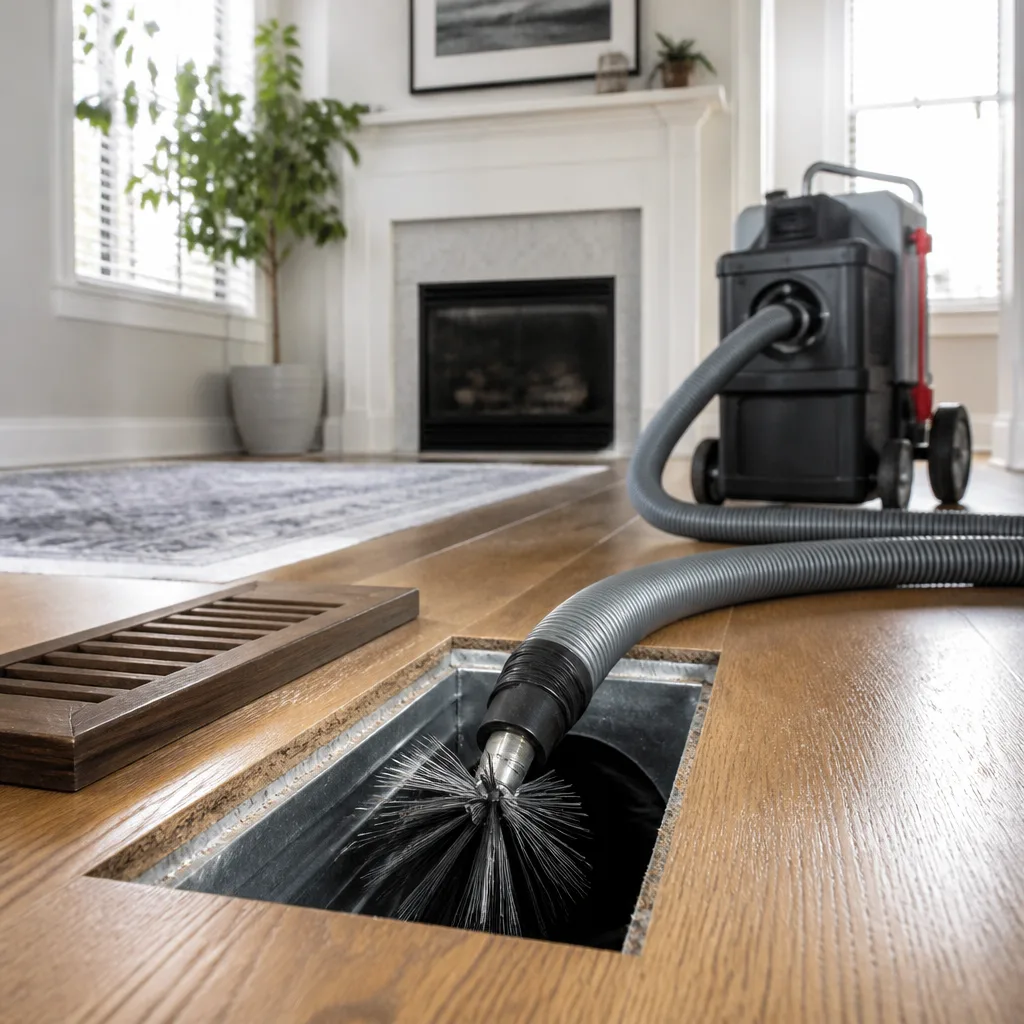 Whole-home duct cleaning
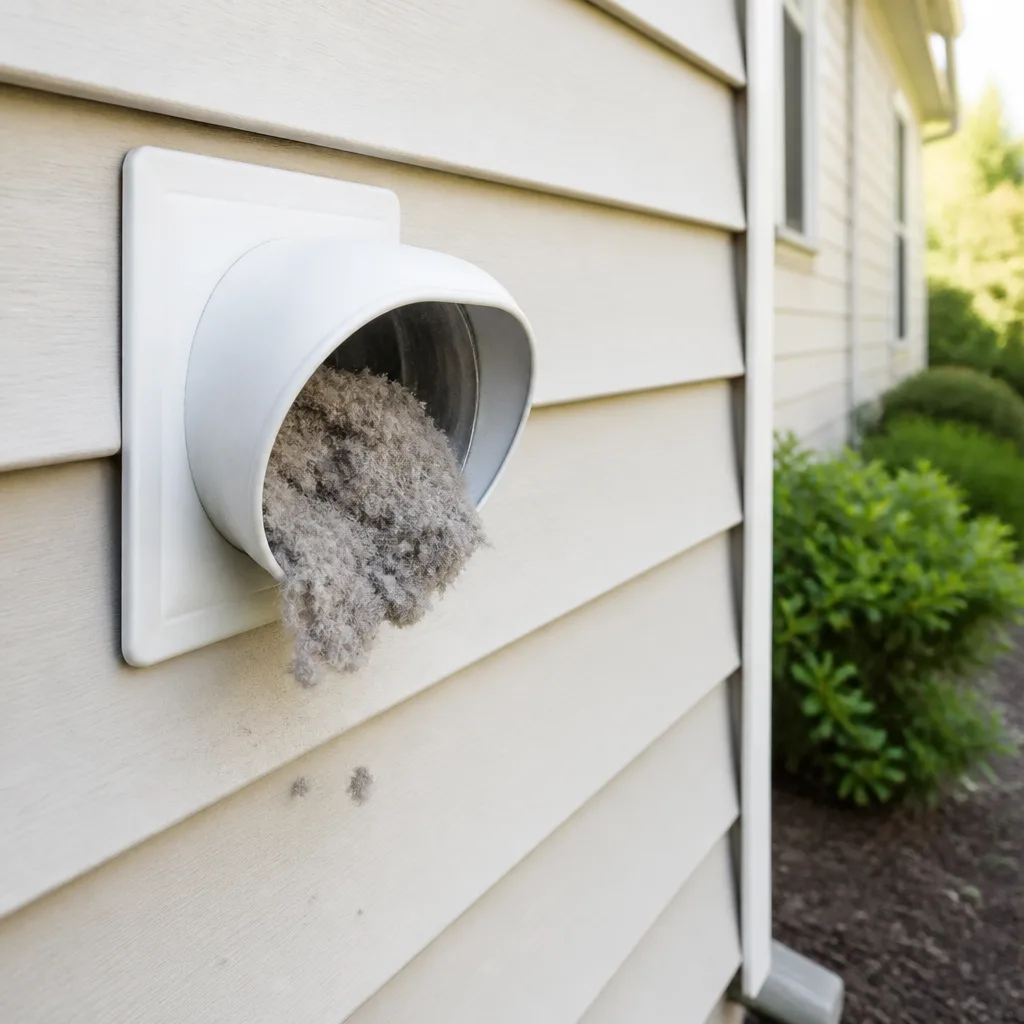 Dryer vent cleaning
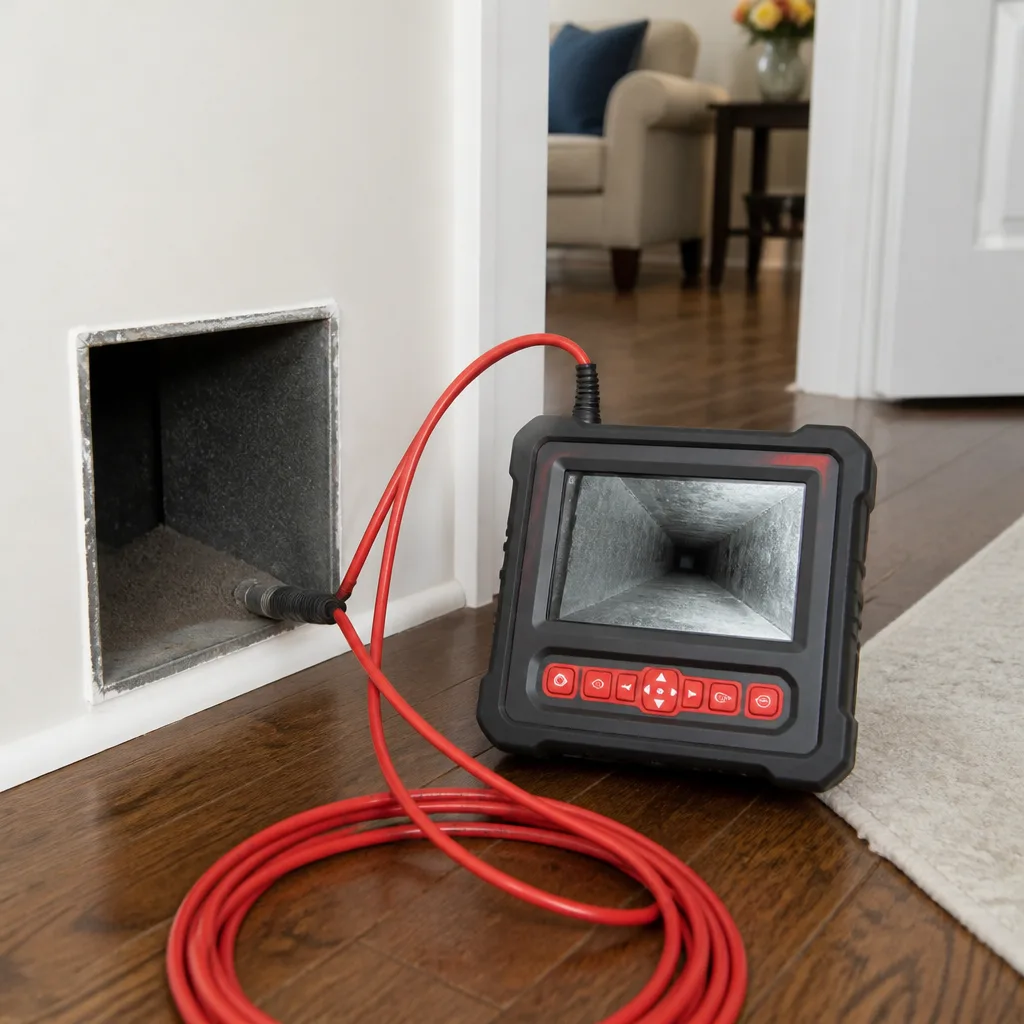 Camera inspection
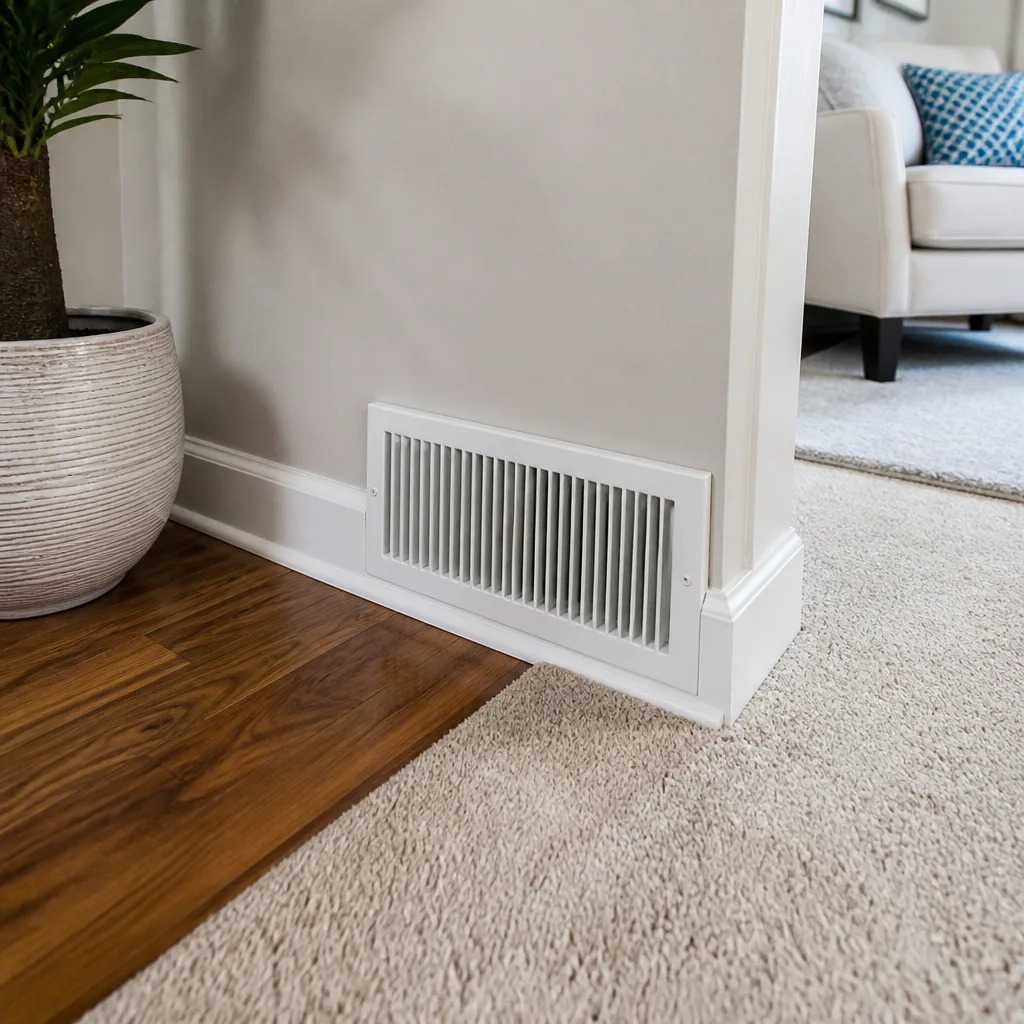 Sanitizing & deodorizing
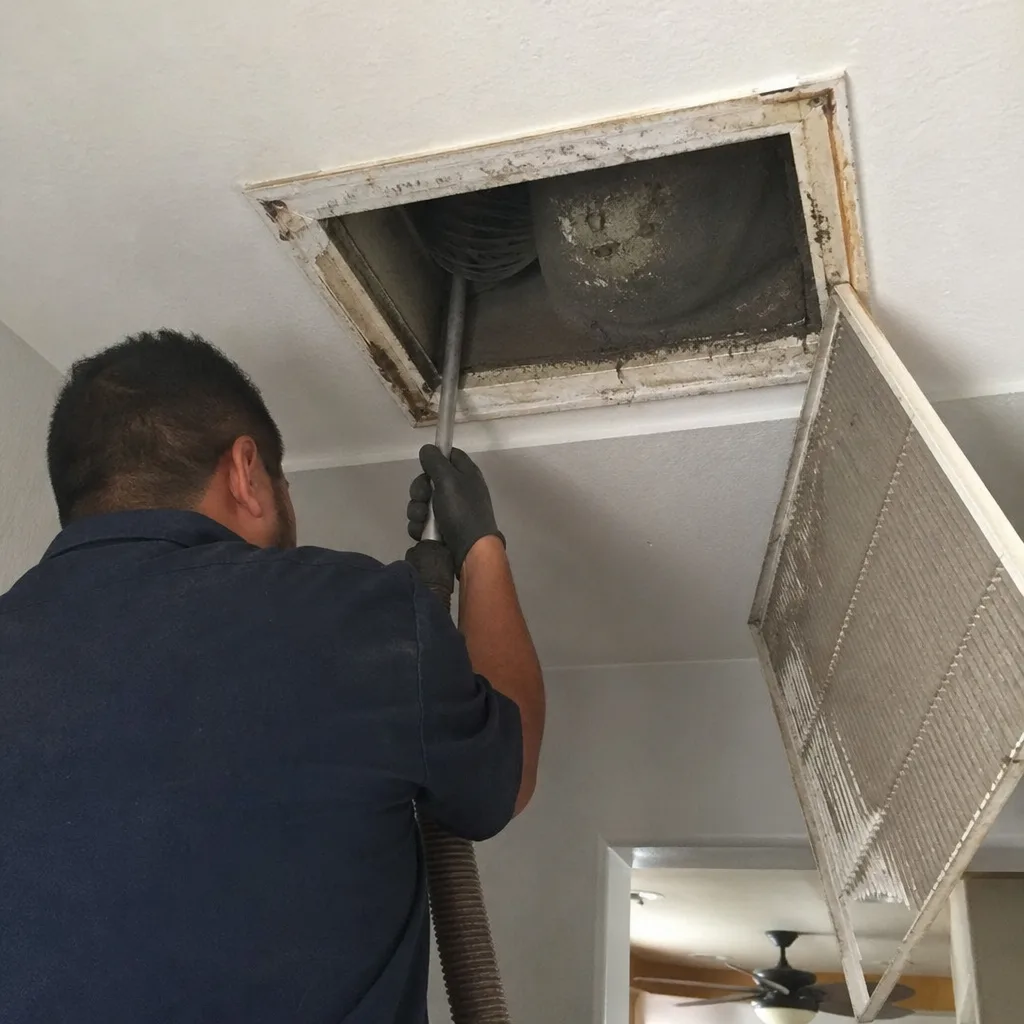
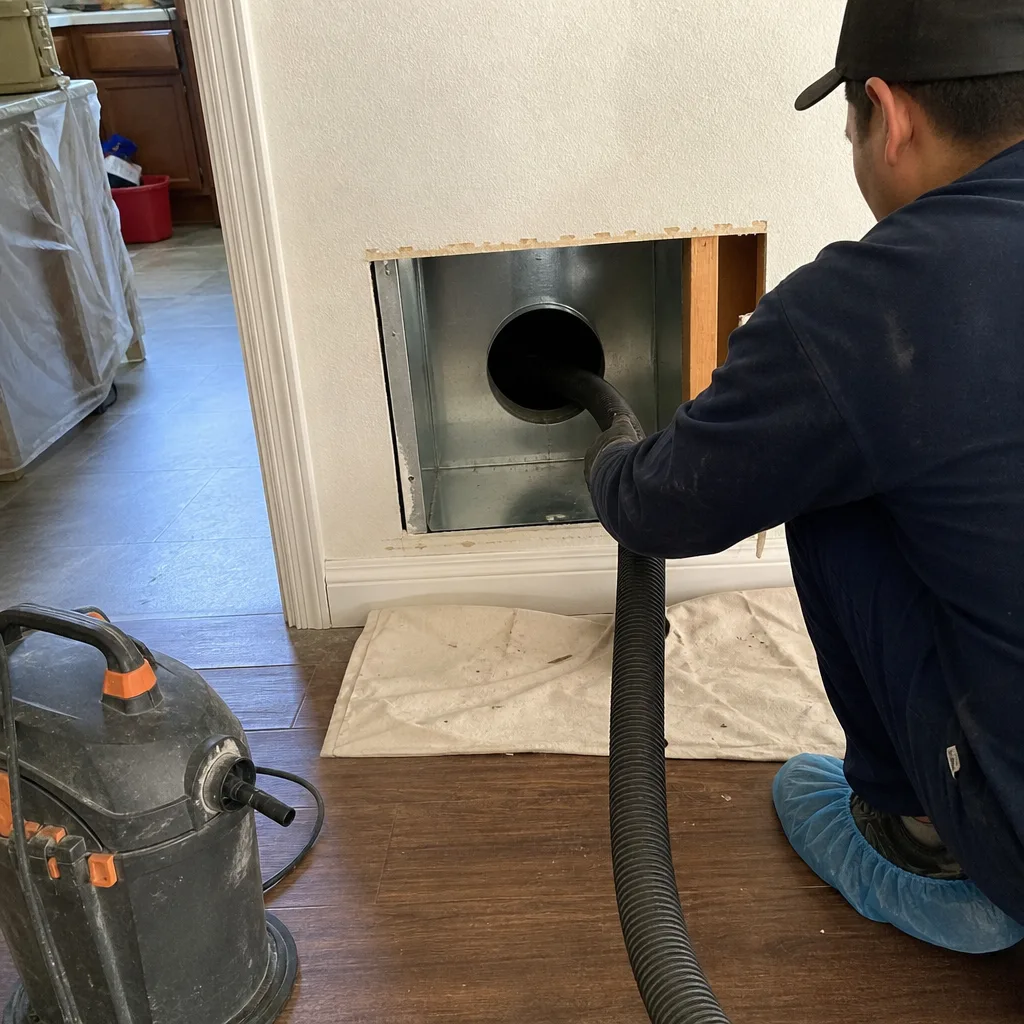
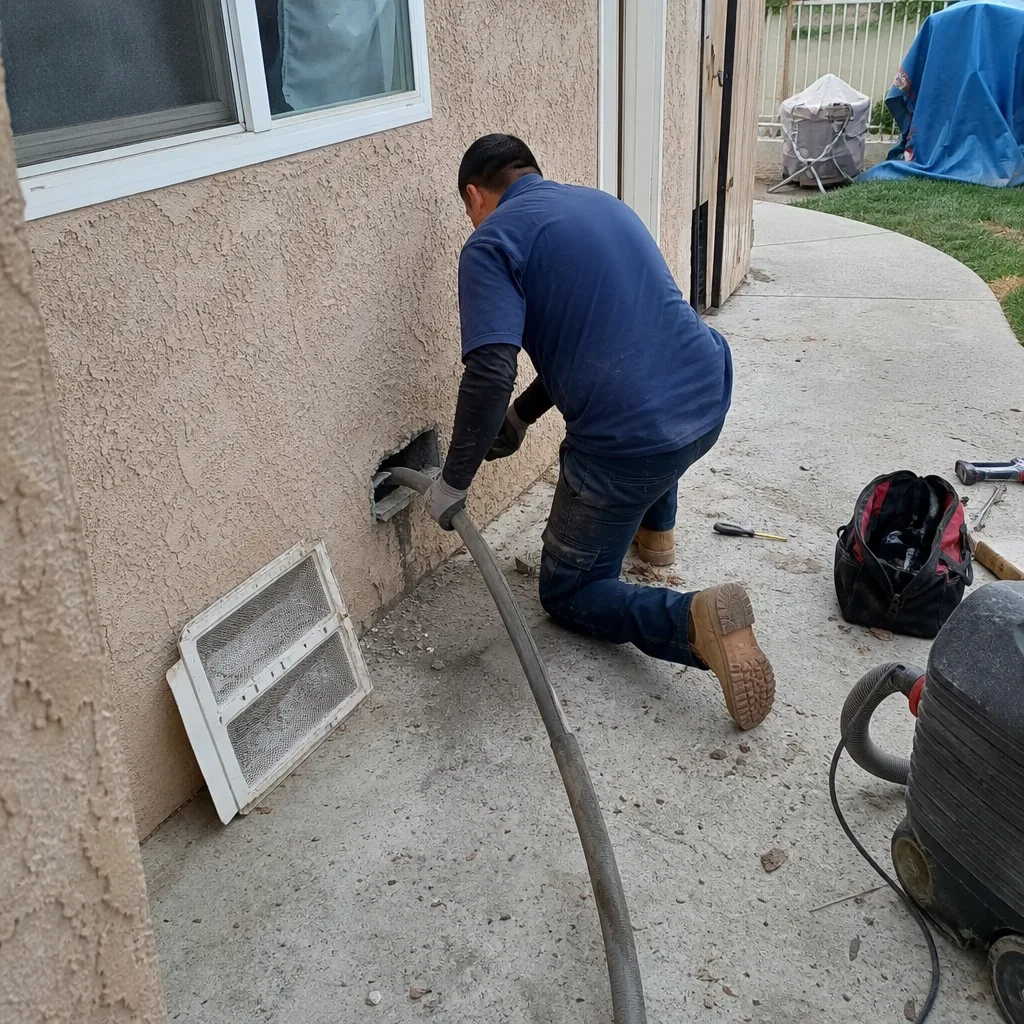
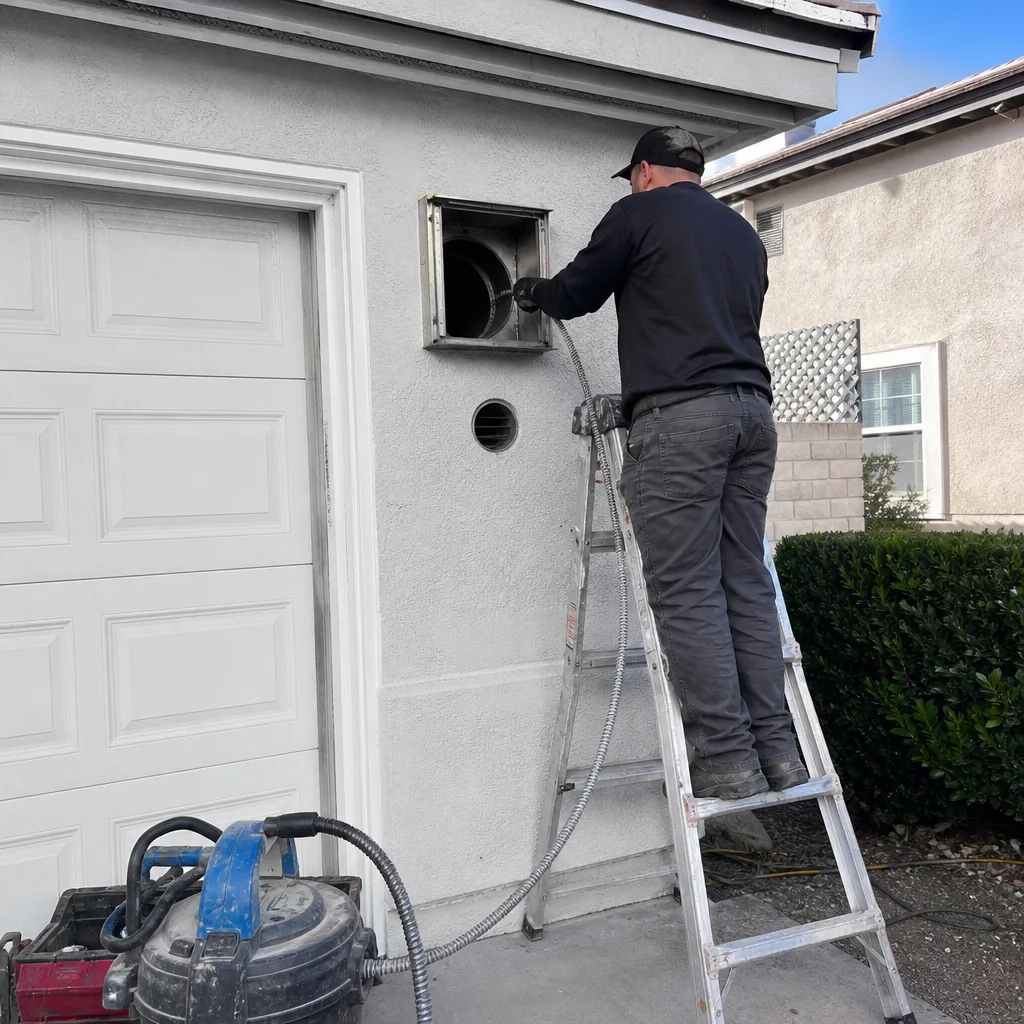
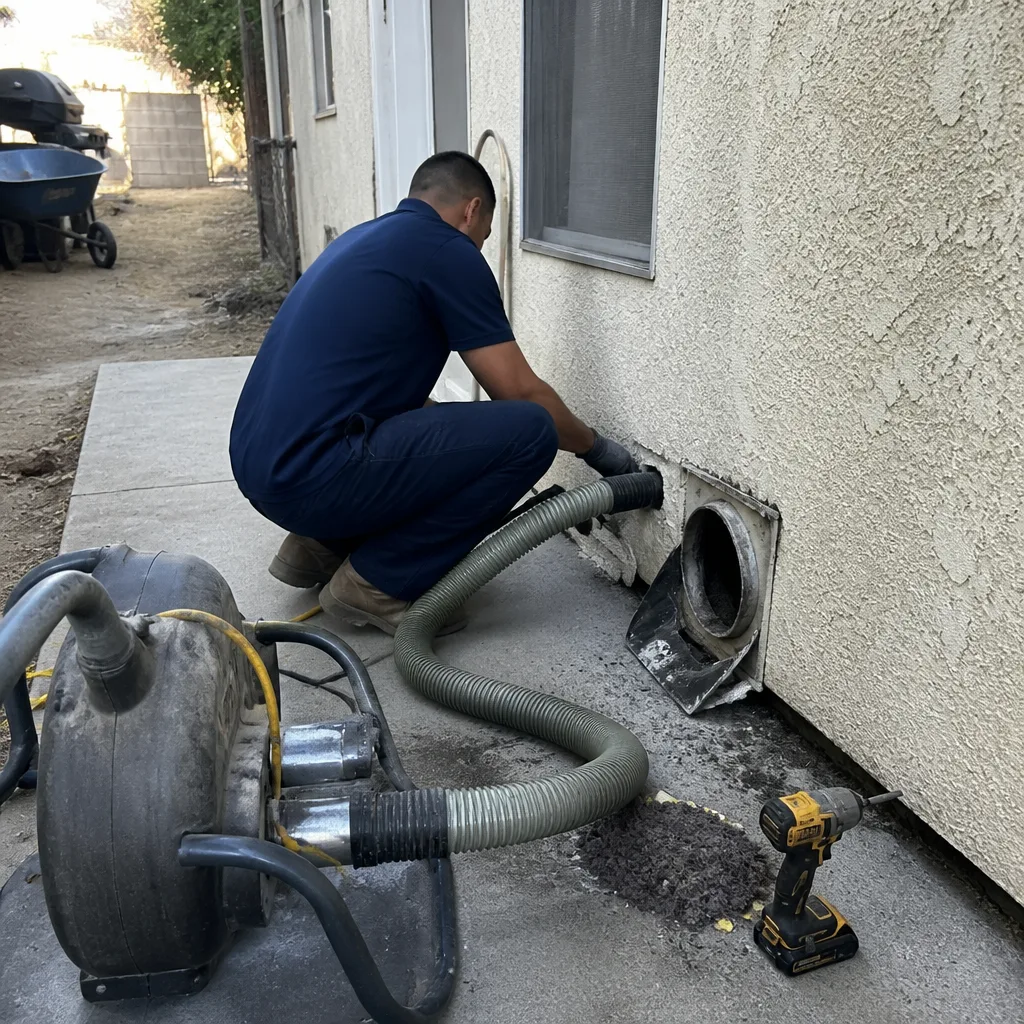
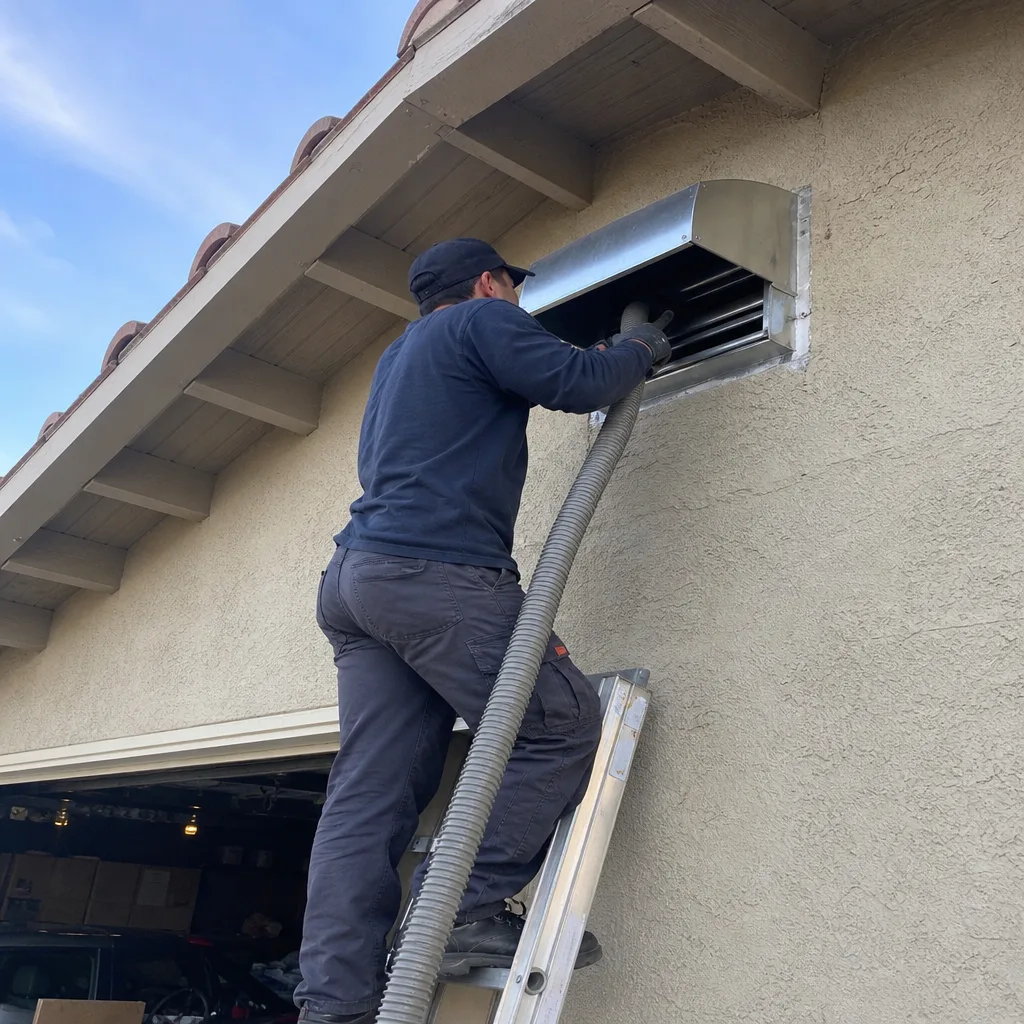
Whole-system duct and dryer vent check with before-and-after photos - you see exactly what came out of your vents
That "$99 whole-house special" is a bait ad - the real number appears once they are in your hallway, or the "clean" is a shop-vac at the register. We photograph the inside of your ducts before and after instead.
Air Duct Cleaning Warning Signs: A San Bernardino Homeowner’s Reference Guide
Uneven room temperatures in a San Bernardino home aren’t always a thermostat issue. They’re frequently the first measurable sign of duct blockage, disconnection, or collapse. Most homeowners spend hundreds on HVAC diagnostics and refrigerant checks before anyone actually looks inside the ducts. This The Complete Air Duct Cleaning Guide for San Bernardino Homeowners covers the early physical and performance signals that appear months before a duct problem becomes an expensive repair, so you can act while cleaning is still the answer instead of replacement.
Styles & brands we work with
- Whole-home duct cleaning
- Dryer vent cleaning
- Camera inspection
- Sanitizing & deodorizing
Quick Answer
The earliest reliable warning signs of contaminated or failing ductwork in San Bernardino are rooms that won’t hold temperature, a sudden rise in dust accumulation on flat surfaces within 48 hours of cleaning, airflow that feels weak or static-heavy at certain registers, and a musty or burning odor that appears only when the system runs. Any one of these justifies a camera inspection. Waiting until you see visible debris at the register means the problem has already progressed past the cleaning-only stage.
Table of Contents
- Performance Signals Most Homeowners Misdiagnose
- Odor Signals: Three Distinct Smells, Three Different Problems
- Visual Signals You Can Check Yourself
- What a Camera Inspection Reveals That Symptoms Alone Cannot
- The Threshold Test: Cleaning vs. Repair vs. Replacement
- San Bernardino-Specific Factors That Accelerate Duct Problems
- Common Mistakes to Avoid
- When to Call a Professional
- Frequently Asked Questions
- The Bottom Line
Performance Signals Most Homeowners Misdiagnose
Duct problems don’t announce themselves with a bang. They show up as subtle HVAC behaviors that get blamed on the equipment, the thermostat, or the age of the house. In San Bernardino, where summer temperatures routinely pass 100°F, a duct system losing conditioned air into an attic can add $80 to $140 to a monthly cooling bill without a single visible symptom. Here are the performance signals worth taking seriously.
Rooms That Won’t Cool Below 80°F
When one bedroom sits at 82°F while the hallway holds 74°F, the problem is almost never the AC unit itself. A central system pushes air through a closed network of ducts. If a section of flex duct has collapsed, disconnected, or been crushed by attic storage, that branch simply doesn’t deliver. The room gets whatever air seeps in through the door. Before calling an HVAC tech to add refrigerant or replace a compressor, ask this: does the problem follow the room, or does it follow the system? Room-specific temperature failure points to the duct run serving that room. We’ve found disconnected branch ducts behind this exact complaint in homes across San Bernardino, where attic temperatures regularly exceed 140°F and flex duct adhesive fails over time.
Static-Heavy Air at the Register
Hold your hand two inches from a supply register. Air should feel smooth and consistent. If it feels choppy, static-laden, or oddly turbulent, that’s a restriction downstream or an obstruction in the duct itself. Common culprits: collapsed inner liner on flex duct, a damper that has worked itself partially closed, or a dense plug of debris. The static sensation is air fighting its way past something. It’s not normal, and it doesn’t fix itself.
HVAC Short-Cycling
Short-cycling means the system starts, runs for a few minutes, shuts off, then restarts shortly after. Most people associate this with an oversized AC unit. But a restricted duct system raises static pressure inside the air handler, which can trip the high-limit switch and shut the system down to protect itself. If the system short-cycles and you’ve ruled out thermostat placement and filter condition, duct restriction should be next on the diagnostic list. A residential system with a properly designed and clean duct network should run in longer, steadier cycles.
Odor Signals: Three Distinct Smells, Three Different Problems
Smell is one of the most underused diagnostic tools in a home. Ducts carry odor directly from the problem to your nose. The smell you notice tells you more than most homeowners realize.
Musty or Damp Odor
A persistent musty smell when the system runs typically means microbial growth somewhere in the air stream: in the duct liner, on the coil, or in accumulated debris that has absorbed moisture. In San Bernardino’s climate, this is less common year-round than in coastal cities, but it appears in homes with evaporative cooler crossover, plumbing leaks near return ducts, or condensation forming on the air handler. If the odor is strongest in specific rooms, the growth is likely in that duct branch. This is not a smell to mask with air fresheners. The source material has to come out.
Burning or Dusty Odor on First Run
A dusty smell when the heat kicks on for the first time each winter is so common that people assume it’s normal. It is common, and it is also contamination. What you’re smelling is months of settled dust, skin cells, pollen, and debris being incinerated by the heat exchanger. If the smell clears within 30 minutes, the duct system held enough particulate to warrant cleaning before next season. If it lingers for days, the buildup is substantial. In San Bernardino, the Santa Ana winds push fine particulate into homes through every small gap, and that particulate settles in ductwork during the off-season. The first heat cycle bakes it. The smell is a warning, not a quirk.
Chemical or Plastic Odor
A chemical smell that appears only when the system runs and doesn’t go away after a few cycles is a different category of problem. This can signal off-gassing from deteriorating duct liner, adhesive failure on flex duct connections, or even a foreign object that has fallen into the system and is now heating or melting. If the smell is sharp, sweet, or plastic-like, turn the system off and get a camera inspection before running it further. This is one of the few odor signals that should stop normal operation.
Visual Signals You Can Check Yourself
You don’t need a camera to spot the early warning signs. You need to know where to look.
Debris at Return Grilles
The return grille is the mouth of your system. Everything the system breathes in passes through it. If you pull the grille off (two screws on most residential homes) and find a mat of gray fiber, hair, and dust caked on the backside, that same material is coating the inside of the return duct and the filter housing. A return grille that looks like a dryer lint trap means the system has been running with inadequate filtration, and the duct network has been accumulating whatever the filter didn’t catch.
Visible Duct Sag in Accessible Attic Sections
In San Bernardino’s summer heat, attic temperatures regularly climb past 140°F. Flex duct has a temperature rating, but sustained exposure to that kind of heat, combined with the pull of gravity across long horizontal runs, causes the inner liner to separate from the insulation jacket. The duct begins to sag between supports. If you see drooping lines in an attic that has accessible walkways, that sag is pinching airflow. The duct needs re-supporting or replacement, not just cleaning. Cleaning a collapsed duct is like vacuuming a kinked garden hose; the problem is the kink.
Discoloration Around Registers
Look at the paint or drywall directly above and around your supply registers. Brown or gray streaking means air is escaping around the register box rather than through it, and that escaping air carries whatever’s in the duct cavity. In older San Bernardino homes with original register boxes, the box-to-drywall seal fails over time and every heating or cooling cycle blows a small amount of attic air (and attic dust) into the living space. If the streaking appears at multiple registers, the issue is systemic, not cosmetic.
What a Camera Inspection Reveals That Symptoms Alone Cannot
Here’s the part most guides skip: the symptom you notice is rarely the problem itself. It’s the downstream effect. A camera inspection of the duct interior shows what’s actually happening, and the findings are frequently not what the homeowner expected.
Collapsed Flex Duct
A room that won’t cool. A register with no airflow. A static pressure buildup that makes the system sound louder at other vents. All these symptoms can trace back to one section of flex duct that has collapsed. The camera shows the inner liner flattened against the bottom of the jacket, reducing airflow to a fraction of design capacity. In our experience, this is one of the most common findings in San Bernardino attics with duct runs older than 15 years. Cleaning does not fix this. The damaged section must be replaced or re-supported.
Disconnected Joints
When two sections of duct separate at a joint, the system quietly air-conditions the attic. The camera shows a clean gap where conditioned air pours into unconditioned space. This is a repair issue that looks like a performance issue. The telltale sign: a room that is substantially warmer than the rest of the house, combined with an electric bill that has crept upward for no obvious reason. Sealing the joint restores both comfort and efficiency.
Rodent Nesting and Contamination
San Bernardino has an established rodent population, and ductwork is warm, protected, and accessible from attics and crawlspaces. A camera inspection frequently reveals nesting material, droppings, and chewed duct liner. This is a contamination issue requiring removal of the material, disinfection of the duct surfaces and replacement of damaged sections, not just a pass-through cleaning. The reason this matters more in San Bernardino than in coastal cities: the dry climate pushes rodents into homes seeking moisture, and the attic-ducted systems common in the city give them direct access.
The Threshold Test: Cleaning vs. Repair vs. Replacement
The single most important question a homeowner can ask before spending money on Air Duct Cleaning is this: is this a cleaning problem or a repair problem? Using the wrong service doesn’t just waste money. It leaves the underlying condition in place to keep doing damage.
When Cleaning Is the Correct Answer
Cleaning resolves the problem when the duct structure is intact and the issue is accumulated material: dust, pollen, hair, construction debris, pet dander, and light mold growth on non-porous surfaces. If the ducts are properly sealed, connected, and supported, professional source-removal cleaning restores the system to a clean interior condition. The signs that point toward cleaning as the solution: even airflow at all registers, no visible sag or damage in accessible sections, and contamination that accumulates uniformly across the system.
When Repair Must Come First
Repair is mandatory when the duct system itself has failed: collapsed flex, disconnected joints, torn outer jacket, or compromised support structure. Think of it this way: if the pipe is broken, cleaning the inside of the pipe doesn’t restore flow. In these situations, the repair must be completed first, then the system cleaned to remove accumulated debris and restore interior condition. At Air Duct Repair in Rialto, we address the structural failure before asking whether the interior needs cleaning, because the camera shows which problem came first.
When Replacement Is the Only Honest Recommendation
Sometimes the camera reveals a system past saving: rodent-chewed duct liner throughout, mold growth penetrating porous insulation, or flex duct that has degraded to the point where the inner liner separates from the jacket across multiple runs. In these cases, replacement is less expensive in the long run than repeated cleaning and repair. The honest professional says so plainly. The bargain duct cleaner quotes a cleaning fee and sends a crew with a shop vacuum, regardless of what the system actually needs. That’s the difference between a diagnosis and a sales call.
San Bernardino-Specific Factors That Accelerate Duct Problems
San Bernardino’s climate and housing stock create conditions that most generic duct guides don’t account for. Understanding why your ducts are under more stress than a home in, say, Orange County helps you read the warning signs with local context.
Extreme Attic Heat and Duct Degradation
Attic temperatures in San Bernardino homes routinely exceed 140°F during summer afternoons. Flex duct is rated for sustained temperatures up to roughly 140°F (the exact rating depends on the manufacturer). Continuous operation at or near the rating limit accelerates degradation of the inner liner, and the adhesive on connections degrades faster. Homes in San Bernardino with original 1990s or 2000s flex duct are now hitting the age and thermal-exposure point where failure becomes common. We see it consistently in the neighborhoods south of the 210 and east of Waterman Avenue, where the housing stock is in its second or third decade.
Santa Ana Wind Particulate Load
The Santa Ana winds that sweep through the San Bernardino Valley carry fine dust and particulate from the high desert. That material enters homes through window gaps, door seals, and attic vents, then gets pulled into the return side of the HVAC system. Homes near the foothill transition zones, where wind exposure is strongest, accumulate particulate faster than homes in the valley floor. If you live in a wind-exposed area, your ducts are carrying a heavier particulate load between cleanings than a comparable home in a sheltered location.
Older Housing Stock and Duct Modification History
Many San Bernardino homes have been remodeled, room-added, or had HVAC systems retrofitted over the decades. Each modification creates new duct connections, and if those connections weren’t sealed properly, they become leak points. A home with a room addition built in 1998 and an HVAC replacement in 2011 may have three different generations of ductwork connected to one air handler. The camera inspection reveals which generation is failing. The answer is rarely “the whole system is bad.” It’s usually one branch, one joint, or one section.
Common Mistakes to Avoid
- Assuming the thermostat is the problem. When rooms don’t hold temperature, homeowners replace thermostats before checking air delivery. If the thermostat was working last year, it’s probably working now. The ducts are a more likely culprit.
- Running the system with a clogged filter, then blaming the ducts. A filter clogged to the point of collapse lets unfiltered air bypass entirely. What accumulates in the ducts after that is filter failure, not normal use.
- Quoting a per-vent price without seeing the system. Any company that prices duct cleaning per vent before inspecting the system doesn’t know what they’re cleaning. The camera defines the job, not the square footage of the house.
- Ignoring a burning smell that clears after 20 minutes. That smell is the system incinerating accumulated particulate. It clears because the material burns off. The buildup remains.
- Putting duct cleaning before duct repair. Cleaning a system with disconnected joints or collapsed sections is wasted money. The damage continues during and after the cleaning. Repair first, then clean.
- Using a $49 duct cleaning special as a “starter” service. The bargain price isn’t a starter. It’s a teaser designed to get a truck in the driveway, after which the invoice changes. Professional Lionheart Air Duct Cleaning home service quotes one flat price for the system, agreed before work begins, with no per-vent surprise pricing.
When to Call a Professional
Call when the warning signs are persistent rather than isolated: a room that won’t cool across multiple days, an odor that returns every time the system runs, visible debris at the return, or an electric bill that has climbed without a change in usage. Also call before you buy a home with existing ductwork; a camera inspection during escrow is far less expensive than discovering a collapsed branch duct in August. If you’ve had a rodent problem, a water leak near ductwork, or recent construction with drywall dust, schedule a camera inspection even without symptoms. Those events create contamination that visual inspection alone won’t catch. Lionheart Air Duct Cleaning offers free estimates in San Bernardino. Call (855) 356-4382 and we’ll put a camera in the ducts before we quote anything.
Frequently Asked Questions
Professional air duct cleaning for a typical San Bernardino single-family home (2,000 to 2,500 square feet, 10 to 14 registers) generally runs between $450 and $900 depending on system complexity, number of air handlers, and contamination level. Homes with extensive rodent remediation or multiple systems fall higher. A flat per-system price, agreed before work starts, protects you from the per-vent pricing games that bait-and-switch operators use to inflate invoices once the van is in the driveway. Call (855) 356-4382 for an exact quote. Estimates are free.
Cheap duct cleaning quotes are almost always bait pricing. The operator quotes a low number based on a limited number of vents or a stripped-down service, then finds “additional work” once the crew arrives. The work is either up-charged or performed with inadequately sized equipment that doesn’t achieve source removal. Professional-grade systems like Rotobrush and Nikro equipment, paired with containment methodology, cost more to operate and produce a different result than a shop vacuum and a drill brush. For Choosing the Right Air Duct Cleaning Brand: A Buyer’s Guide for San Bernardino.
Demand before-and-after camera footage of the duct interior. A professional duct cleaning company runs a camera before starting and after finishing, and provides both sets of images. If a company cannot or will not show you the inside of your ducts before and after, you cannot verify the work. This is the single most important verification step in the entire process.
Most San Bernardino homes benefit from professional duct cleaning every 3 to 5 years, with more frequent service for homes with pets, smokers, recent renovation dust, or a documented rodent problem. Homes in wind-exposed foothill areas that accumulate Santa Ana particulate faster may need service on the shorter end of that range. The honest answer depends on what the ducts look like on camera, not on a calendar.
Yes. Dust mites, pollen, pet dander, and mold spores accumulate in ductwork and get redistributed every time the system runs. For someone with a respiratory condition, that’s a continuous exposure source that room-level cleaning never addresses. Removing the reservoir of allergens from the air stream is the most direct indoor air quality improvement available for an existing home.
To a point. The burning smell is settled dust incinerating on the heat exchanger. Cleaning removes that settled dust, so the next first-run-of-season cycle is substantially cleaner. But if the smell is persistent or chemical rather than dusty, the problem is not settled particulate. It’s deteriorating material or a foreign object, and that requires a camera diagnosis rather than cleaning.
The Bottom Line
Duct problems in San Bernardino announce themselves early, but through signals most homeowners attribute to other causes: uneven room temperatures, weak register airflow, short-cycling, and odors that seem ambient rather than systemic. Reading those signals correctly is the difference between a cleaning that costs hundreds and a repair or replacement that costs thousands. The threshold test is structural: intact ducts with accumulated contamination call for cleaning. Damaged, disconnected, or collapsed sections call for repair first. When in doubt, a camera inspection ends the speculation in about half an hour, showing you exactly what’s inside your system and what it needs. Catch the warning signs before the contamination load or structural damage forces the more expensive path. Dryer Vent Cleaning in Rialto and Air Duct Cleaning in Rialto apply the same diagnosis-first standard: we look before we quote, and we report what we find.
Written by the team at Lionheart Air Duct Cleaning, serving San Bernardino since 2013. Explore our more guides & resources.
See the difference
 Before
 After
 Before
 After
 Before
 After