
Last updated November 2, 2026
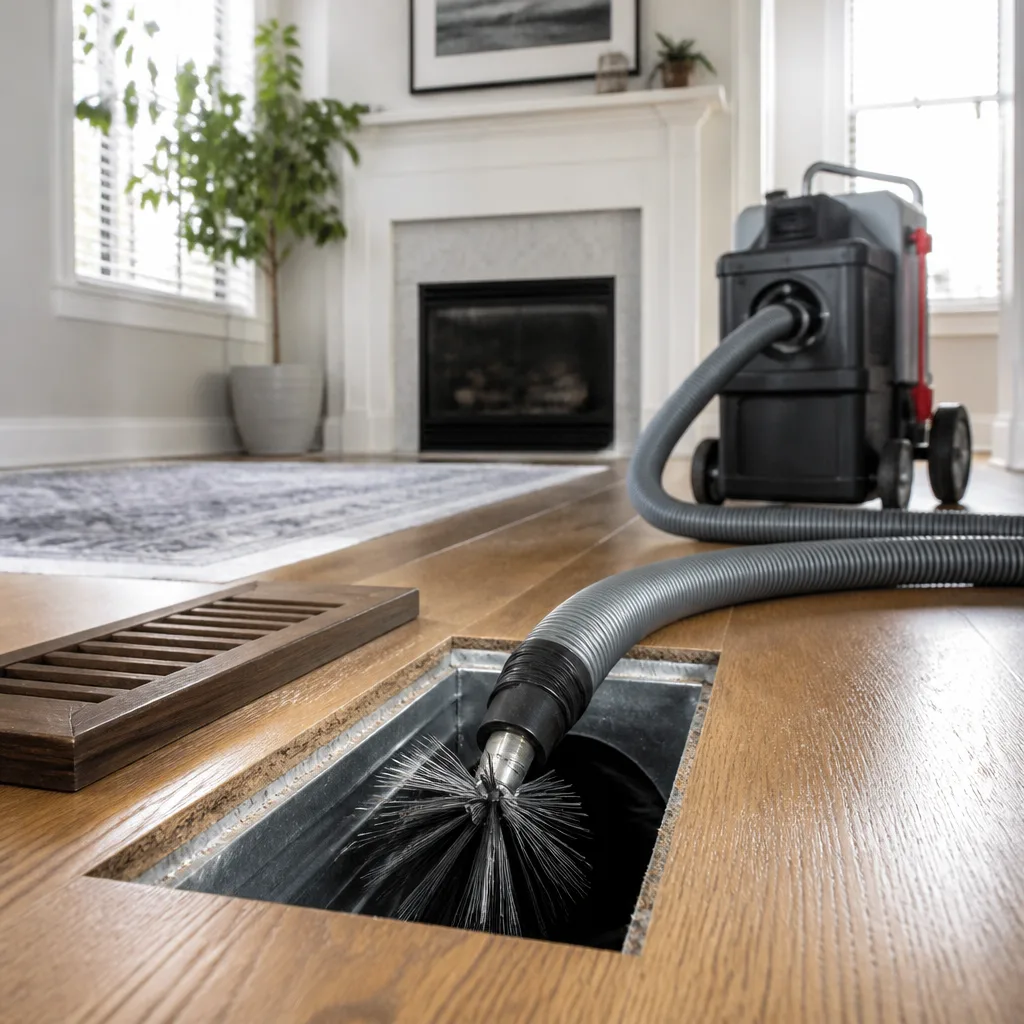 Whole-home duct cleaning
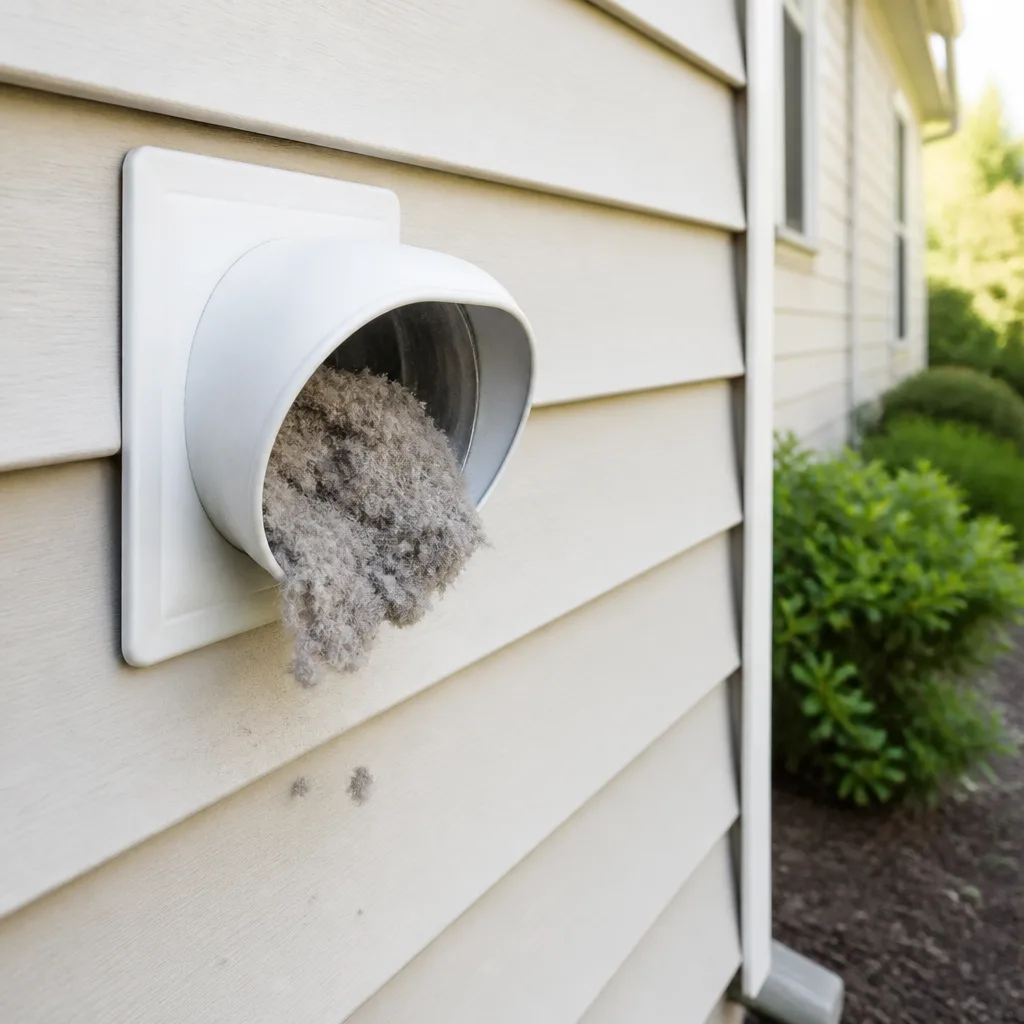 Dryer vent cleaning
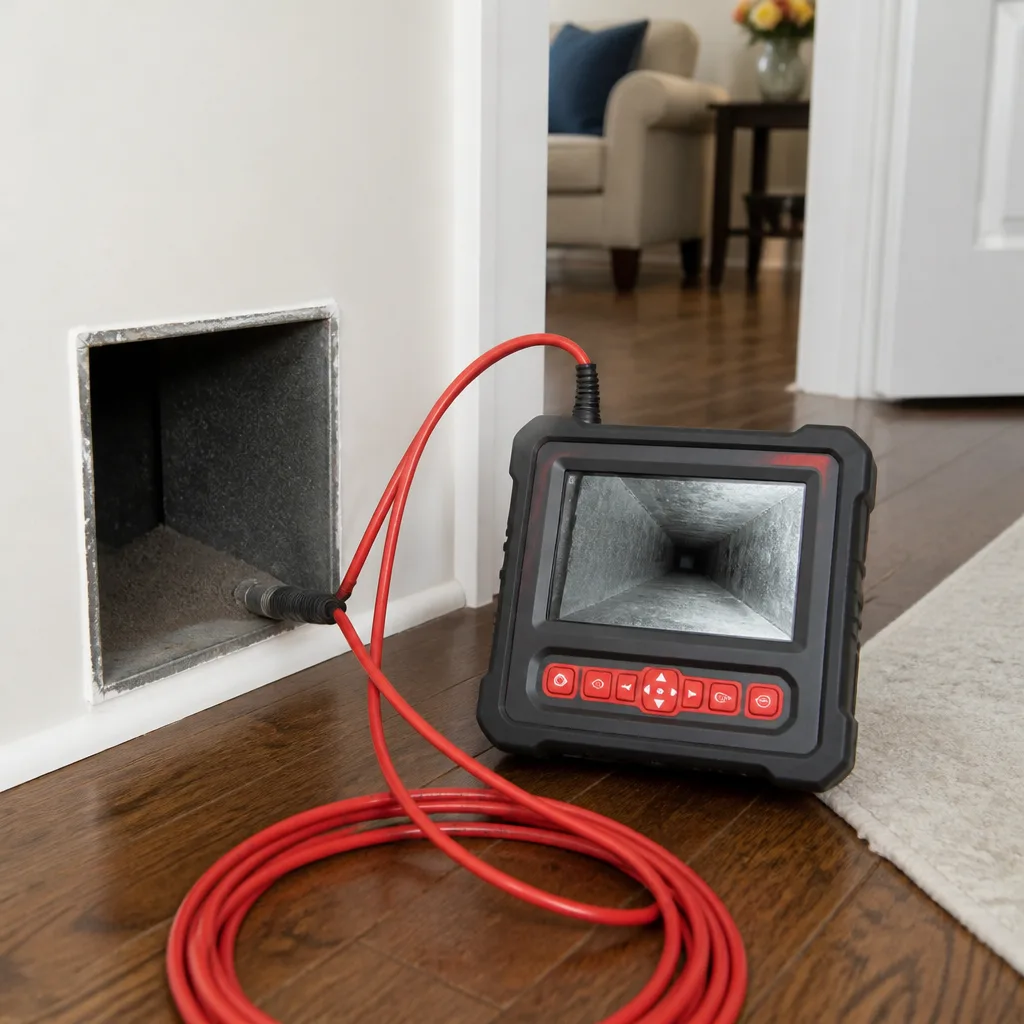 Camera inspection
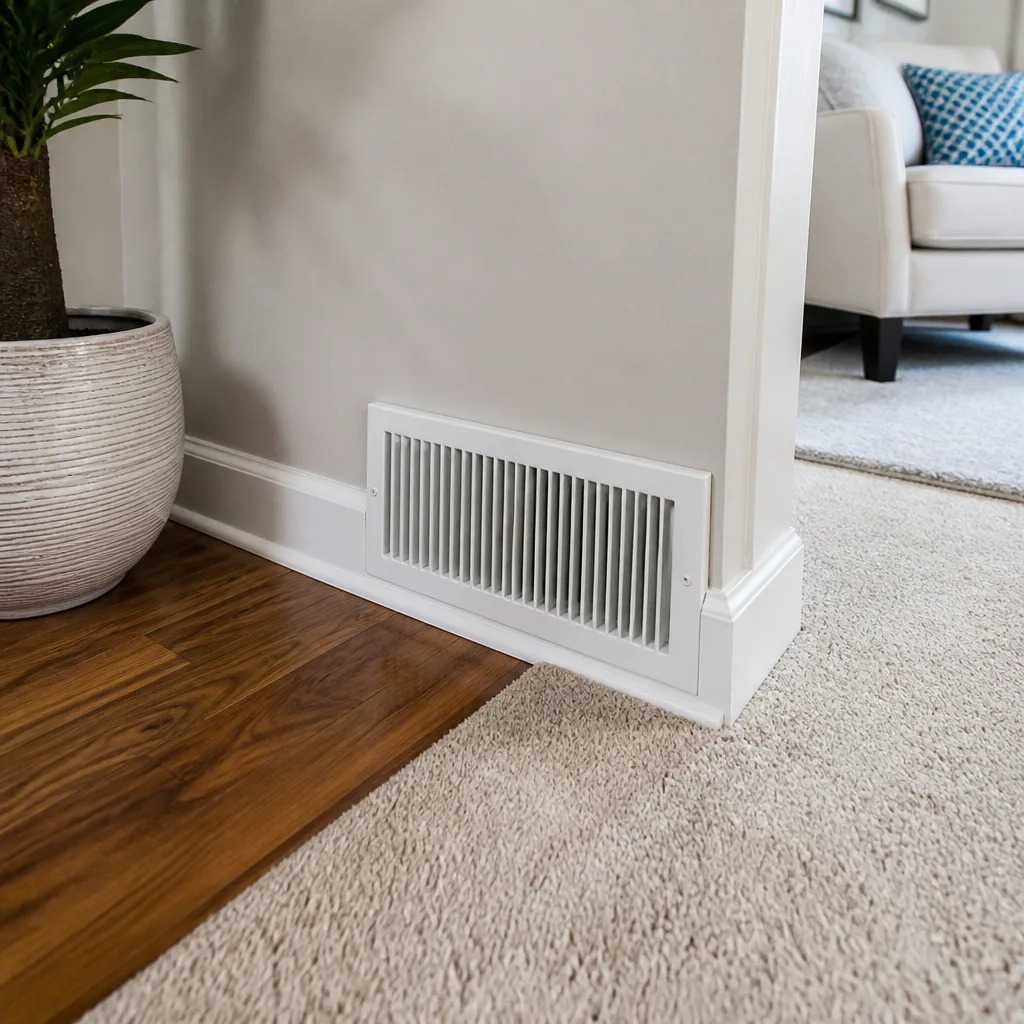 Sanitizing & deodorizing
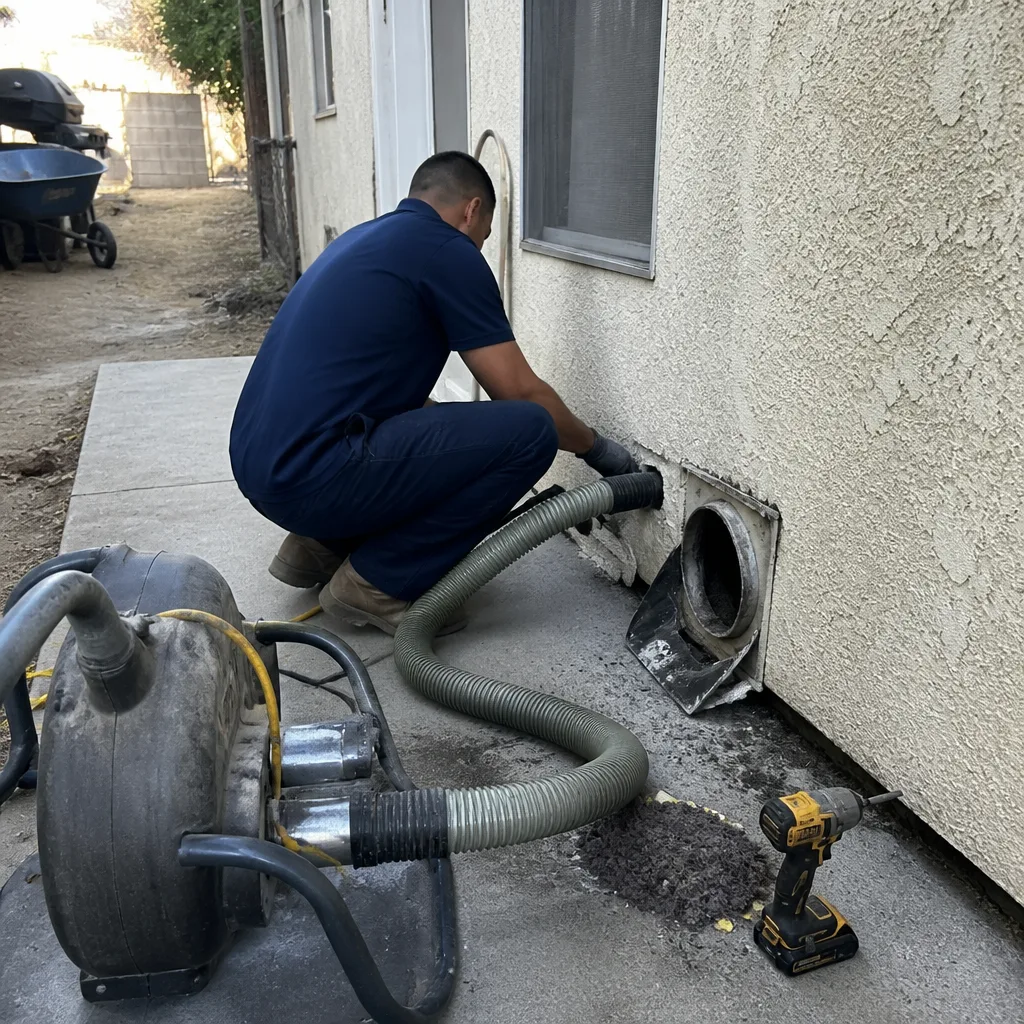
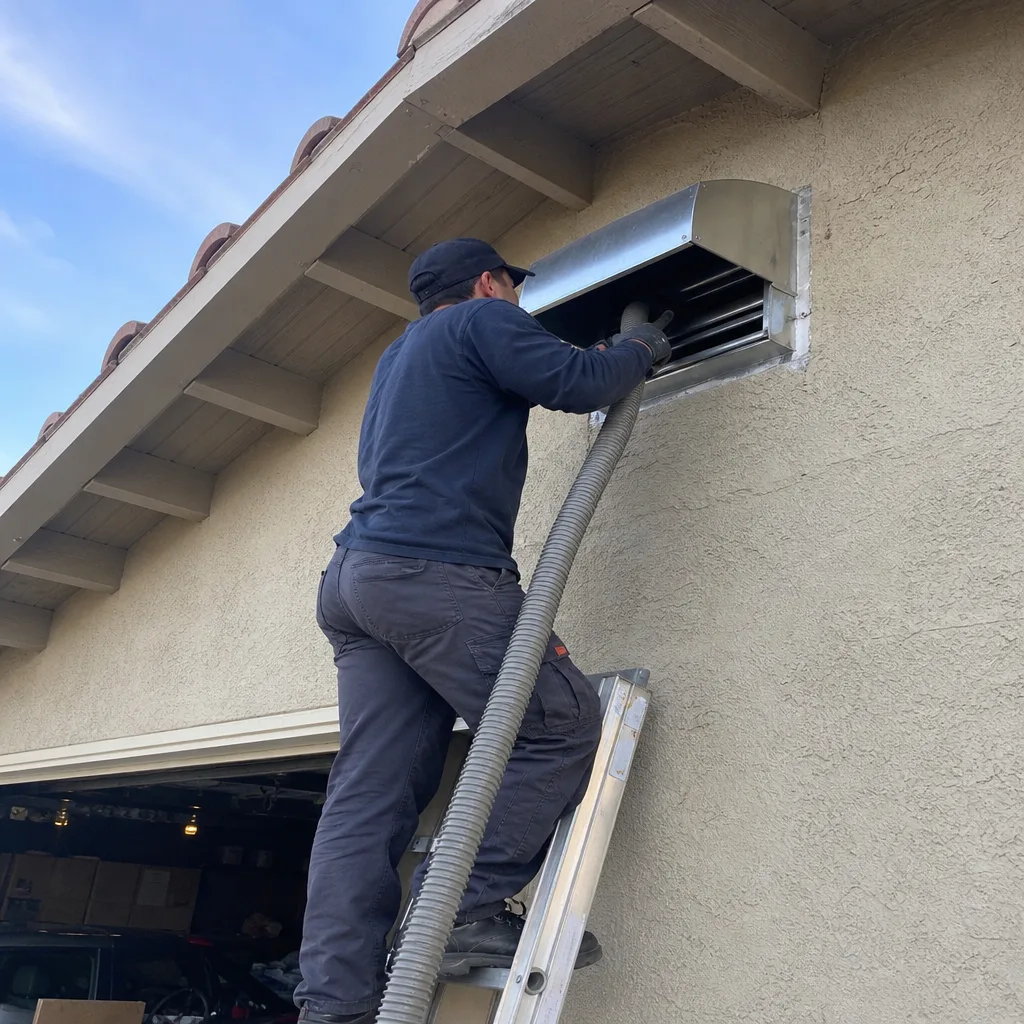
Whole-system duct and dryer vent check with before-and-after photos - you see exactly what came out of your vents
That "$99 whole-house special" is a bait ad - the real number appears once they are in your hallway, or the "clean" is a shop-vac at the register. We photograph the inside of your ducts before and after instead.
Seasonal Air Duct Cleaning Care for San Bernardino: Year-Round Homeowner’s Guide
Running a central HVAC system continuously at 100°F+ for three months straight, which is completely normal in the Inland Empire, deposits more debris per square foot of ductwork than an entire year of system use in a mild coastal climate. Most San Bernardino homeowners don’t realize their ducts are working under conditions that would be considered extreme anywhere else. This guide walks through exactly what each season does to your ductwork, when to act, and how to avoid the expensive repairs that follow neglect. For more details on what professional service involves, see our Air Duct Cleaning services. You’ll learn why spring and fall matter more than you think, what wildfire smoke actually does inside your system, and how to time professional service around San Bernardino’s utility rebate windows.
Styles & brands we work with
- Whole-home duct cleaning
- Dryer vent cleaning
- Camera inspection
- Sanitizing & deodorizing
Quick Answer
San Bernardino’s seasons aren’t equal: a wildfire smoke window, a Santa Ana wind season, a summer heat spike that runs HVAC systems continuously, and a mild winter that causes homeowners to ignore their systems entirely until spring reveals the damage. Seasonal duct cleaning here should be timed around these four events, with spring post-Santa Ana cleaning and fall pre-wildfire preparation as the two highest-priority windows. A professional cleaning in those two windows, plus smart filter management in summer and a winter inspection for condensation issues, keeps your system running clean year-round.
Table of Contents
- Spring: The Post-Santa Ana Cleaning Window
- Summer: Continuous-Run Months and Filter Strategy
- Fall: Wildfire Smoke Season and HEPA Preparation
- Winter: Condensation, Attic Ducts, and Early Mold
- Timing Service Around San Bernardino Utility Rebate Windows
- What Homeowners Can Safely Do Themselves
- Signs Your Ducts Need Attention in Any Season
- Common Mistakes to Avoid
- When to Call a Professional
- Frequently Asked Questions
- The Bottom Line
Spring: The Post-Santa Ana Cleaning Window
Spring is the single most important duct cleaning window in San Bernardino, and it has everything to do with what the Santa Ana winds leave behind. Those winds, which typically run from October through March and peak in winter, carry fine desert particulate from the Cajon Pass and the high desert directly into residential neighborhoods across the city. That dust doesn’t just settle on surfaces. It gets pulled into return registers, pushed through the blower, and embedded in the duct system.
What most homeowners don’t realize is that this fine particulate is abrasive. Over time, it works against the interior liner of flex duct, the flexible, insulated tubing used in many San Bernardino attic installations. In our experience inspecting systems across the city, homes that go multiple years between cleanings often show liner degradation that looks like sandpaper wear, especially at bends and connection points. The fine desert dust acts as a low-grade abrasive every time the blower cycles. Once that liner degrades, the duct loses its smooth interior surface, which means more friction, more dust retention, and eventually air leaks.
Spring is the moment to address this because it’s the first season after the worst of the Santa Ana activity. A thorough spring cleaning removes the accumulated winter and wind-season particulate before the system enters its hardest working season: summer. Delaying spring cleaning means pushing that abrasive dust through the system during months when the AC is running 12 to 16 hours a day, which accelerates the damage exactly when you can least afford a breakdown.
Here’s what a proper spring cleaning in San Bernardino should include:
- Full supply and return duct cleaning using professional-grade equipment like Rotobrush or Nikro systems, which mechanically agitate and extract debris rather than just vacuuming the surface
- Blower compartment inspection to check for dust accumulation on the fan blades, which reduces airflow and forces the system to work harder
- Coil inspection for dust and debris that settled during the winter months
- Registers and grilles cleaning to remove visible dust buildup and improve airflow
- Visual check for duct damage caused by wind-season vibration, pest activity, or general wear
We recommend scheduling this in March or April, before the first real heat spike hits. By May, temperatures in San Bernardino are already pushing into the 80s and 90s, and HVAC companies get booked out. Getting ahead of that rush means you’re not waiting weeks for an appointment while your system runs harder than it should.
Summer: Continuous-Run Months and Filter Strategy
San Bernardino summers regularly hit 100°F, and many homeowners run their AC systems nearly non-stop from June through September. That continuous operation changes the calculus on filters and introduces a specific risk most people don’t know about: coil freeze events.
When an AC system runs constantly in extreme heat, the evaporator coil works at maximum capacity. If airflow is restricted, whether from a dirty filter, a clogged coil, or compromised ductwork, the coil temperature can drop below freezing. Ice forms on the coil surface. When it melts, that water has to go somewhere, and in many cases, it drips into the duct system or the surrounding insulation. That moisture creates precisely the conditions that lead to microbial growth inside ducts.
This is why filter management during summer isn’t a minor detail. It’s the difference between a system that handles the heat fine and one that develops moisture problems you won’t notice until fall. Here’s a seasonal filter strategy calibrated for Inland Empire summers:
- Upgrade to MERV 11 or MERV 13 filters during continuous-run months. The higher rating captures more fine particulate, which is abundant in San Bernardino’s dry, windy environment. Check that your system can handle the higher resistance, older systems may struggle with MERV 13.
- Check filters every 30 days during peak summer, not every 90 days. Continuous operation fills filters faster than intermittent use. A filter that looks clogged at 30 days has already been restricting airflow for weeks.
- If you have pets or live near open desert or construction, check every 2 to 3 weeks. The additional dander and dust load shortens filter life significantly.
- Watch for ice on the refrigerant line or reduced airflow from registers. Both are early signs of a coil freeze event. Turn the system off and call a professional rather than running it harder.
- Schedule a mid-season inspection if you notice musty odors when the AC first kicks on. That odor can indicate moisture in the ductwork from a previous freeze cycle.
Summer is not typically when we recommend full duct cleaning, unless there’s an active problem. The system is working too hard, and homeowners need their cooling online. What summer requires is vigilance: filter checks, airflow awareness, and a quick response to any sign of moisture. If you do notice diminished airflow from certain rooms, it could point to duct damage or disconnection, and that’s where a service like Air Duct Repair in Rialto becomes relevant even outside your normal cleaning schedule. San Bernardino homeowners face the same issue: a disconnected or damaged duct in a hot attic means cooled air leaking into unconditioned space, wasting energy and extending run times.
Fall: Wildfire Smoke Season and HEPA Preparation
Ask any long-time San Bernardino resident about fall, and they’ll talk about wildfire smoke. The city sits downwind of fire-prone areas in the San Bernardino National Forest and the Cajon Pass corridor, and when fires burn, smoke settles into the valley for days or weeks. That smoke doesn’t just stay outside.
Smoke particulate is extremely fine, much finer than typical household dust. Standard fiberglass filters can’t capture it. What passes through your filter gets circulated through the entire duct system, and the smallest particles can embed in the dust already coating the interior surfaces. That’s how smoke odor lingers in a home long after the outside air clears. The smell is coming from inside the ducts, where smoke-saturated dust continues off-gassing every time the blower cycles.
Fall is the window to prepare. Here’s the sequence we recommend:
- Schedule a thorough duct cleaning in September or early October, before the worst of fire season. Removing existing dust and debris means there’s less material for smoke particulate to cling to.
- Upgrade to a high-efficiency filter before fire season peaks, typically October through November. If your system can handle it, a HEPA-style or MERV 13 filter will capture significantly more smoke particulate than standard options.
- Consider a standalone HEPA air purifier for the living areas, particularly if anyone in the home has respiratory conditions. Duct cleaning addresses what’s in the system, but a room purifier handles airborne particulate in real time during smoke events.
- Inspect and potentially replace attic duct insulation if you’ve had smoke intrusion in previous years. Smoke-damaged insulation is something we see fairly regularly in San Bernardino: fiberglass insulation that has absorbed smoke particulate takes on a gray-brown discoloration and a persistent acrid odor. It can’t be cleaned effectively. It needs to be replaced.
One thing worth understanding clearly: smoke-damaged insulation inside ducts looks different from normal dust. Normal dust is gray, accumulates in a layer, and has a neutral or slightly dusty smell. Smoke-contaminated insulation is darker, often unevenly discolored, and carries an acrid, campfire-like odor that intensifies when the system runs. If you notice that combination, the fix is replacement, not cleaning. Lionheart’s Air Duct Repair in Rialto capability addresses this directly, because most duct cleaning companies will clean around damaged insulation rather than tell you it needs to go.
Fall preparation for San Bernardino also connects to the broader Air Duct Cleaning in Rialto question of equipment quality. We run professional-grade systems like Rotobrush and Nikro on every job, and we pair them with Abatement Technologies negative-air capability where containment is required. That matters during smoke season, because cleaning a system that’s been exposed to wildfire smoke can kick up particulate that you don’t want redistributed through the living space. Negative-air methodology contains what the cleaning process dislodges.
Winter: Condensation, Attic Ducts, and Early Mold
San Bernardino winters are mild compared to the mountains, but they create a specific risk for ductwork: condensation. Here’s the mechanism. When outdoor temperatures drop at night, attic temperatures fall with them. Duct surfaces, particularly metal components and uninsulated sections, cool down. When the furnace runs intermittently during the day, warm, moist air from the living space passes through those cooled ducts. The moisture condenses on the interior surfaces. It’s the same physics as a cold glass on a humid day.
Reduced system use makes this worse. A system that runs regularly maintains more consistent temperatures throughout the ductwork, which reduces the thermal shock between cycles. But in winter, many San Bernardino homeowners run their heat only in the morning and evening, leaving the system off for long stretches. That start-stop pattern creates repeated condensation cycles, and over weeks and months, moisture accumulates in the duct lining, particularly in attic installations where there’s no climate control.
This is why winter is the season when early mold colonization is most likely to begin in San Bernardino ductwork. The conditions are right: intermittent moisture, mild temperatures that stay between 50°F and 70°F, and organic material in the form of accumulated dust and skin cells. Mold doesn’t need dramatic flooding or standing water. It needs consistent humidity and a food source, both of which are present in many attic duct systems by mid-winter.
What early mold colonization looks like versus normal dust:
- Normal dust: dry, loose, gray or tan, brushes away easily, no distinct odor
- Early mold colonization: slightly darkened or speckled patches that don’t brush away cleanly, may feel slightly damp or tacky, often concentrated at joints or low points where condensation collects
- Environmental signs: a persistent musty or earthy odor when the heat first kicks on, especially in the morning after the system has been off overnight
A winter inspection is the right call if you’ve noticed any of those signs, or if your home has flex duct in an uninsulated attic that hasn’t been inspected in several years. The inspection itself doesn’t need to be a full cleaning, but it’s the season to identify problems before spring cleaning addresses them. If you catch condensation-driven mold early, the fix is often a cleaning plus targeted repair of any compromised insulation. Catching it late means more extensive remediation.
Timing Service Around San Bernardino Utility Rebate Windows
One of the most useful but least-known aspects of HVAC maintenance in San Bernardino is the utility rebate landscape. SoCalGas and Southern California Edison (SCE) both periodically offer rebates or incentives tied to HVAC efficiency upgrades, maintenance, and sometimes related home performance improvements. These programs don’t directly subsidize duct cleaning in most cases, but they can offset the cost of associated upgrades that make duct cleaning more effective: high-efficiency filters, smart thermostats, insulation improvements, and in some cases duct sealing or repair. For related reading, browse more guides & resources on home performance.
Here’s how to think about timing:
- Check current SoCalGas and SCE program listings in late winter or early spring. Many programs announce annual cycles that align with equipment replacement seasons. If you’re planning a duct repair or sealing project alongside spring cleaning, that’s the window to look.
- If you’re considering a filter upgrade, look for smart thermostat or efficiency rebates that can offset other HVAC improvements. A properly functioning system with clean ducts and a modern thermostat runs more efficiently, which compounds the value of the cleaning itself.
- Don’t delay necessary cleaning waiting for a rebate that may never come. The cost of deferred maintenance, in energy waste and potential repairs, typically exceeds any rebate value. If your ducts need cleaning, clean them.
- Ask your HVAC or duct contractor about current programs. Companies working in the Inland Empire track these cycles because their customers ask about them.
The practical takeaway: spring and fall are the prime seasons for San Bernardino duct service, and both coincide with the utility program announcements that matter most. Scheduling your spring cleaning in March or April positions you to take advantage of any spring rebate cycle, while fall service in September aligns with pre-winter program rollouts.
What Homeowners Can Safely Do Themselves
There’s a meaningful difference between what a homeowner can safely handle and what requires professional equipment. For ductwork, the DIY list is short and focused on prevention rather than cleaning. Here’s what’s reasonable:
- Change or clean filters on schedule. This is the single highest-impact maintenance task for any HVAC system, and it requires no special tools.
- Vacuum visible dust from register covers and grilles. Remove the covers, vacuum them thoroughly, and wipe them down before reinstalling. This keeps the visible openings clean and reduces what enters the system.
- Inspect visible duct sections in accessible areas like garages, basements, or crawl spaces. Look for obvious gaps, disconnected joints, crushed sections, or pest activity. You’re looking for problems, not fixing them.
- Keep the area around return vents clear. Furniture, rugs, or storage items blocking returns restrict airflow, which stresses the system and accelerates dust accumulation.
- Document any odors, moisture signs, or airflow changes. When you call a professional, that information helps diagnose the problem faster.
What’s not on the DIY list: attempting to clean the interior of ductwork yourself. Consumer-grade vacuums and brushes can’t reach deep enough to remove embedded debris, and in many cases, the attempt knocks dust loose without actually extracting it, making the air quality temporarily worse. There’s also the safety consideration. Duct interiors can harbor sharp metal edges, exposed fasteners, and, in older systems, materials you don’t want to disturb without proper containment. The professional equipment we use, including Rotobrush and Nikro systems paired with Abatement Technologies negative-air capability when needed, exists precisely because residential tools cannot do this job.
Signs Your Ducts Need Attention in Any Season
Seasonal schedules matter, but there are signs that override the calendar. If you notice any of these, it’s time for a professional inspection regardless of what month it is.
- Visible dust accumulating on surfaces within days of cleaning. This suggests the ducts are redistributing dust faster than normal settling explains.
- Musty, smoky, or otherwise unusual odors when the system runs. These odors typically originate inside the ductwork and intensify with airflow.
- Uneven airflow between rooms. Some rooms stay comfortable while others never quite reach the thermostat setting. This often points to duct damage, disconnection, or blockage.
- Higher utility bills without an obvious explanation. Restricted airflow and leaking ducts force the HVAC system to run longer to reach the same temperatures.
- Visible mold or moisture around registers or grilles. This is a red flag, not a wait-and-see situation. If you see growth at the opening, there’s likely more inside.
- Family members experiencing allergy symptoms that worsen at home and improve elsewhere. Indoor air quality issues often manifest this way, particularly in the bedroom, where people spend eight hours breathing filtered air.
In our experience working across San Bernardino, most of these signs are interconnected. A home with visible dust accumulation often has restricted airflow, which often leads to higher utility bills, which often correlates with indoor air quality complaints. Fixing the root cause, usually debris in the ductwork or actual duct damage, resolves multiple symptoms at once. That’s why we always recommend a proper diagnosis rather than treating individual symptoms.
Common Mistakes to Avoid
- Treating all four seasons the same. San Bernardino’s climate demands different strategies for different windows. The cleaning that matters in March is not the same as what matters in September.
- Using the cheapest fiberglass filters year-round. Standard filters protect the equipment but do almost nothing for air quality, especially during wildfire smoke season or continuous summer operation.
- Ignoring reduced airflow as “just how the system is.” Uneven room temperatures are a diagnostic signal, not a personality trait. They typically trace back to duct problems that worsen over time.
- Assuming a mild winter means no maintenance. San Bernardino’s mild winters create condensation conditions in attic ducts that colder climates don’t face in the same way. The system still needs attention.
- Waiting until there’s a visible problem to inspect the ducts. By the time mold is visible at a register or odors are unmistakable, the underlying issue has been developing for months.
- Choosing a duct cleaning company based on price alone. We see this constantly across the Inland Empire. Bargain operators bring consumer-grade equipment, often a shop vacuum mounted in a van, and can’t actually remove embedded debris. The result is a cleaning that looks fine on the invoice but does nothing for air quality.
When to Call a Professional
Call a professional duct specialist when you notice persistent odors, visible mold near registers, uneven airflow between rooms, or dust accumulating unusually fast after cleaning. Also call if your home has been through a significant event: a nearby wildfire, a major remodel that generated construction dust, or a rodent or pest infestation in the attic. These situations create conditions that routine maintenance can’t address. If you’re in San Bernardino and you’re not sure whether your ducts need professional attention, start with an inspection. Lionheart Air Duct Cleaning offers free estimates in San Bernardino, call (855) 356-4382 to schedule one. We’ll tell you honestly whether the system needs cleaning, repair, or nothing at all.
You can also learn more about our full-service approach on the Lionheart Air Duct Cleaning home page, or see what’s involved in our Dryer Vent Cleaning in Rialto service, which we always recommend alongside duct work because lint buildup is a documented leading cause of residential structure fires. Treat dryer vent cleaning as a safety service, not an upsell.
Frequently Asked Questions
For most San Bernardino homes, professional duct cleaning every 2 to 3 years is appropriate, but homes with pets, high desert dust exposure, wildfire smoke exposure, or household members with respiratory conditions often benefit from annual or near-annual cleaning. The key is matching the schedule to actual conditions rather than a generic timeline. Homes near the Cajon Pass corridor or open desert areas see meaningfully more particulate than homes in more sheltered parts of the city. Call (855) 356-4382 and we’ll help you assess what makes sense for your specific location and system.
Wildfire smoke gets into duct systems because the particulate is much finer than what standard filters capture, typically 0.4 to 0.7 microns for smoke versus 10 microns or larger for the coarse dust most filters target. Once inside the system, smoke particulate embeds in existing dust and can create persistent odor that lingers for months after the outside air clears. Standard MERV 8 filters catch very little smoke, which is why we recommend higher-efficiency filters during San Bernardino’s fall fire season and a duct cleaning beforehand to reduce the material smoke can cling to. See our Air Duct Cleaning Emergency Preparedness Guide for San Bernardino Homes for step-by-step preparation.
The difference is equipment and thoroughness. Professional duct cleaning uses mechanical agitation systems like Rotobrush or Nikro that physically dislodge debris from duct walls, paired with high-powered extraction that pulls the material out of the system. A $49 special typically involves running a consumer-grade vacuum hose into a few registers, which removes loose surface dust and leaves embedded debris in place. You’re not paying less for the same service. You’re paying a small amount for a service that doesn’t do the job. For San Bernardino homeowners, this distinction matters more than in many markets because the desert particulate load is higher and more abrasive.
Dirty or compromised ductwork increases energy costs by restricting airflow, which forces your HVAC system to run longer to achieve the same temperature. Dust and debris accumulation narrows the effective diameter of the duct, and in flex duct systems, abrasive debris can degrade the liner and create air leaks. Both effects mean your blower works harder and your conditioned air goes places other than your living space. In San Bernardino, where summer systems run continuously, even a modest airflow restriction translates into measurable utility cost over a three-month cooling season. Call (855) 356-4382 for an inspection if you’ve noticed rising bills without a clear explanation.
Both matter, but they serve different purposes. Spring cleaning addresses the accumulation from Santa Ana winds and winter use, removing abrasive desert particulate before summer puts your system under continuous load. Fall cleaning prepares for wildfire smoke season, removing dust that smoke would otherwise saturate and embed within. If you can only do one cleaning per year, choose spring, because summer is when San Bernardino systems work hardest and the damage from restricted airflow is most costly. If you can do two, spring and fall cover the full range of local conditions.
A shop vacuum cannot clean air ducts. The hose reach is limited to the first few feet of duct from each register, and the suction power is nowhere near what’s required to pull embedded debris from duct walls. In practice, a DIY attempt often dislodges dust without extracting it, temporarily worsening indoor air quality while providing the false comfort of “cleaning” the system. Professional systems like the Rotobrush and Nikro equipment we use in San Bernardino are engineered specifically for duct cleaning, with rotational brushes and extraction capabilities designed to reach deep into the system and remove what’s actually adhered to the surfaces.
The Bottom Line
San Bernardino’s climate puts unusual demands on residential ductwork, and seasonal care is about responding to those specific demands rather than following generic maintenance advice. Spring is the priority window, clearing out Santa Ana abrasive particulate before summer’s continuous operation. Fall matters for wildfire smoke preparation and the filter upgrades that protect indoor air quality during fire season. Summer requires vigilance on filters and airflow, and winter demands attention to condensation and early mold risks. Two professional cleanings per year, in spring and fall, with smart maintenance in between, keeps San Bernardino systems running clean, efficient, and safe. For a detailed look at pricing, read our Air Duct Cleaning Cost Breakdown: The San Bernardino Homeowner’s Reference for 2026. That’s what the climate requires, and what a proper seasonal schedule delivers.
Written by the team at Lionheart Air Duct Cleaning, serving San Bernardino since 2013.
See the difference
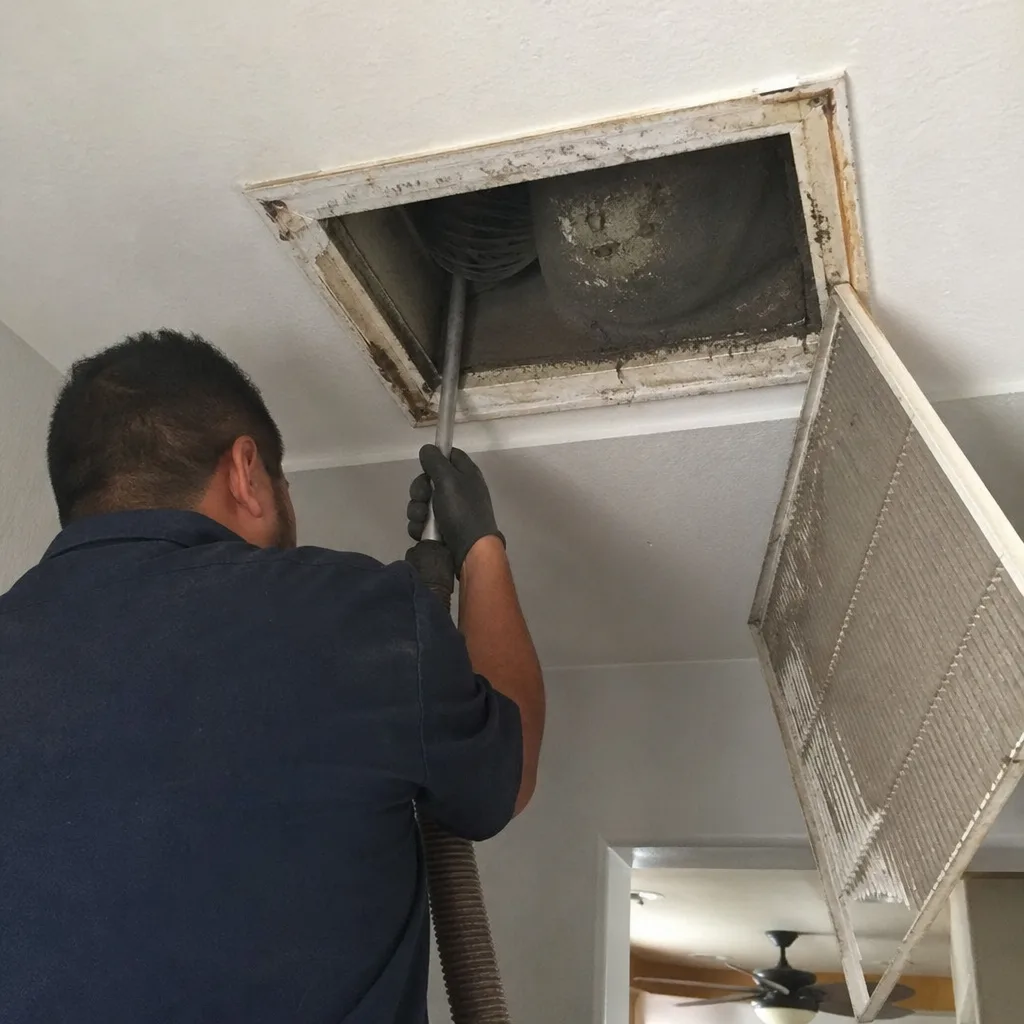 Before
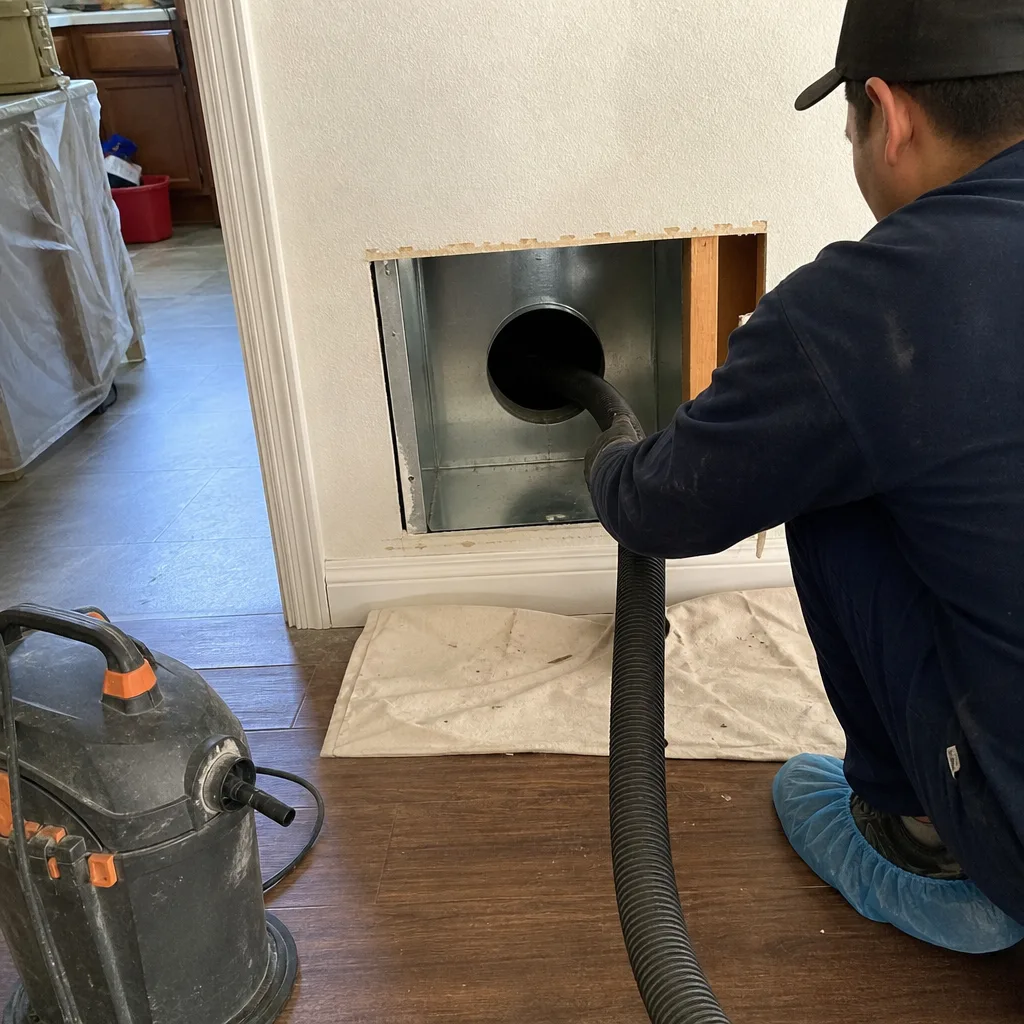 After
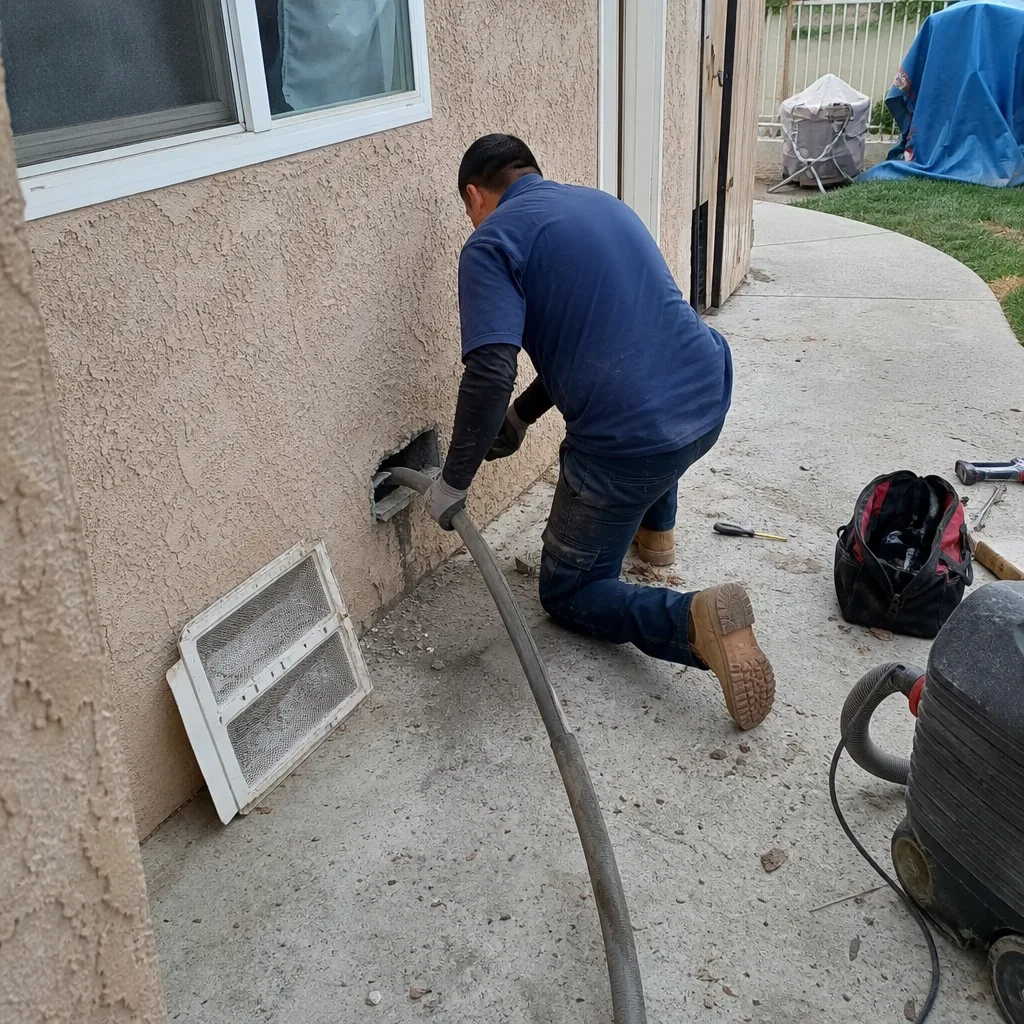 Before
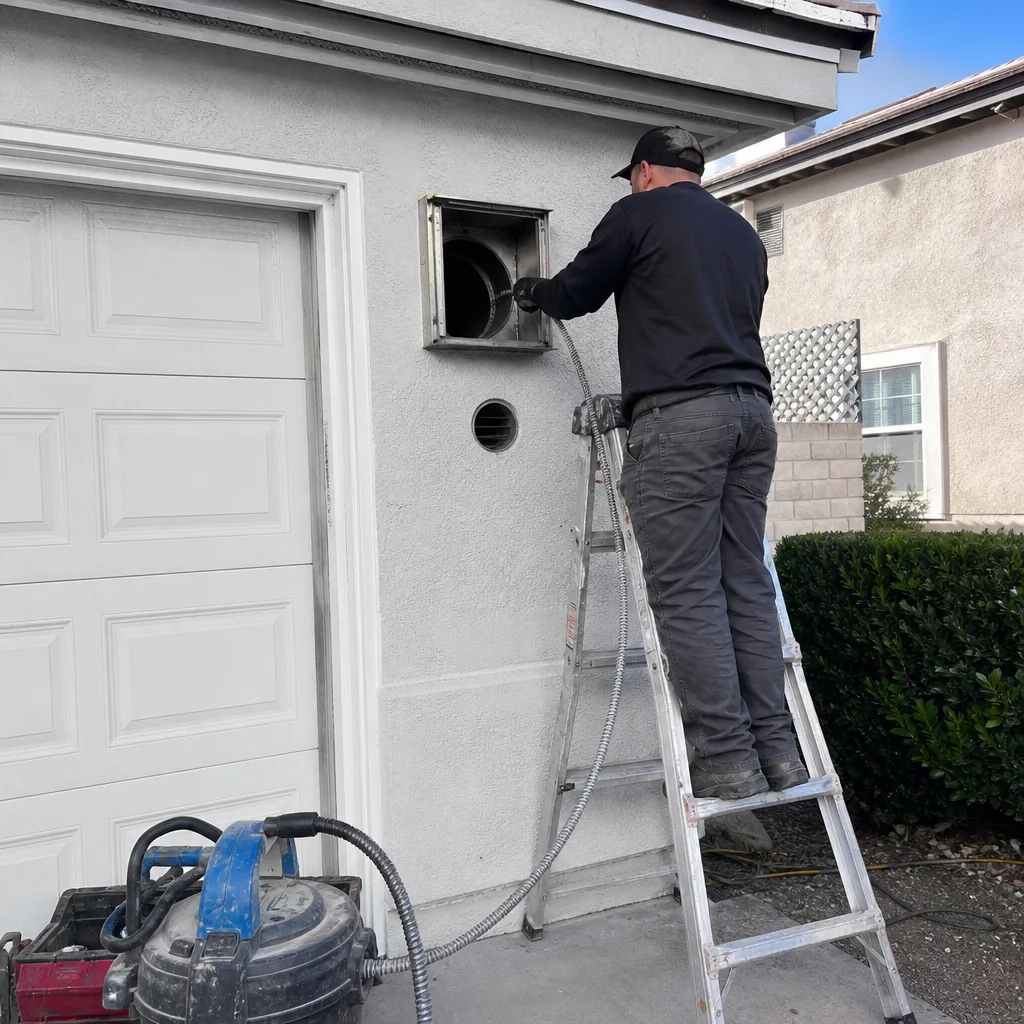 After
 Before
 After