
Last updated November 2, 2026
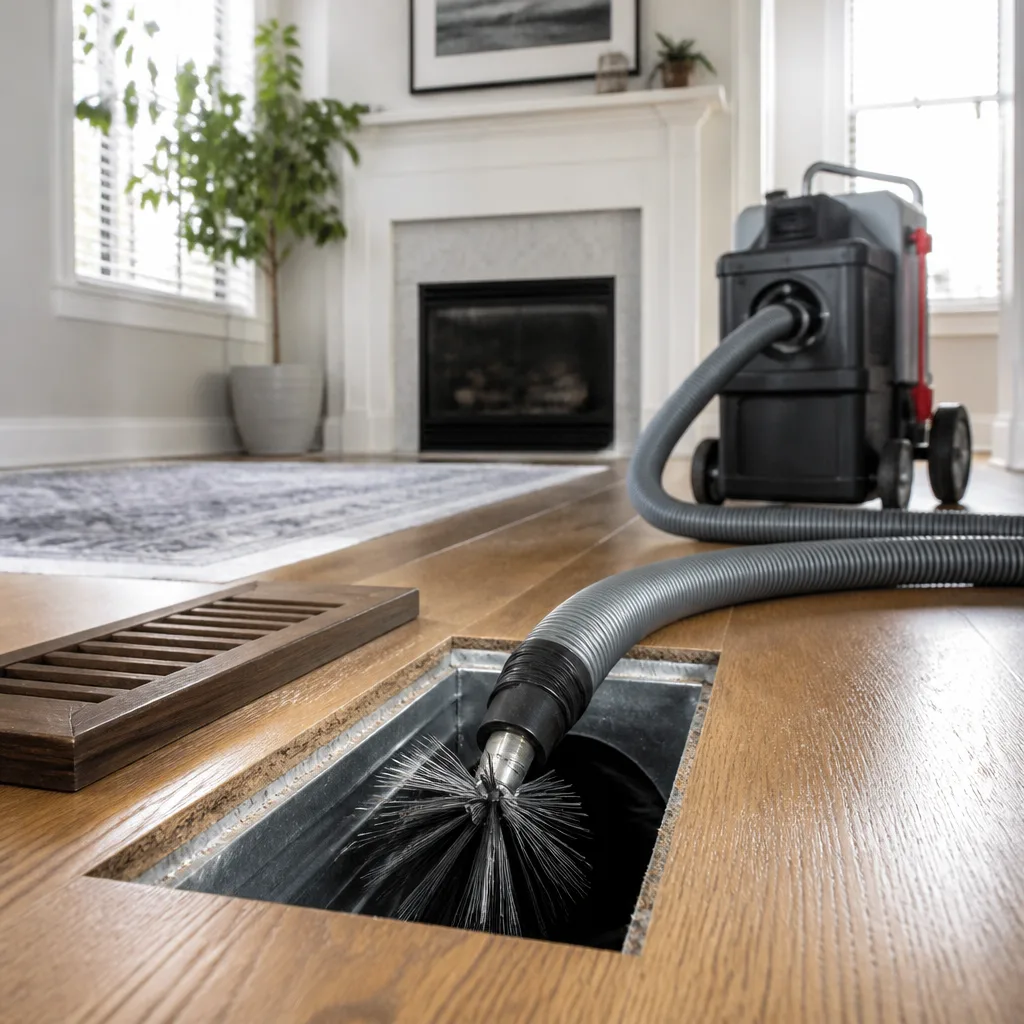 Whole-home duct cleaning
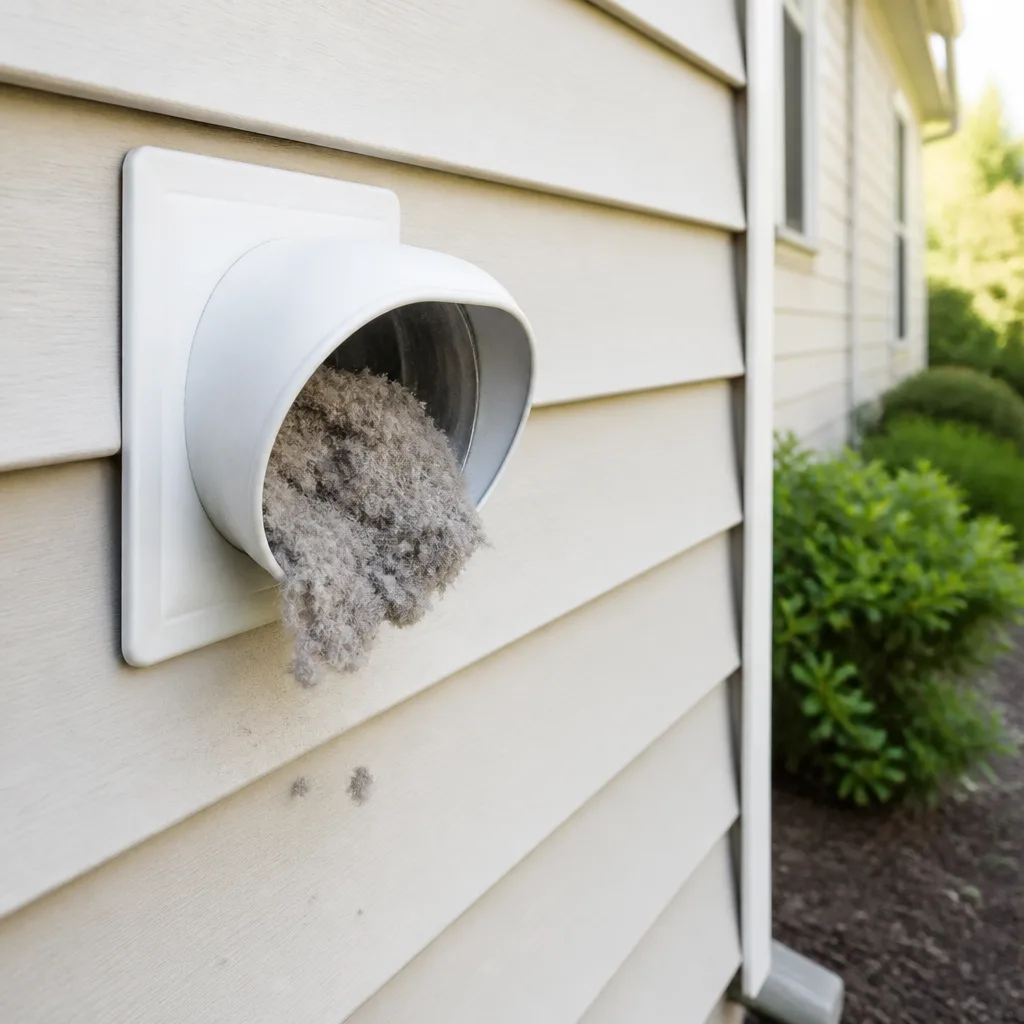 Dryer vent cleaning
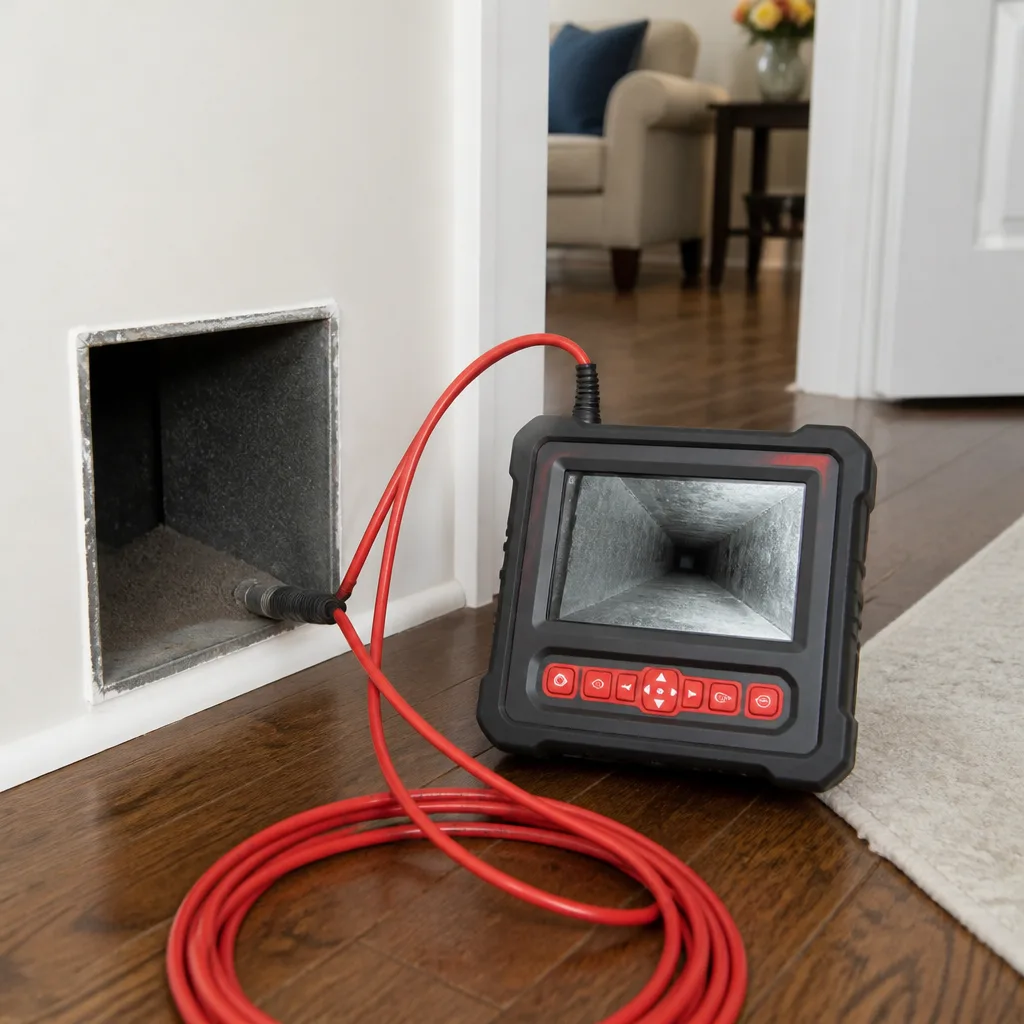 Camera inspection
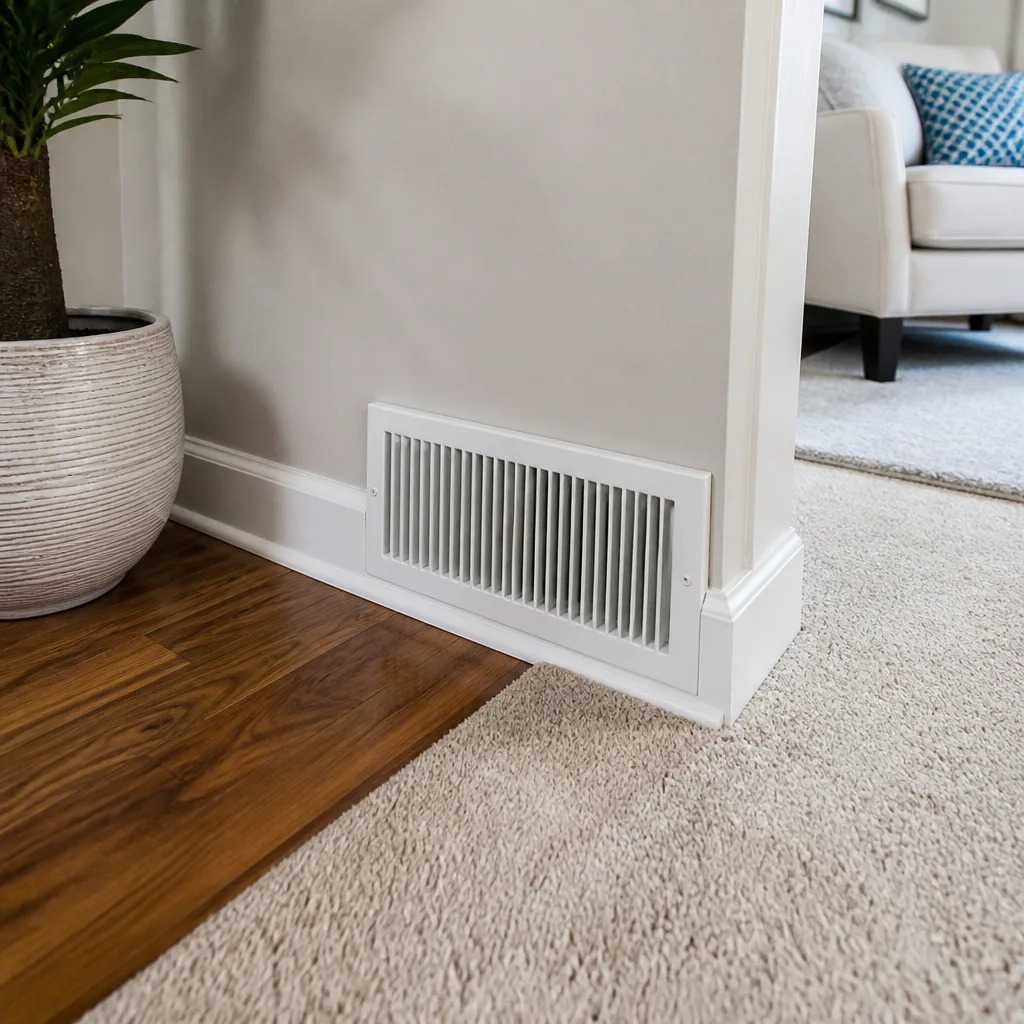 Sanitizing & deodorizing
Whole-system duct and dryer vent check with before-and-after photos - you see exactly what came out of your vents
That "$99 whole-house special" is a bait ad - the real number appears once they are in your hallway, or the "clean" is a shop-vac at the register. We photograph the inside of your ducts before and after instead.
Air Duct Cleaning Emergency Preparedness Guide for San Bernardino Homes
After the 2020 El Dorado Fire, San Bernardino County air quality monitors recorded AQI readings above 300 for consecutive days. That is not a typo. Three hundred on the Air Quality Index means hazardous air, the kind that forces fine particulate through every gap in a home’s envelope and straight into the HVAC system. Most San Bernardino homeowners have a plan for wildfire evacuation, earthquake supplies, and power outages. Almost nobody has a protocol for what happens to their ductwork during and after these events. This guide closes that gap. You’ll learn exactly when to shut your system down, which filters actually matter, how to document contamination for insurance, and when professional duct decontamination is the only safe path forward.
Quick Answer
Air Duct Cleaning after a wildfire, earthquake, or dust event in San Bernardino is not routine maintenance. It’s emergency contamination control. The short answer: shut your HVAC system down when smoke or visible dust is present, keep it off until outdoor air clears, run the system on recirculate only if you must use it during moderate smoke, upgrade to a MERV-13 or higher filter before any event season, and schedule a professional duct inspection within 72 hours after a major event if you smell smoke, see dust accumulation around registers, or live in a pre-1980 home where asbestos-wrapped duct insulation may have been disturbed. Documentation for insurance should begin the day of the event, not weeks later.
Styles & brands we work with
- Whole-home duct cleaning
- Dryer vent cleaning
- Camera inspection
- Sanitizing & deodorizing
Table of Contents
- Wildfire Smoke Protocol: When to Shut Down and What Filter Ratings Actually Matter
- Post-Earthquake Dust Events: What Seismic Activity Does to Duct Connections
- The 72-Hour Post-Event Decision Checklist
- Hazardous Materials in Older San Bernardino Housing Stock
- Documenting Duct Contamination for Insurance Claims
- Professional Decontamination vs. What Restoration Contractors Can Handle
- Common Mistakes to Avoid
- When to Call a Professional
Wildfire Smoke Protocol: When to Shut Down and What Filter Ratings Actually Matter
San Bernardino sits in a wildfire corridor. The San Bernardino National Forest, the Cajon Pass wind patterns, and the Santa Ana seasonal cycle create conditions where smoke events are not a possibility. They’re a calendar item. When smoke is visible or you can smell it indoors, the first decision is binary: shut the system down or run it in a specific way.
What to do when wildfire smoke is present:
- Shut down outdoor air intake. Most residential HVAC systems in San Bernardino do not have a dedicated fresh-air intake damper, but if yours does, close it. Systems with economizers or whole-house fans should be switched to “off” at the thermostat, not just “fan only.” Whole-house fans pull unfiltered outside air directly through the attic and into living spaces. During smoke events, that is the single worst thing you can run.
- Run the system on recirculate only, if at all. If you need cooling during moderate smoke (AQI 100-200), set the thermostat to “fan on” with the system in cooling mode so air passes through the filter repeatedly. This assumes you have a decent filter installed. Most homes do not.
- Upgrade to MERV-13 minimum before fire season. A standard fiberglass filter catches big stuff. That’s it. MERV-13 catches smoke particles, fine dust, and the sub-2.5-micron particulates that cause the most respiratory damage. Aprilaire makes MERV-13 media filters that fit most standard 1-inch and 4-inch filter slots. If your filter housing can’t accept a MERV-13 due to airflow restrictions, call an HVAC or duct professional to evaluate before retrofitting.
- Do not run the system at all at AQI above 200. At hazardous levels, no residential filter short of a dedicated HEPA bypass system will keep up. Running the system means pulling contaminated air across the coil, into the blower, and through the duct liners. That particulate deposits inside the system and gets redistributed for weeks after the outdoor air clears. Shut it down. Use portable air purifiers with HEPA filters in occupied rooms instead.
How long to wait after smoke clears: Wait until outdoor AQI drops below 100 for at least 24 consecutive hours before resuming normal system operation. Then change the filter immediately, regardless of how old it is. If you ran the system during a smoke event with anything less than a MERV-13 filter, schedule a duct inspection. In our experience serving San Bernardino homes after the El Dorado and Line Fires, we’ve pulled filters that looked like charcoal briquettes and found fine soot coating the interior of supply plenums. That’s not something a new filter fixes.
Professional equipment matters here. Rotobrush systems use agitation combined with HEPA-filtered negative air to remove particulate that has adhered to duct surfaces. A shop-vac with a brush taped to it cannot do this. For smoke-contaminated systems, containment-grade methodology is the difference between cleaning and just moving soot around. Abatement Technologies negative-air units, which we use on contamination jobs, pull the loosened particulate out of the home entirely rather than recirculating it. Most residential duct cleaners do not run this kind of equipment. For residents in nearby Rialto or the surrounding Inland Empire, the same smoke event hits your system the same way.
Post-Earthquake Dust Events: What Seismic Activity Does to Duct Connections
San Bernardino is not just in wildfire country. The city sits within ten miles of the San Andreas Fault and roughly the same distance from the San Jacinto Fault. Seismic events here are not hypothetical. And while most homeowners check for gas leaks, cracked drywall, and foundation movement after a quake, almost nobody checks the ductwork. That’s a mistake, because earthquakes do two specific things to residential duct systems in older San Bernardino housing stock.
First, seismic shaking separates duct joints. Flexible duct, the insulated plastic-and-wire tubing used extensively in Southern California attics, is held together with zip ties and foil tape at connection points. A 5.0 or stronger quake can pop those connections open just enough to create gaps. Once separated, the duct pulls attic air, insulation particles, dust, rodent droppings, and whatever else is up there directly into the conditioned air stream. A separated return-side flex duct is worse: it draws unfiltered attic air into the system before the filter, meaning all that particulate bypasses filtration entirely and coats the coil, the blower, and the supply ducts.
Second, earthquakes generate a massive sudden dust load inside the home. Plaster dust from cracked walls, silica dust from shifting concrete, and decades of accumulated dust in wall cavities and attics get released simultaneously. That dust gets sucked into return registers the moment the system runs. In a pre-1990 San Bernardino home, that dust can include lead paint particles from friction surfaces near windows and doors, and in pre-1980 homes, potentially asbestos fibers from degraded duct wrap. Running the system after a significant quake without inspecting the ducts means distributing that load through every room in the house.
What to check after any quake over 4.5 magnitude:
- Look at visible duct runs in the attic or crawlspace for separated joints, sagging sections, or disconnected flex duct.
- Check register faces for new dust accumulation within 48 hours of the quake, even if you haven’t run the system much.
- Listen for a change in system sound: whistling, rattling, or a hollow change in airflow often indicates a duct separation.
- Check the filter. If it’s suddenly darker than expected in a short window, something upstream changed.
This is where air duct repair capability matters. Cleaning a system with separated ducts is pointless. The contamination just keeps coming. We repair what we find, which most standalone duct cleaning companies cannot do.
The 72-Hour Post-Event Decision Checklist
The first 72 hours after a wildfire smoke event, earthquake, or major dust intrusion determine whether you have a manageable situation or a full-system contamination problem. Here is the sequence we recommend for San Bernardino homeowners.
Hour 0-24: Assessment and containment
- Shut the HVAC system off if you haven’t already. Do not run it “just to see if it works.”
- Close all exterior doors and windows. If smoke is present, seal obvious gaps with damp towels or painter’s tape.
- Check the air filter. Photograph it. This photo becomes part of your documentation trail.
- If you have portable HEPA purifiers, run them in occupied rooms. They are your primary air cleaning during the event.
- Do not vacuum or sweep visible dust with a standard vacuum. That redistributes fine particulate. Use damp wiping on hard surfaces.
Hour 24-48: Initial inspection
- Once outdoor conditions are safe, visually inspect the attic or crawlspace duct runs with a flashlight. Look for disconnections, crushed sections, or visible soot/dust coating.
- Remove a register or two and look inside the duct with a flashlight. Soot, gray dust, or discoloration means the system has been contaminated.
- Check the coil, if accessible, for a matted layer of dark particulate. A contaminated coil will redistribute smoke odor and particles for months.
- Document everything with photos and written notes. Include dates and AQI readings if available.
Hour 48-72: Decision point
- If inspection shows clean ducts, a clean coil, and no odor: replace the filter with a MERV-13, run the system on fan-only for 30 minutes with windows open, then resume normal operation.
- If inspection shows soot, dust accumulation, or suspected duct disconnection: keep the system off and call for a professional assessment. Running a contaminated system is how you turn a $400 cleaning into a $4,000 remediation.
- If you live in a pre-1980 home and the event was a quake: assume asbestos-containing materials may have been disturbed. Do not DIY inspect duct wrap in these homes. Leave it to professionals who can assess safely.
This checklist is designed to be printed and kept with your emergency supplies. The decisions are simple. The consequences of getting them wrong are not.
Hazardous Materials in Older San Bernardino Housing Stock
San Bernardino has a significant inventory of pre-1980 housing. That matters for emergency duct contamination, because the materials used in those homes create risks that newer construction does not have.
Asbestos-wrapped duct insulation. Before the 1980 ban, many homes in San Bernardino and throughout the Inland Empire used asbestos-containing paper or tape wraps on duct seams, particularly at elbows and register boots. That material is safe when undisturbed. An earthquake, a contractor working in the attic, or even a violent pressure event during a wildfire smoke intrusion can disturb it. Once disturbed, asbestos fibers can be pulled into the air stream. This is not a DIY cleanup situation. Do not touch, peel, or vacuum suspected asbestos material. Professional assessment is required.
Lead paint dust near return registers. Pre-1978 homes are likely to have lead-based paint, often under layers of newer paint. Friction surfaces like window sashes, door frames, and floor edges generate lead dust continuously. A significant earthquake or major renovation work releases enough of that dust to be pulled into return registers. Once inside the duct system, it recirculates through the home. Standard residential duct cleaning can remove lead-contaminated dust, but it must be done with HEPA filtration and containment, not a basic brush-and-vacuum pass. Guardsman environmental products, which we carry, are designed for this kind of post-event surface treatment in HVAC systems.
Rodent and pest contamination. San Bernardino’s climate and housing stock create ideal conditions for rodents in attics and crawlspaces. After a quake or fire event, pests may be displaced and seek new harborages, sometimes inside damaged ductwork. Rodent droppings and urine in ducts are health hazards, not just odors. Cleaning these systems requires full PPE and proper disposal, not a standard service call.
For homeowners in Rialto or surrounding communities, the same housing-age risks apply. Southern California’s building boom of the 1960s and 70s left a legacy of materials that demand respect during any post-event duct work.
Documenting Duct Contamination for Insurance Claims
If a declared disaster event in San Bernardino County damages or contaminates your duct system, your homeowner’s policy may cover professional cleaning or replacement. Whether it does depends heavily on your documentation. Most claims fail not because coverage doesn’t exist, but because the homeowner couldn’t prove the contamination was event-related rather than pre-existing neglect.
What to document, starting the day of the event:
- Pre-event condition. Ideally, you have filter change records or a prior duct inspection report. This establishes baseline. If you don’t have one, say so honestly in your claim. A clean filter photo before fire season is part of responsible home maintenance, and it doubles as insurance evidence.
- Event photos. Photograph the sky, the smoke, the AQI reading on your phone, the ash on your car. This establishes the event was severe enough to cause contamination. These are timestamped by your phone automatically.
- Interior evidence. Photograph register faces, visible dust on surfaces, and any visible attic duct damage. Take close-ups and wide shots with context so the adjuster can see the location.
- Professional inspection report. Hire a duct professional for a documented inspection. The report should note specific findings, not vague language like “system appears dirty.” Specific language: “Supply plenum shows significant gray particulate deposition consistent with wildfire smoke infiltration. Flex duct run in west attic shows separation at trunk connection.” That specificity is what claims adjusters respond to.
- Restoration contractor qualifications. If your insurance company sends a restoration contractor, verify they have HVAC-specific remediation experience. General water and fire restoration companies often sub out duct work or attempt it with equipment not designed for the task. Ask whether they run HEPA negative-air containment and whether they can produce a before-and-after visual record of the duct interiors.
In our experience, insurers in California are increasingly specific about what they will reimburse for duct cleaning after wildfire events. A professional company that can document with photos and equipment that meet industry standards gives you a far stronger position than a budget cleaner who hands you a receipt and disappears.
Professional Decontamination vs. What Restoration Contractors Can Handle
Here is the distinction most San Bernardino homeowners don’t know, and it costs them either money or health, sometimes both.
General fire and water restoration contractors are not duct remediation specialists. They handle structure, contents, and sometimes HVAC cleaning as a subcontracted service. What they often cannot do:
- Run true negative-air containment on the duct system, which prevents cross-contamination during cleaning.
- Provide agitation-based cleaning that removes adhered smoke residue rather than just loose dust.
- Perform duct repair on damaged or separated sections discovered during the cleaning process.
- Deploy the specific tools, like Rotobrush systems with HEPA-filtered collection, that professional duct cleaning requires.
What a professional duct cleaning company with the right equipment does differently: first, we seal off the supply and return registers to create a contained system. Second, we connect negative-air equipment, the same category of machinery Abatement Technologies supplies to restoration contractors, so that what we loosen gets pulled out of the home rather than into it. Third, we agitate every duct surface with powered brush systems, not just vacuum. Fourth, we inspect for damage and repair what we find. Fifth, we provide photographic verification so you know what was done.
This is the standard the Lionheart Air Duct Cleaning home service operates to. The equipment matters. Nikro and Rotobrush are the systems professional HVAC and restoration contractors use. If someone shows up with a van-mounted vacuum and a spinning brush head from a hardware store, that’s a different service category entirely.
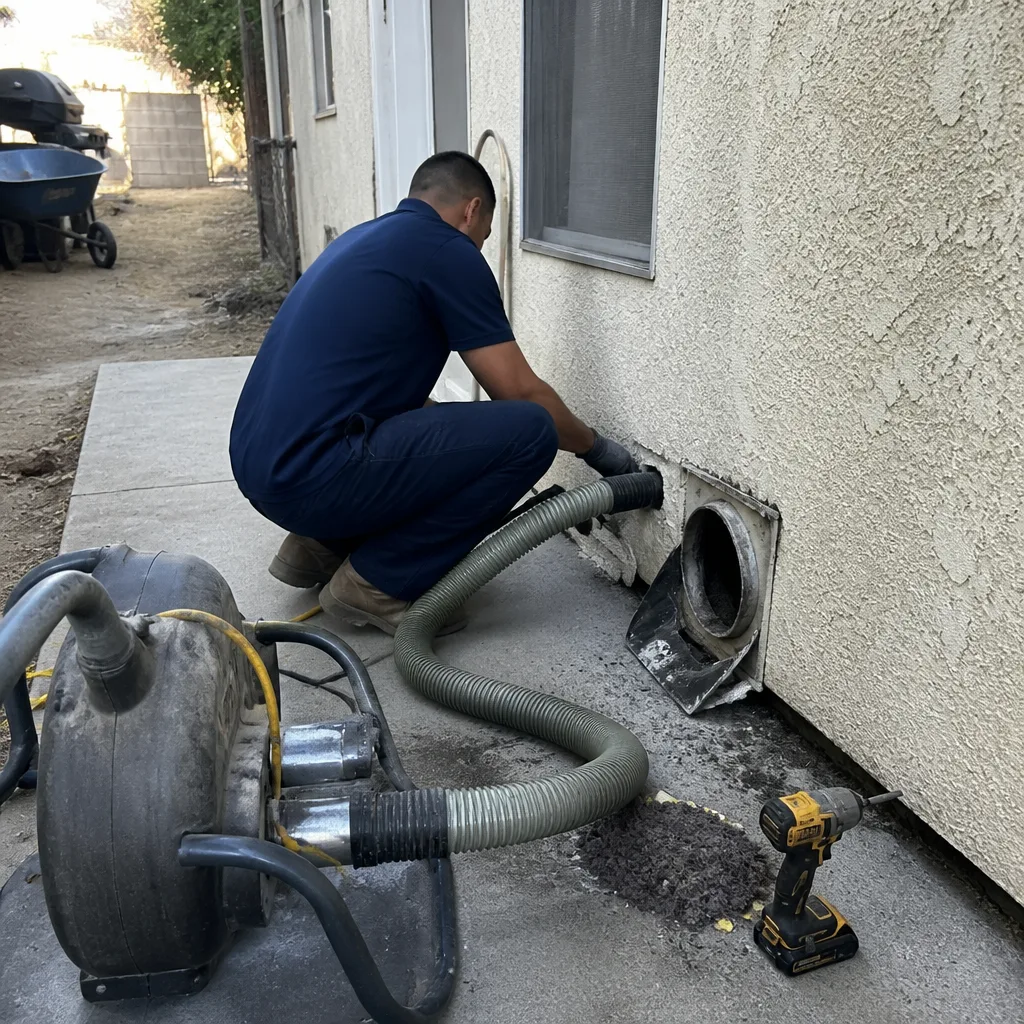
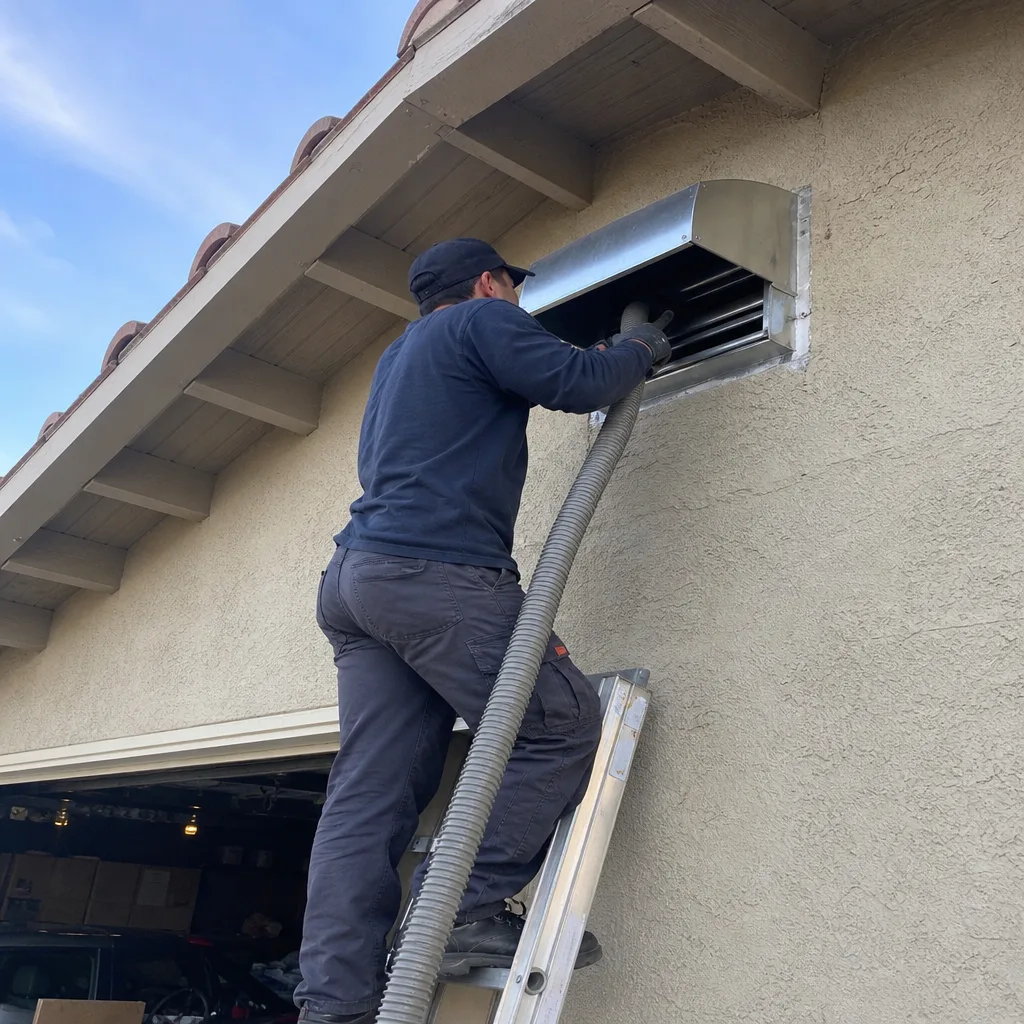
For dryer vent cleaning in Rialto or any San Bernardino home, the same logic applies: lint removal is fire prevention, not convenience. After a wildfire event, dryer vents can accumulate fine ash and soot that reduce airflow and increase lint adhesion. Treat it as part of your post-event checklist.
See the difference
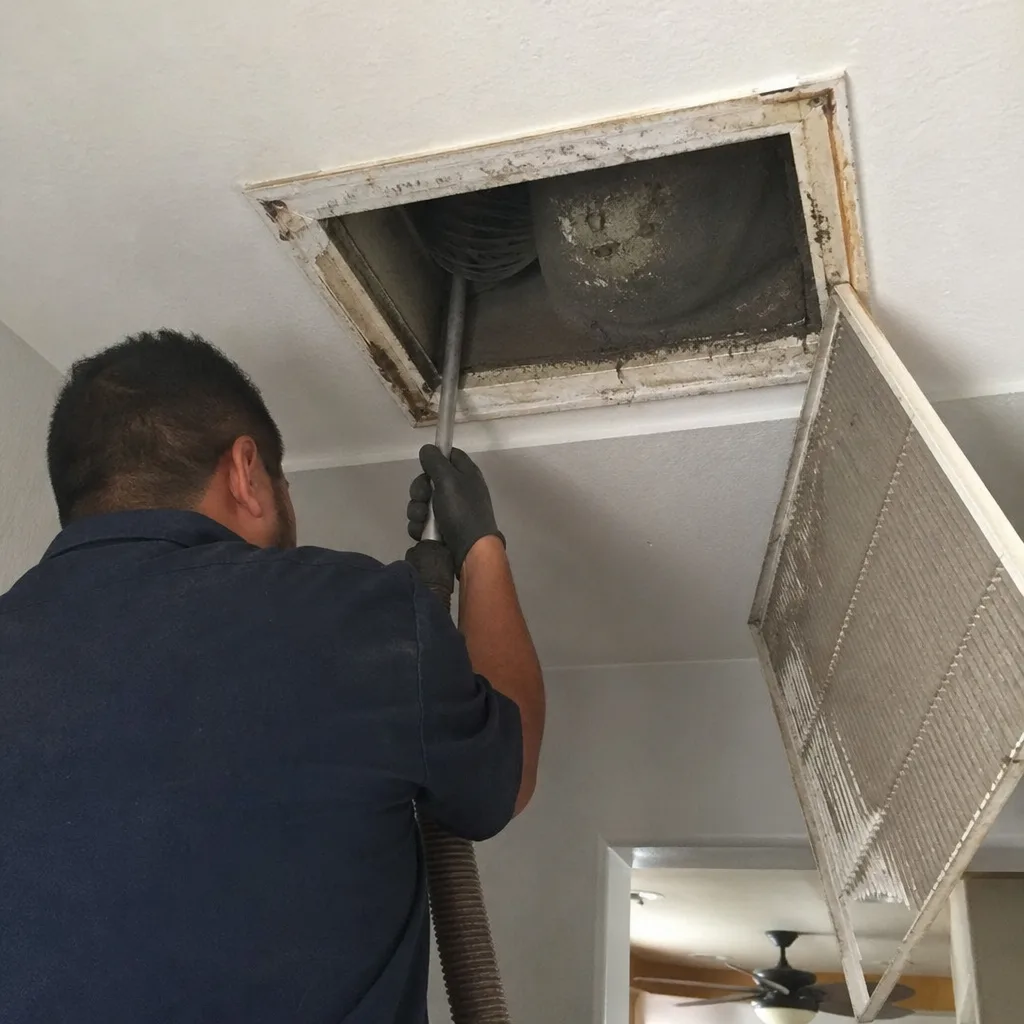 Before
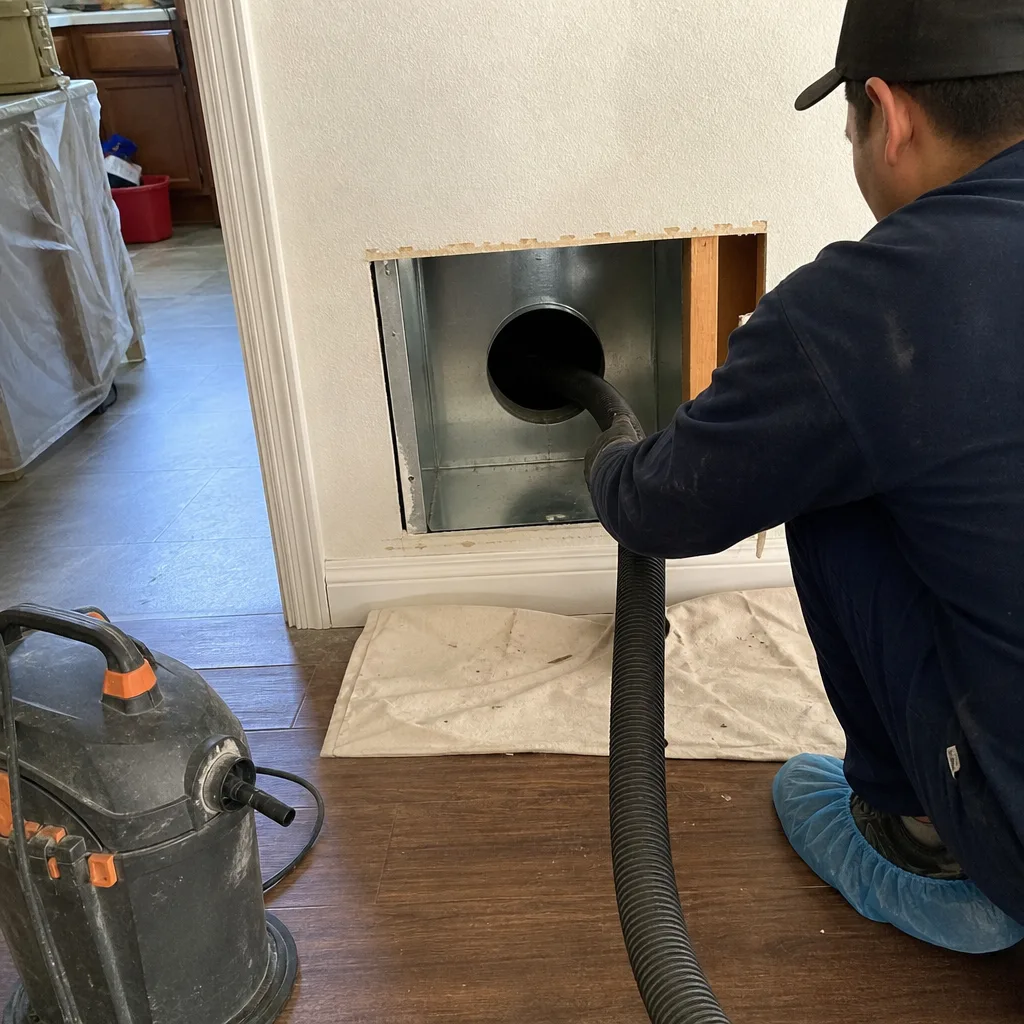 After
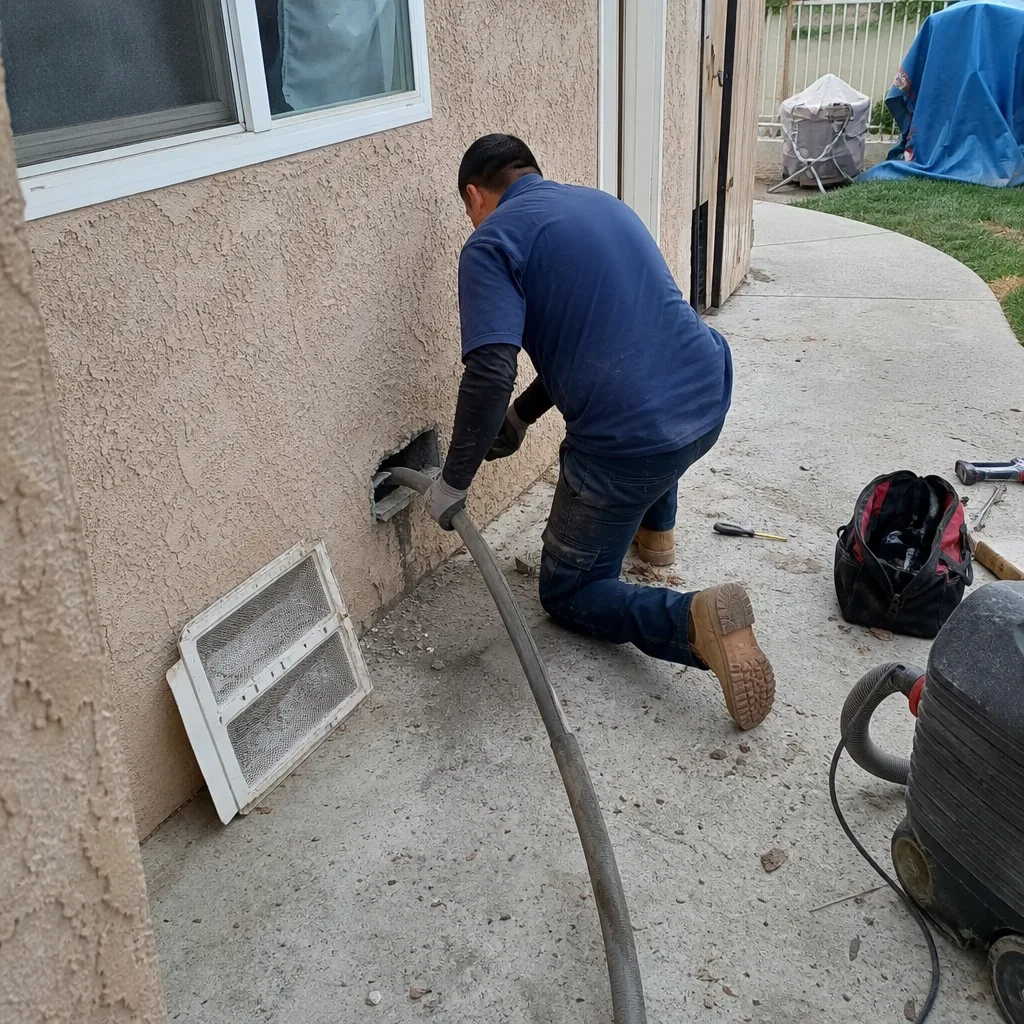 Before
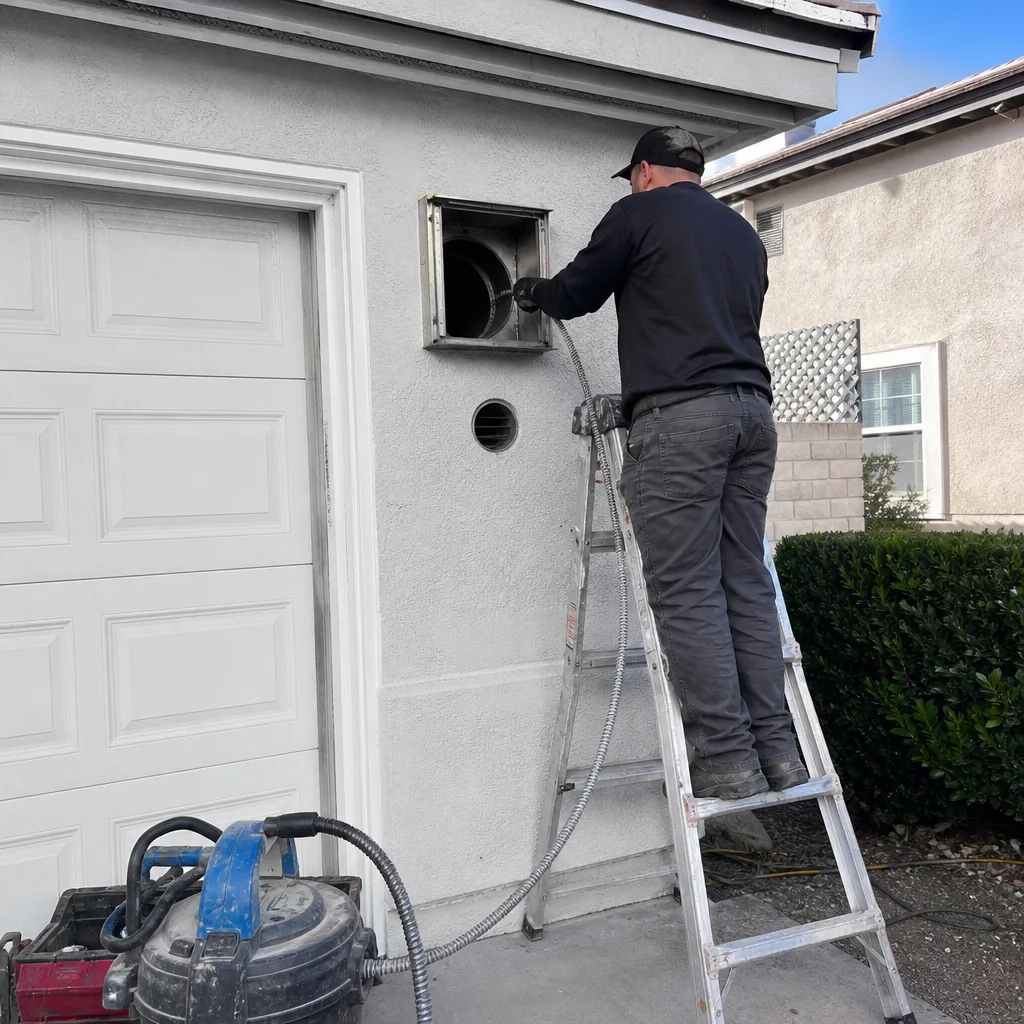 After
 Before
 After
How Often Does Duct Cleaning Actually Need to Be Done in San Bernardino?
The honest answer, without the marketing spin: not as often as most duct cleaning companies advertise, and more often than most San Bernardino homeowners actually do it.
For homes without pets, without smokers, with regular filter changes, and no significant environmental events, duct cleaning every 5-7 years is a reasonable interval. But San Bernardino is different. The combination of wildfire seasons, high-desert dust, the Santa Ana winds, and older housing stock means many homes here need cleaning every 3-5 years. Here’s what accelerates the timeline:
- Annual wildfire smoke events that deposit fine particulate even when the system is mostly shut down.
- Construction or renovation projects, which generate dust that gets pulled into returns.
- Rodent or pest activity in attics and crawlspaces, common in this climate.
- Homes with pets that shed heavily or homes where smoking occurs indoors.
- Earthquake events that disturb decades of accumulated dust and potentially separate duct joints.
One flat price per system, agreed before work starts, is how we quote. No per-vent pricing games, no coupon that doubles once the van arrives. You should know what you’re paying before anyone shows up.
Common Mistakes to Avoid
- Running the HVAC system during a smoke event “just for circulation.” If the filter is not MERV-13 or better, you are actively pulling smoke particulate into the system and depositing it on coil surfaces and duct liners. Shut the system down or upgrade the filter first.
- Using a standard fiberglass filter during fire season in San Bernardino. A $4 filter catches large dust and protects the equipment. It does nothing for smoke. This is the most common and most consequential mistake we see.
- Hiring by lowest price after a contamination event. A $49 whole-house special cannot cover the equipment, time, and labor required for actual duct cleaning, let alone smoke remediation. You’re paying for a filter change and a vague promise.
- Not documenting event conditions. When the insurance adjuster asks why the ducts need professional cleaning, “there was a fire nearby” is weak. Dated photos of AQI readings, ash accumulation, and interior dust are strong.
- Cleaning ducts without addressing separated connections. If earthquake damage left gaps in flex duct runs, cleaning the system is a temporary fix. The contamination source is still active. Repair must happen alongside cleaning, or the problem returns within weeks.
- Attempting DIY duct cleaning after smoke events. You cannot reach duct interiors with a shop vac and a duct tape extension. What you’ll do is loosen particulate and blow some of it into the living space while leaving most behind. Worse, in pre-1980 homes, you may disturb asbestos-containing materials.
- Treating dryer vent cleaning as optional after a fire event. Ash and soot from wildfire events deposit in dryer vents too. Combined with existing lint, this reduces airflow and creates a measurable fire risk. Dryer vent cleaning is a safety service. Treat it like one.
When to Call a Professional
You should call a professional duct company when inspection after an event shows visible soot, gray particulate, or debris accumulation inside ducts; when you can smell smoke from the system weeks after the event; when a quake has clearly separated or sagging duct runs; when the home is pre-1980 and suspected asbestos materials may have been disturbed; when insurance documentation requires a professional inspection report; or when respiratory symptoms in the household persist after the event. Lionheart Air Duct Cleaning offers free estimates in San Bernardino. For more guides & resources, visit our blog. Call (855) 356-4382 to schedule an inspection or discuss what you’re seeing in your system.
Frequently Asked Questions
For a typical single-family home in San Bernardino, whole-system duct cleaning ranges from $350 to $700 depending on system size, number of returns, and contamination level. Smoke-contaminated systems requiring containment and additional treatment typically run $600 to $1,200. We quote one flat price per system before work starts. Call (855) 356-4382 for a free estimate on your specific home.
Only if your filter is MERV-13 or higher and the outdoor AQI is below 200. At hazardous levels, no standard residential filter keeps up. Shut the system down and use portable HEPA purifiers in occupied rooms until outdoor conditions improve. Then change the filter before restarting, regardless of how recently you changed it.
Check for visible separation in attic duct runs, listen for changes in airflow sound, look for sudden dust accumulation around registers within 48 hours after the quake, and check your filter for unusual darkening. Any of these signs warrants a professional inspection. Flex duct in older San Bernardino homes is particularly vulnerable to joint separation under seismic stress.
Coverage depends on your policy and the event classification. Documented damage from a declared disaster is more likely to be covered than gradual accumulation. Your strongest position includes dated photos of event conditions, pre-event maintenance records, and a professional inspection report with specific findings. Ask your insurer before scheduling work, and get the documentation chain started the day of the event.
Professional-grade duct cleaning uses powered agitation equipment like Rotobrush systems paired with HEPA negative-air containment, such as Abatement Technologies units. Budget services typically run a vacuum hose through the ducts without containment, without meaningful agitation, and without photographic verification. The $99 service cleans what a vacuum can reach. It does not clean adhered particulate from duct surfaces. Call (855) 356-4382 to ask about our equipment and process before you book anything.
Within 72 hours of smoke clearing, assuming you can safely access the property. The inspection itself is quick. What you’re looking for is whether smoke particulate penetrated the system and deposited on coil surfaces or duct interiors. The sooner you know, the sooner you can decide whether cleaning is needed, and the stronger your documentation will be for any insurance claim. Estimates are free, so there’s no cost to find out what you’re dealing with.
The Bottom Line
San Bernardino homes face environmental risks that most duct cleaning guides don’t address. Wildfire smoke, earthquake-induced dust, and older housing stock with hazardous materials create conditions where duct contamination is not a slow accumulation problem. It’s an acute event. The protocol is simple: shut the system down during smoke and dust events, run it only with MERV-13 filtration, inspect within 72 hours after major events, document everything for insurance, and hire a company with professional-grade equipment and repair capability rather than a budget operator with a vacuum. Your ductwork is either part of your emergency plan or a hole in it. The choice is yours.
Written by the team at Lionheart Air Duct Cleaning, serving San Bernardino since 2013.