
Last updated November 2, 2026
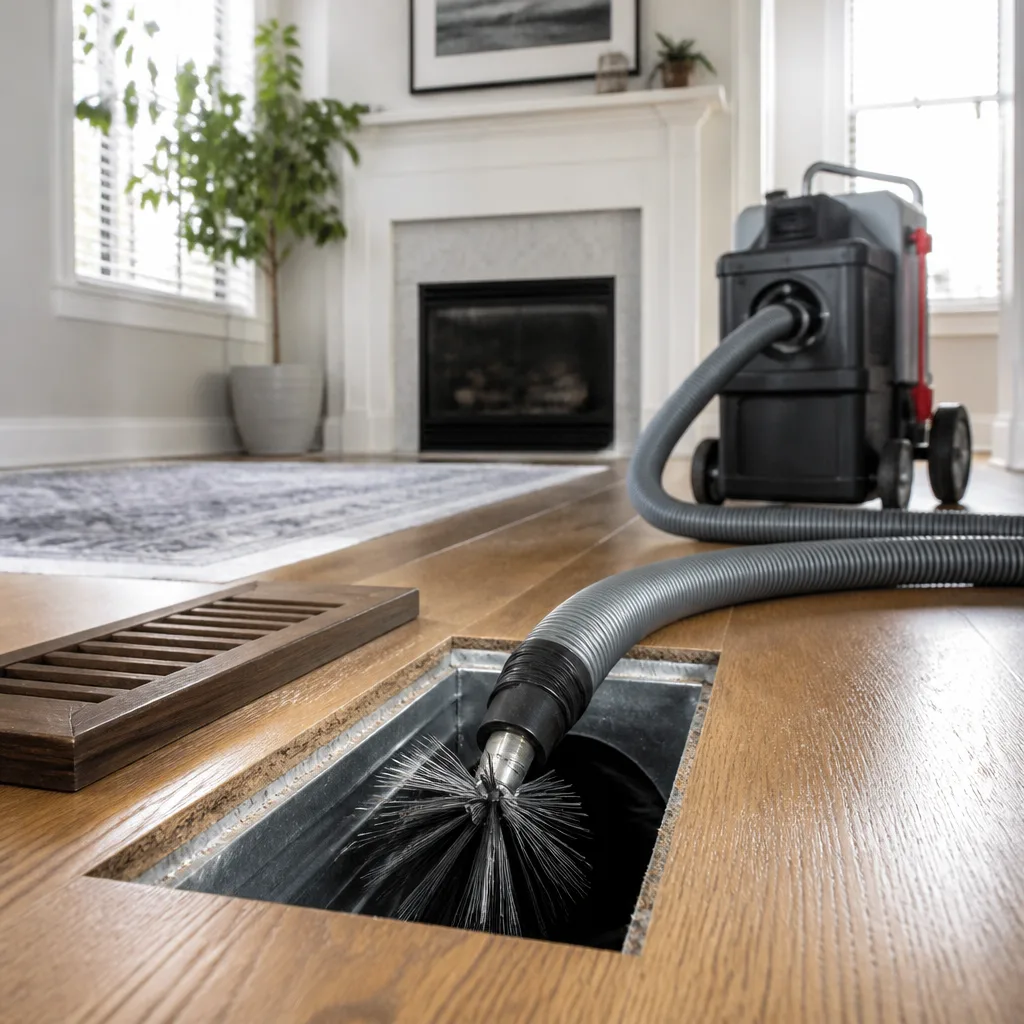 Whole-home duct cleaning
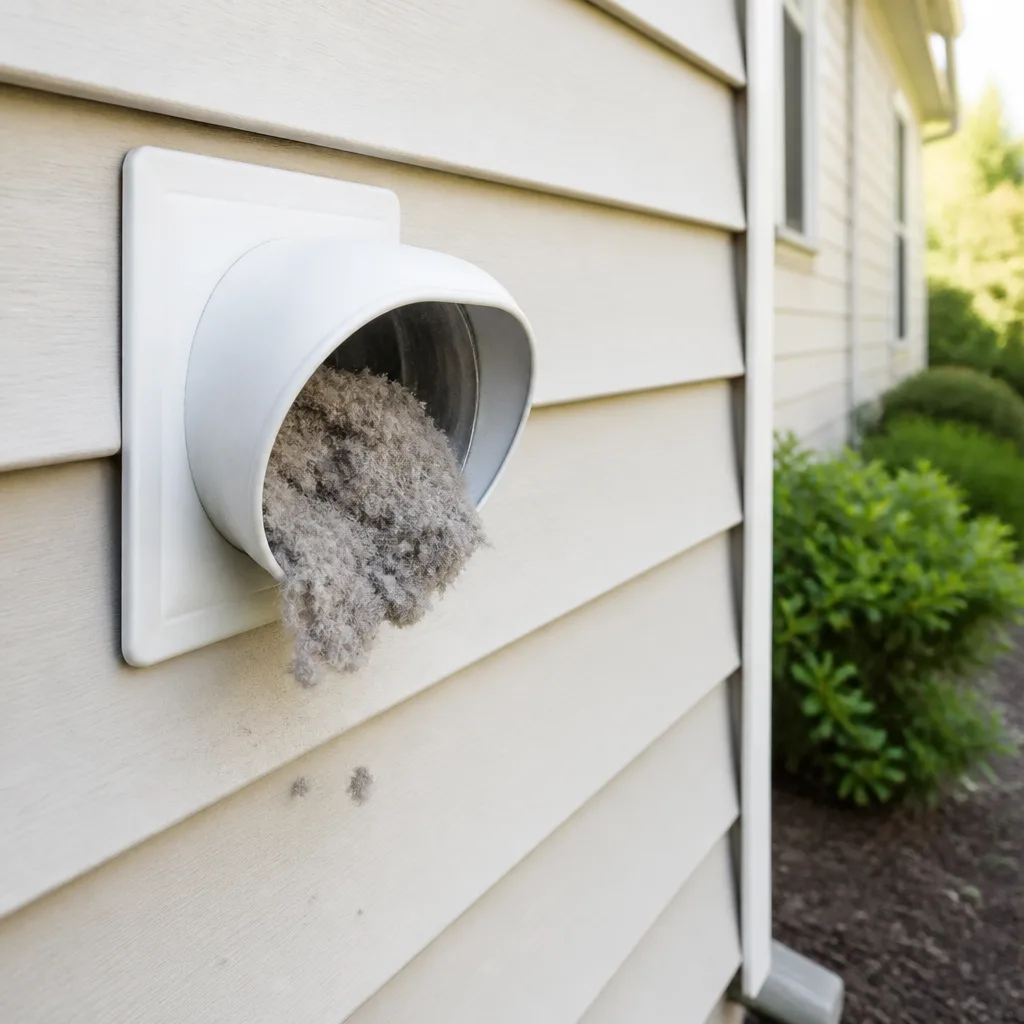 Dryer vent cleaning
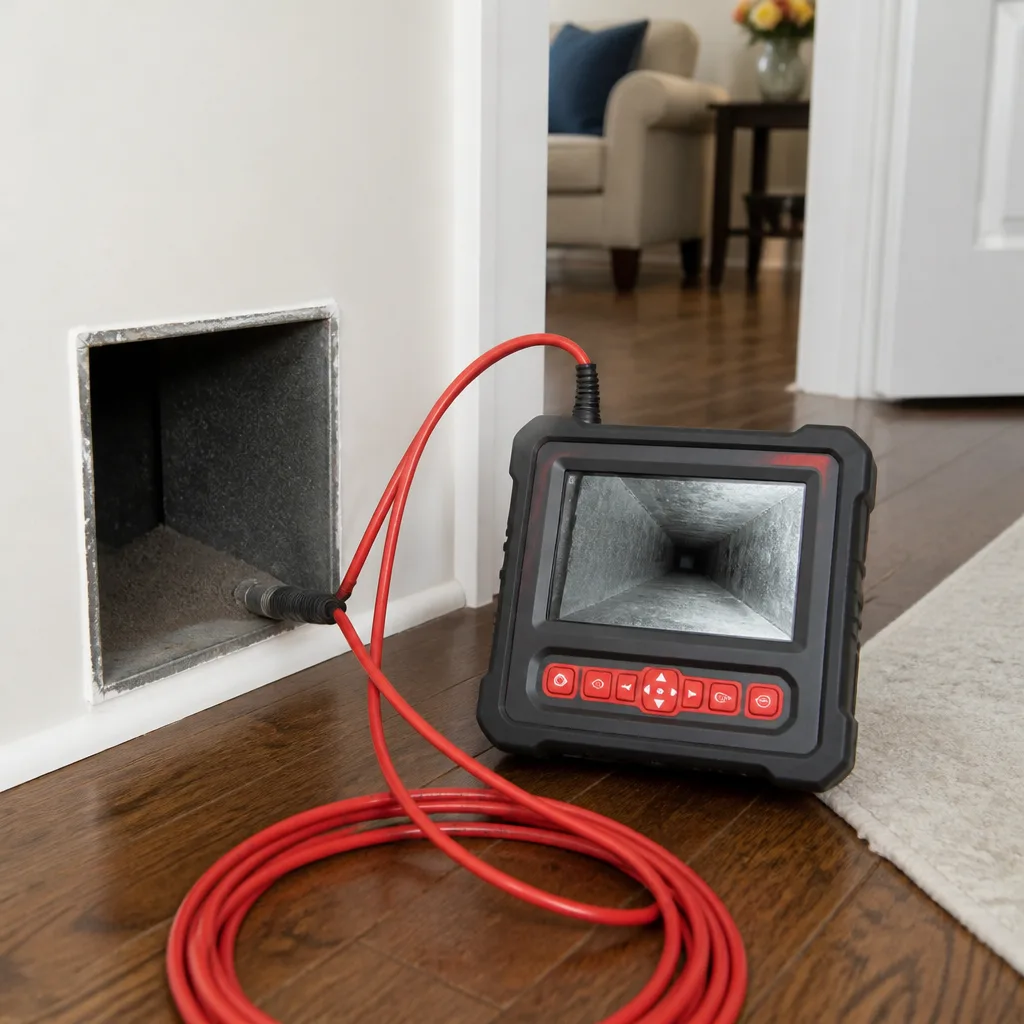 Camera inspection
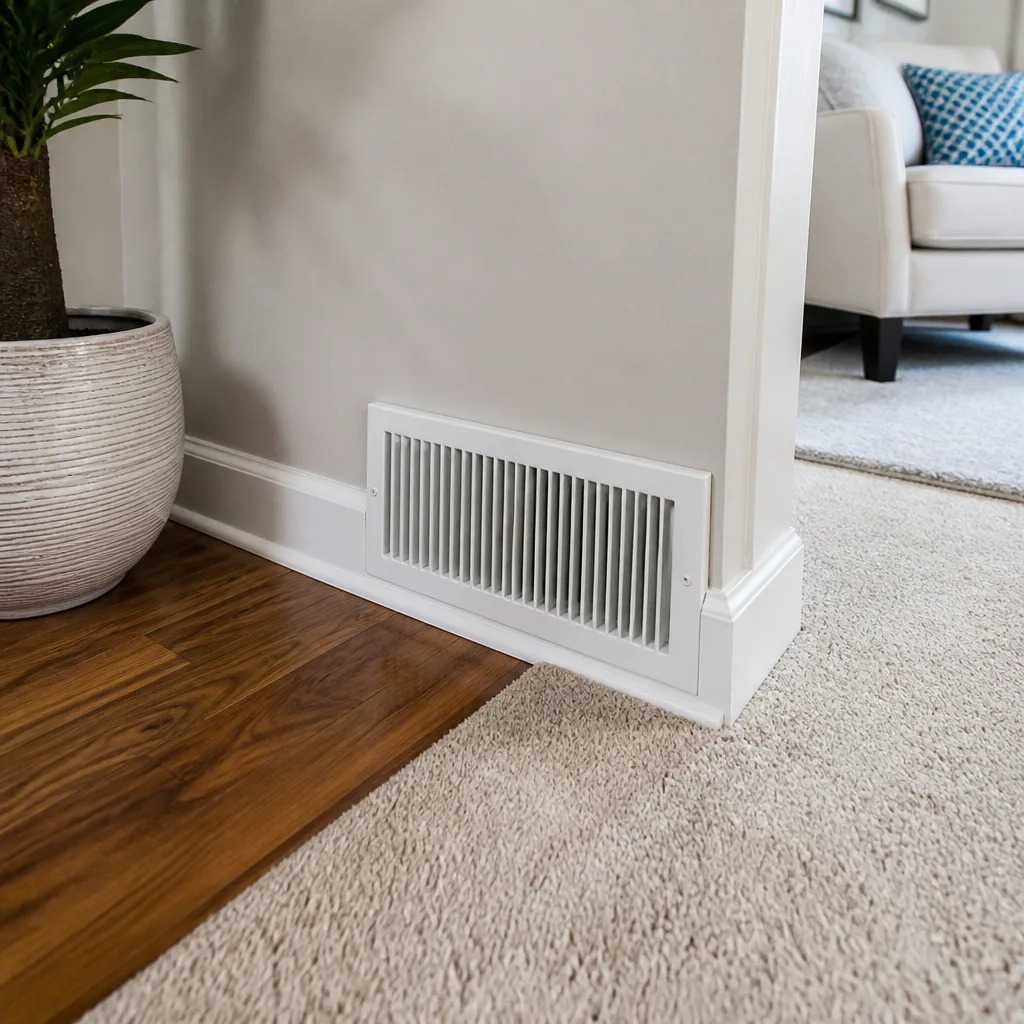 Sanitizing & deodorizing
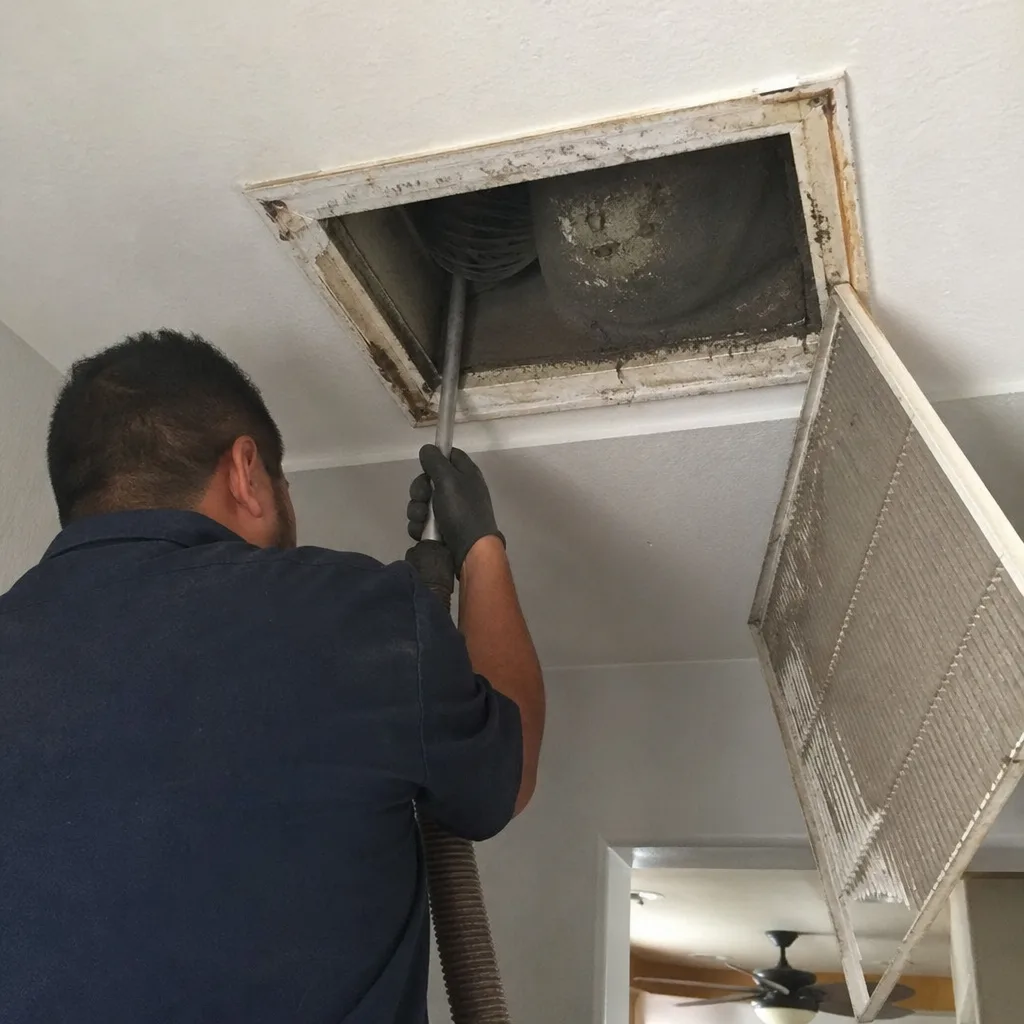
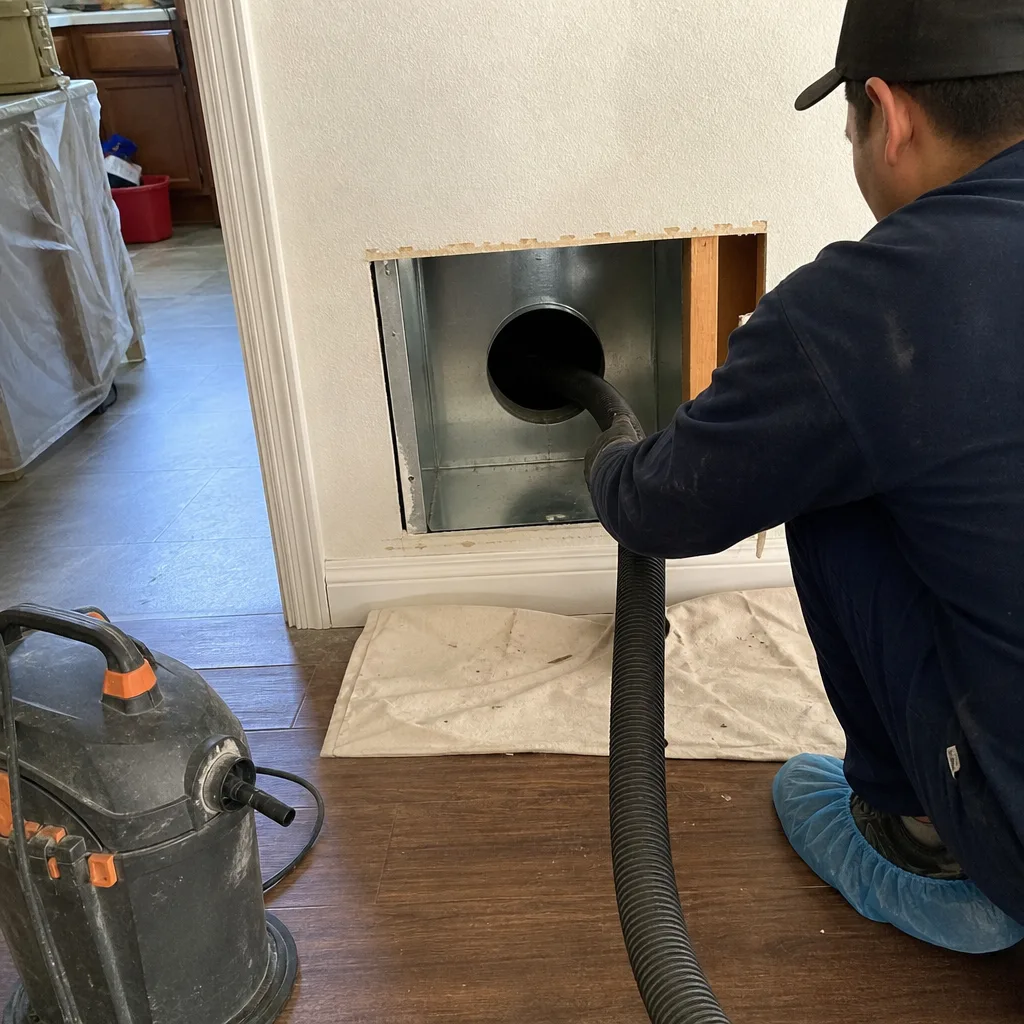
Whole-system duct and dryer vent check with before-and-after photos - you see exactly what came out of your vents
That "$99 whole-house special" is a bait ad - the real number appears once they are in your hallway, or the "clean" is a shop-vac at the register. We photograph the inside of your ducts before and after instead.
Air Duct Cleaning Permits, Codes & Inspections in CA: What You Need to Know
Here’s the disconnect most San Bernardino homeowners don’t see coming: the guy who cleans your ducts for $99 is almost never licensed to fix what he finds inside them. California treats routine duct cleaning and duct repair as two entirely different activities under the law. You can clean without a permit. You cannot modify, replace, or structurally repair ductwork without one. If a cleaning crew finds a disconnected trunk line, crushes it back into place, and wraps it in foil tape to “make it work,” you may now have an unpermitted repair hidden behind your drywall. This guide – and our Air Duct Cleaning Warning Signs: A San Bernardino Homeowner’s Reference Guide – walk through the California Mechanical Code, Title 24 energy standards, HERS testing requirements, and the documentation you should demand before and after anyone touches your ducts. By the end, you’ll know exactly when a job is permit-free and when it’s not.
Quick Answer
Routine air duct cleaning in California does not require a permit, inspection, or license from the Contractor’s State License Board. However, any duct repair, modification, sealing, or replacement that goes beyond surface cleaning falls under the California Mechanical Code and typically requires a C-20 HVAC contractor license and a building permit. If the work changes airflow, seals leaks, or replaces duct sections, Title 24 energy compliance and HERS testing may also be triggered.
Styles & brands we work with
- Whole-home duct cleaning
- Dryer vent cleaning
- Camera inspection
- Sanitizing & deodorizing
Table of Contents
- The Legal Line: Cleaning vs. Repair Under California Code
- Title 24 and Duct Leakage: What It Means for San Bernardino Homes
- HERS Raters, Duct Sealing, and When Testing Gets Triggered
- What to Ask Any Contractor Who Finds Damage During a Cleaning
- Documentation to Retain After Any Duct Work
- Insurance Claims, Home Sales, and Duct Documentation
- DIY Duct Work: What’s Actually Legal in California
- Questions to Ask Before Hiring a Duct Company in San Bernardino
The Legal Line: Cleaning vs. Repair Under California Code
California draws the line between cleaning and repair at the point where a tool modifies the duct system. Here’s how that plays out in the field. When we clean a duct system in a San Bernardino home, we’re running a Rotobrush or Nikro agitation and extraction system through the interior surfaces. We remove debris, dust, and microbial growth from the inside of existing ductwork. That’s cleaning. The Mechanical Code sees it as maintenance, not construction.
Repair begins the moment someone does any of the following:
- Cuts into existing ductwork to access or replace a section
- Disconnects and reconnects duct segments at joints
- Applies sealant that changes the air-leakage performance of the system
- Replaces a duct boot, collar, or plenum connection
- Re-routes a duct run to a new location
- Patches a hole or tear with anything more than temporary surface dressing
Under California Mechanical Code section 108, a permit is required for work that alters, repairs, or extends a mechanical system. The California Building Standards Code pushes this further: any duct modification must be done by a contractor holding a C-20 warm-air heating, ventilating, and air-conditioning license. A handyman holding a general B license is not authorized to seal ducts. A cleaning-only company with no contractor’s license at all is not authorized to do anything other than run equipment through the system.
Why does this matter in San Bernardino specifically? Because the housing stock here skews older. Crawlspace and attic ductwork in homes built before 1980 routinely shows disconnected joints, compression damage from stored boxes, and separations at the plenum. A cleaning crew that “fixes” those issues with tape has now performed unpermitted work. If that work fails later and causes water damage or a fire, the homeowner discovers the permit issue the hard way, during an insurance claim.
We’ve walked into homes in the Verdemont and Del Rosa neighborhoods where previous cleaners left tape-splinted ducts that had separated again within six months. The homeowner paid for a repair that was never documented, never permitted, and never actually fixed. That’s the cost of blurring the line between cleaning and repair.
Title 24 and Duct Leakage: What It Means for San Bernardino Homes
Title 24, Part 6 of the California Code of Regulations sets the state’s energy efficiency standards. It has direct authority over duct systems, and it’s the reason an unpermitted duct repair in San Bernardino can come back to haunt a homeowner during a sale or claim.
For any new duct installation or replacement in California, Title 24 mandates a duct leakage test. The current standard requires less than 5% leakage for systems installed in conditioned space and less than 10% for ducts in unconditioned space like attics or crawlspaces. San Bernardino’s summer heat makes this measurable: a duct system leaking 15% or 20% is pushing cooled air into a 140-degree attic. Your air conditioner runs longer, works harder, and dies sooner.
Here’s what Title 24 means in practical terms for San Bernardino homeowners:
- If you replace more than 40 linear feet of ductwork, you have triggered a Title 24 compliance event and need a HERS rater to verify leakage.
- If you alter a duct system during a remodel, the entire altered system can be required to meet current Title 24 leakage standards, not just the portion you changed.
- If you’re replacing an HVAC system and the ducts are older, a permit inspector may flag existing leakage and require sealing before sign-off.
- If the ducts were sealed without a HERS verification, no one can tell you whether the sealing actually worked.
The older San Bernardino neighborhoods, Mount Vernon Avenue corridor, Arrowhead, parts of the North End, contain thousands of homes with original 1960s and 1970s duct runs. Those ducts were installed before anyone measured leakage. Some of them move less air to the far rooms than they lose into the attic. A cleaning won’t fix that. A repair or replacement will, and that’s when the Title 24 clock starts. Air Duct Repair in Rialto often involves this exact conversation with homeowners, because the threshold for repair work is lower than people expect.
HERS Raters, Duct Sealing, and When Testing Gets Triggered
In California, energy compliance for ductwork usually requires a HERS rater. HERS stands for Home Energy Rating System, and a certified HERS rater is a third-party inspector authorized by the California Energy Commission to verify that installed systems meet Title 24 standards.
Here’s when a HERS rater enters the picture:
- Any new duct installation in a permitted project requires HERS duct leakage verification.
- Any duct replacement beyond the 40-lineal-foot threshold requires HERS testing.
- A duct sealing project completed under a utility rebate program, such as a Southern California Edison or SoCalGas incentive, typically requires HERS verification before the rebate is paid.
- When a building permit is pulled for an HVAC replacement and the inspector sees old ducts, they can require HERS verification of existing duct leakage.
The HERS rater performs a duct blaster test. They seal the registers, pressurize the duct system, and measure how much air escapes. The test produces a CFM (cubic feet per minute) leakage number that is compared against the Title 24 maximum. Pass or fail, the result is documented and filed with the permit.
From our seat as a San Bernardino air duct cleaning company, the HERS process is one of those hidden costs nobody budgets for. A homeowner gets a quote for duct replacement, pulls a permit, and learns a HERS test will add several hundred dollars. It’s not optional if the permit requires it. And skipping it means the permit never closes, which means the work is legally incomplete.
If you’re planning major duct work, ask the contractor early: does this project require a HERS rater, and is the testing fee included in the quote? If they can’t answer, keep looking.
What to Ask Any Contractor Who Finds Damage During a Cleaning
Duct cleaning finds problems. That’s the nature of the work. A Rotobrush or Nikro system moves through the duct with agitation and vacuum, and what it kicks loose often reveals conditions that were never visible before: separated joints, crushed flex duct, rodent penetration, rust through the metal. The question is what the company does with what it finds.
Before anyone cleans your ducts in San Bernardino or anywhere in California, ask these five questions. If you’re cleaning first and they find damage, ask them again before authorizing any repair.
- Does your company hold a C-20 HVAC contractor’s license? If the answer is no, the company cannot legally repair anything they find. They can clean. They cannot modify. Write that down before you hand over a deposit.
- If you find damage, will the repair be permitted? A licensed contractor should be able to explain when a repair triggers a permit and when it stays below the threshold. If they wave off the permit question entirely, that’s a red flag.
- Do you have a HERS-certified rater you work with? Not every repair triggers HERS, but a licensed contractor will know when one does. If they’ve never heard of HERS testing, they’ve never pulled a Title 24 duct permit.
- Will you photograph and document what you find before and after cleaning? Cameras in the duct before cleaning, after cleaning, and after any repair. Documentation is your evidence chain for insurance, resale, and warranty.
- What exactly does your repair include? Foil tape is not a repair. Mastic, mechanical fasteners, and documented materials are a repair. Get specifics.
We see this pattern often enough in San Bernardino to name it plainly: a low-cost cleaning outfit finds a torn duct, tapes it, charges an extra $200, and leaves no paperwork. Six months later the tape has dried out in the attic heat and the duct is open again. The homeowner has no record of what was done, no permit, and no recourse. The $99 special became a $300 unpermitted patch. In our experience, professional-grade duct work requires the willingness to fix what’s broken properly or tell the homeowner to bring in someone who can.
Documentation to Retain After Any Duct Work
Paperwork is your only leverage when something fails. In San Bernardino’s hot, dry climate, duct joints loosen and adhesive dries out faster than in coastal zones. A repair that held fine last summer can fail this summer. When it fails, here’s what you want in your file.
- The cleaning or repair invoice with the date, the company name, the license number, and a line-item description of what was done.
- Before and after photos or video of the duct interior, especially for any area that was cleaned or repaired. We use camera documentation on our jobs, and we hand it over at completion.
- The permit number if a permit was pulled, plus the final inspection sign-off from the city or county building department.
- The HERS verification certificate if testing was performed, showing the tested leakage rate and the date.
- Product documentation for any replacement materials: mastic brand, flex duct R-value, metal gauge, register model.
- Warranty terms in writing for any installed equipment or completed repair.
This documentation does three jobs. It proves the work was done by someone legally authorized to do it. It gives a home inspector or appraiser evidence that the duct system has been maintained. And it protects your insurance claim if something downstream fails. A claim for water damage from a disconnected duct is much stronger with dated photos showing the connection was sound after cleaning.
Insurance Claims, Home Sales, and Duct Documentation
San Bernardino County’s home sale market has changed. Buyers, insurers, and lenders are asking for more HVAC documentation than ever before, particularly in a climate where air conditioning is not optional. When a home goes under contract, inspectors look at the mechanical system. If the ducts show signs of amateur repair, tape-wrapped joints, collapsed flex runs, the buyer’s inspector will flag it. The seller then has to explain why there’s no permit, no receipt, and no contractor attached to the work.
Here’s the real-world sequence we’ve watched play out in San Bernardino escrows:
- A buyer’s inspector notes “duct modifications observed, no permit on file.”
- The title company asks the seller for documentation. None exists.
- The buyer requests a credit or a retroactive permit, which requires opening walls or ceilings to expose the work for inspection.
- The seller pays for a legitimate HVAC contractor to repair the prior repair, this time with a permit.
The avoidable version: after any duct work, get the permit, keep the receipt, file the photos. It costs almost nothing at the time and saves thousands at closing.
On the insurance side, California carriers have grown reluctant to insure homes with undocumented mechanical work. A duct replacement done without a permit can be cited by an adjuster as a contributing factor to a denied claim, particularly for water damage or fire. The burden is on you to prove the work was done correctly. Documentation is how you prove it.
DIY Duct Work: What’s Actually Legal in California
California takes a practical but firm stance here. Homeowners are legally permitted to perform work on their own owner-occupied, single-family residence without a contractor’s license, provided the work would otherwise require a permit, and provided the homeowner pulls that permit themselves. That’s the owner-builder exemption in the Business and Professions Code.
But here’s what it does not exempt you from:
- You still need a permit for duct repair or replacement that exceeds the cleaning threshold.
- You still need to pass Title 24 duct leakage testing with a HERS rater if the work is significant enough to trigger it.
- You’re personally liable for the quality and safety of the work. If you seal ducts incorrectly and it causes a problem, the liability is yours.
- You cannot perform duct work on a property you rent out or on any multi-unit building. The owner-builder exemption applies only to owner-occupied single-family homes.
Routine duct cleaning is different. No permit is required. You can clean your own ducts with a rental machine if you choose, though the results rarely match what a professional-grade Rotobrush or Nikro system achieves. The restriction kicks in when you start altering the system. Lionheart Air Duct Cleaning has seen enough DIY duct repairs in San Bernardino attics to say this with confidence: the ones that hold are rare. The ones that fail are common, and they fail in ways that are expensive to undo.
Questions to Ask Before Hiring a Duct Company in San Bernardino
You’re hiring someone to deliver Air Duct Cleaning services inside the air delivery system of your home. In a desert climate like San Bernardino’s, that system moves air you breathe for most of the year, through 130-degree attics and dusty crawlspaces. The lowest bidder does not belong in that environment. Here’s a focused list of what to ask any company before you schedule.
- What equipment do you use? Look for professional-grade systems such as Rotobrush or Nikro, with negative-air containment capability like Abatement Technologies units when the job calls for it. If the company shows up with a shop vacuum and a drill brush, that’s not duct cleaning. That’s a show.
- What happens when you find damage? The answer should involve either a licensed repair within the company or a referral to a licensed contractor. If the answer is “we’ll patch it for you,” keep moving. Lionheart Air Duct Cleaning does more than brush past problems, we diagnose and fix duct damage through our Air Duct Repair service.
- Do you document the job? Camera evidence before and after. If the company doesn’t own a duct camera, walk away. You’ll be paying for work you can’t verify.
- Are you licensed and insured for the specific work being quoted? A C-20 license for HVAC work. Not a general business license. Not “we have a guy.” Get the number and verify it on the CSLB website.
- Will the quote include any permit or HERS fees if they apply? Companies that hide these fees until mid-project are counting on you being too committed to stop.
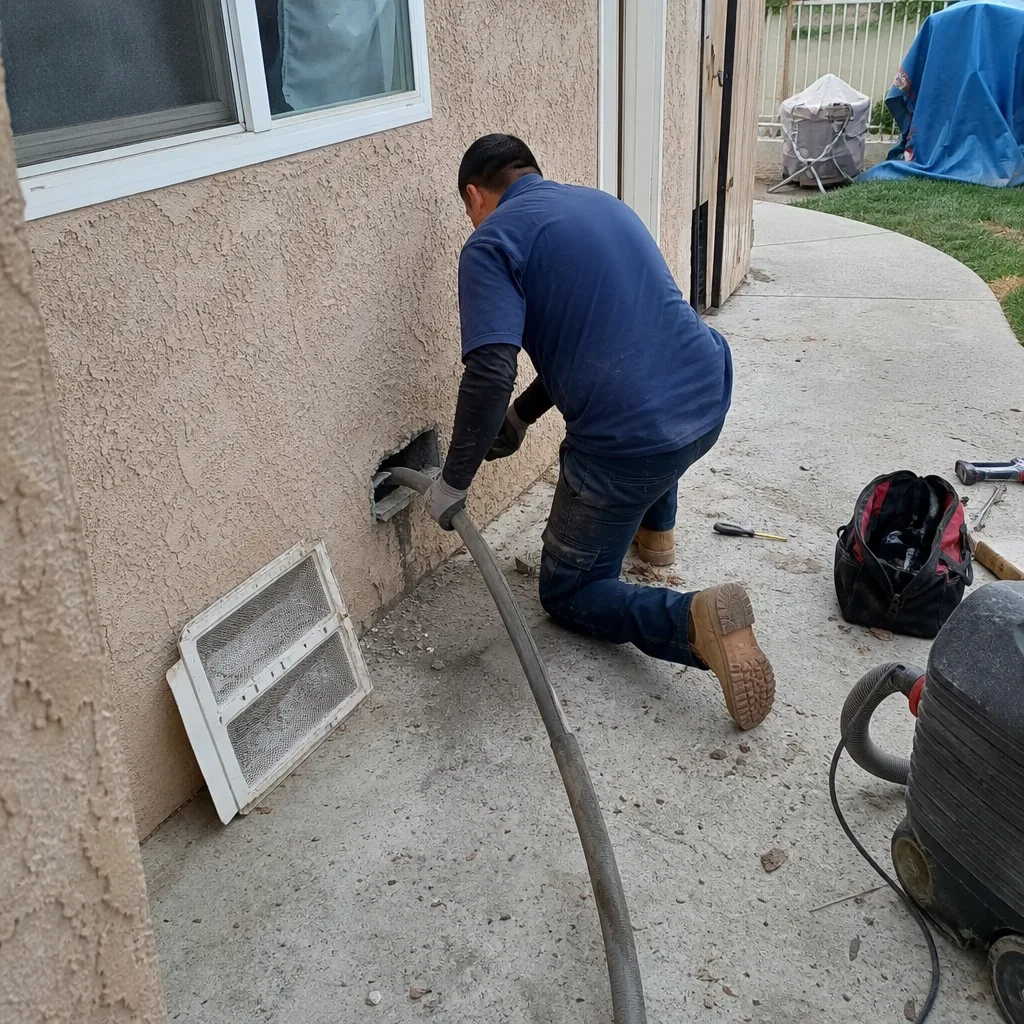
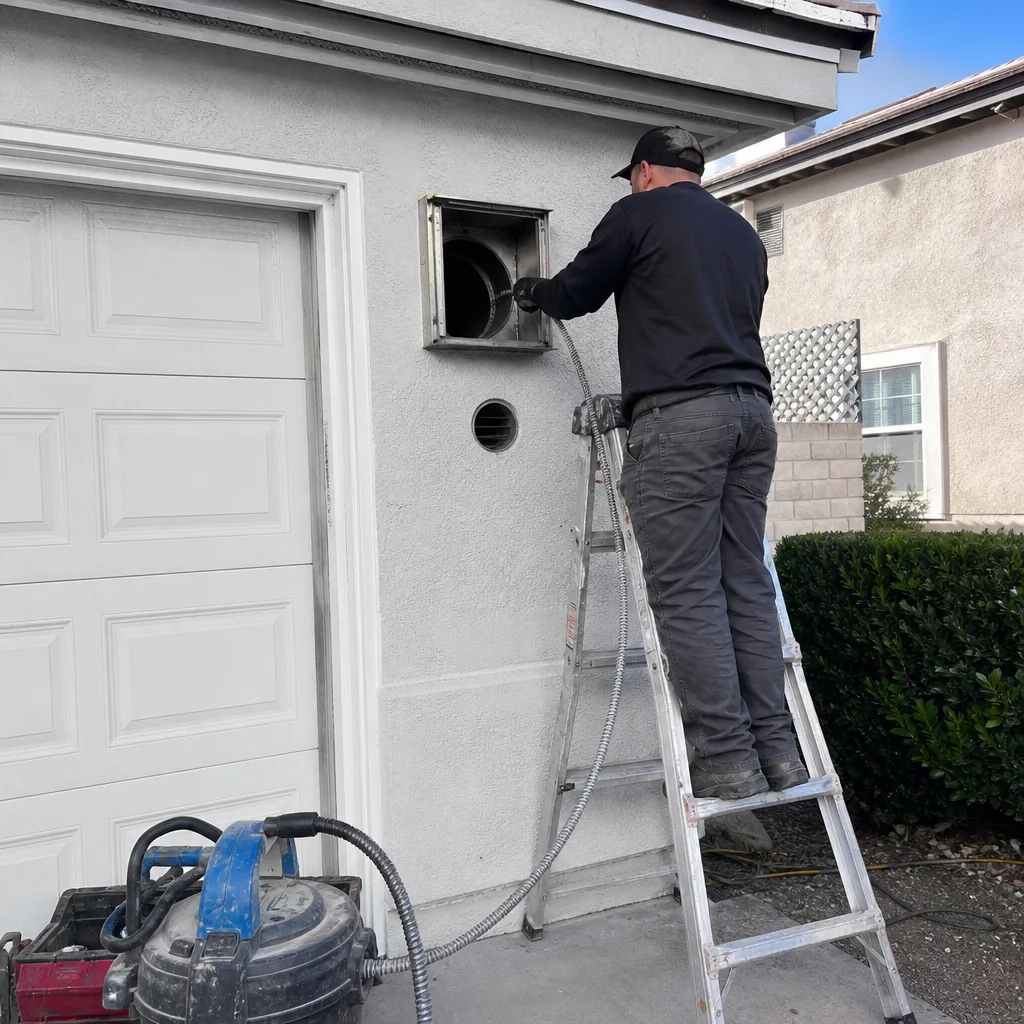
- Do you also clean dryer vents? A company that treats Dryer Vent Cleaning as a fire-safety service rather than an upsell is thinking about your house as a system, not a ticket. Lint buildup is a leading cause of residential dryer fires, and it’s one of the cheapest prevention measures available in San Bernardino.
Common Mistakes to Avoid
- Letting a cleaning company do “minor repairs” without a permit. The moment the work modifies the duct, it crosses into regulated territory. A $150 tape job can cost you a $5,000 escrow credit or a denied insurance claim.
- Paying for duct sealing without HERS verification. You cannot know the sealing worked unless it’s tested. In San Bernardino, where summer attic temperatures push duct sealant to its limits, untested sealing is a guess.
- Replacing ducts during a remodel without pulling a permit. Remodels trigger inspections. An unpermitted duct replacement discovered during a kitchen inspection can stop the whole project.
- Ignoring dryer vent cleaning because it seems optional. Lint fires are a documented cause of structure fires, and the dryer vent is part of the exhaust system, not a separate convenience.
- Hiring a company that can’t produce a C-20 license but promises to “handle everything.” No license, no legal repair authority. End of story.
- Throwing away documentation. The invoice, photos, and permit are your proof. Scan them. Store them. They’re worth real money at resale.
- Treating duct cleaning quotes purely by price. A $99 special that jumps to $700 after “discoveries” is the classic industry pattern. Professional-grade work is priced before the job starts, not after.
See the difference
 Before
 After
 Before
 After
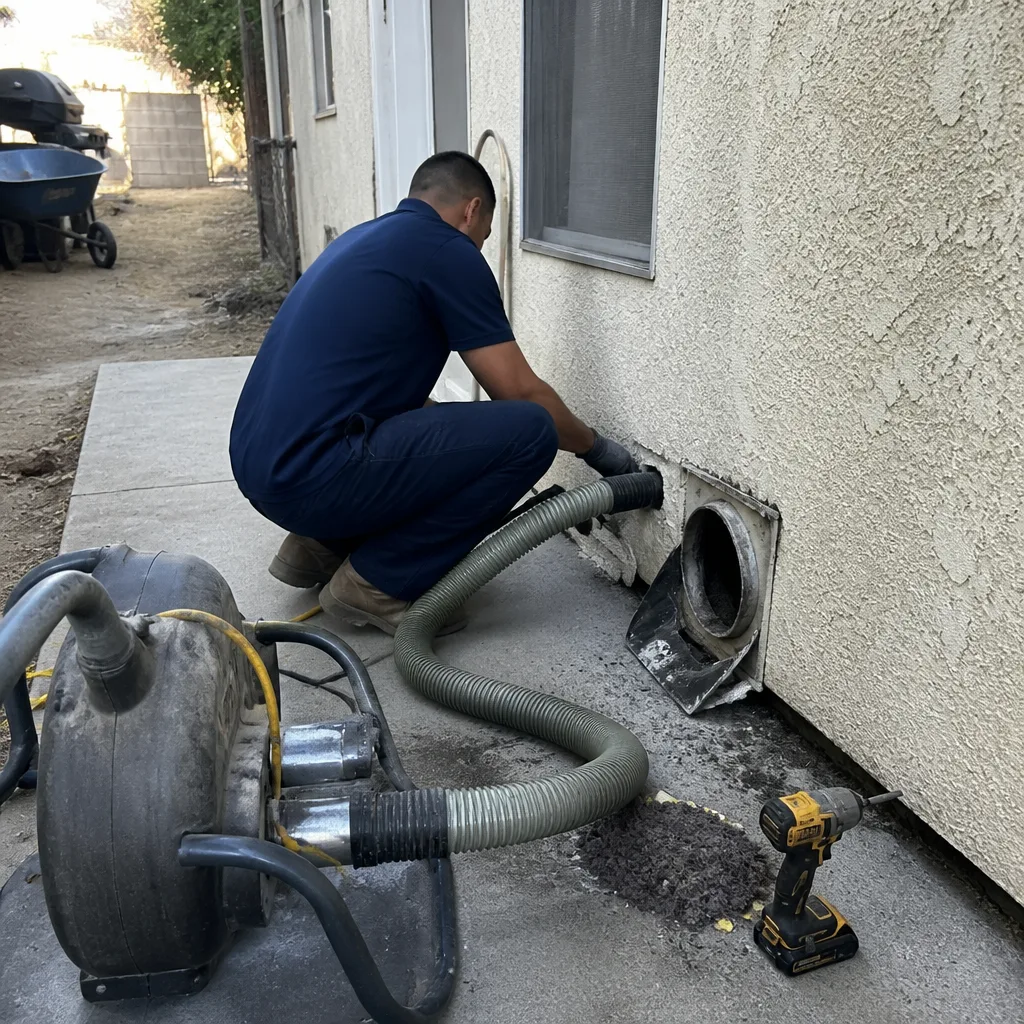 Before
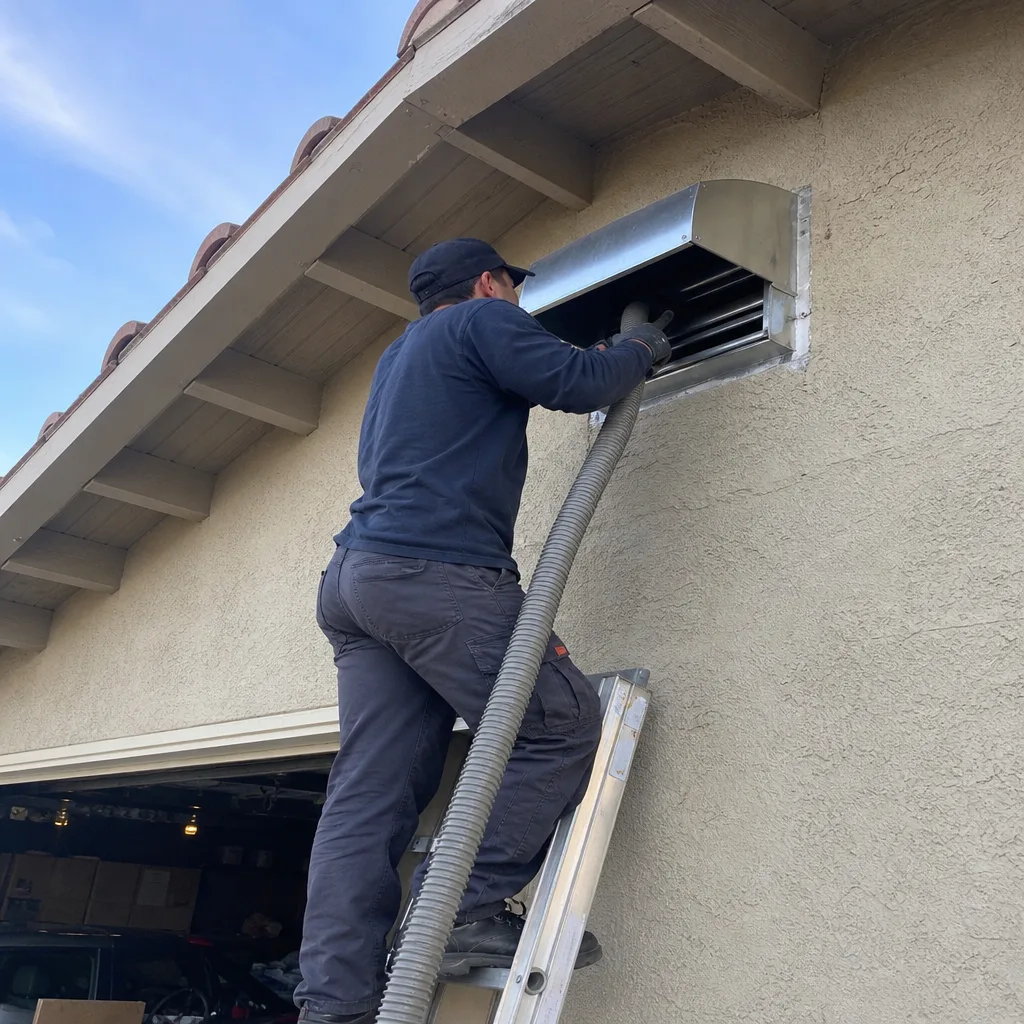 After
When to Call a Professional
If you see visible mold on vents or duct surfaces, if rooms have consistently weak airflow, if your ducts are over 20 years old and have never been inspected, or if you just bought a home where the prior owner left no HVAC documentation at all, call a specialist who can assess the system as a system. A professional cleaning with camera documentation gives you a baseline. A licensed repair brings the system into compliance. Lionheart Air Duct Cleaning offers free estimates in San Bernardino. Call (855) 356-4382 to schedule an assessment.
Frequently Asked Questions
No. Routine air duct cleaning is considered maintenance, not construction, and requires no permit and no contractor’s license. The permit requirement begins when someone modifies, repairs, seals, or replaces ductwork.
Cleaning removes debris from the interior of existing ducts without changing the system. Repair alters the ductwork, its connections, or its sealing. Repair is regulated under the California Mechanical Code and requires a C-20 contractor’s license and, depending on scope, a permit.
Title 24 is California’s energy efficiency code. It sets maximum duct leakage standards and requires HERS testing for significant duct replacement or sealing. In San Bernardino’s hot climate, leaky ducts waste cooling energy and increase utility bills.
Yes, if you own and occupy the home as a single-family residence, you can do the work yourself under the owner-builder exemption. You must still pull a permit if the work requires one and comply with Title 24 and HERS requirements if they are triggered.
The $99 quote typically covers a superficial cleaning with consumer-grade equipment, with the real profit coming from add-ons discovered after the tech arrives. Professional systems like Rotobrush and Nikro, camera documentation, and licensed repair capability cost more because they deliver verifiable results. For an exact quote in San Bernardino, call (855) 356-4382.
In San Bernardino’s dust and heat environment, every 3 to 5 years is reasonable for most homes. Homes with pets, smokers, recent construction, or allergy-sensitive occupants may benefit from more frequent cleaning. Dryer vents should be cleaned annually as a fire-safety measure.
Keep the invoice with contractor license number, before and after photos or video, the permit number and final inspection sign-off, HERS verification if applicable, and materials documentation. These records protect your insurance claims and resale value.
The Bottom Line
California does not require a permit for routine air duct cleaning, but it regulates duct repair and replacement firmly. If a company finds damage during a cleaning, the legal questions begin: are they licensed to fix it, does the fix require a permit, and does Title 24 compliance apply? In San Bernardino, where aging duct systems and extreme heat are the norm, the answers matter. Get documentation for everything. Verify licenses before work starts. Treat dryer vents as a fire-safety item. And if the company cannot answer the permit and Title 24 questions, find one that can – or explore more guides & resources to protect yourself.
Written by the team at Lionheart Air Duct Cleaning, serving San Bernardino since 2013.