
Last updated November 2, 2026
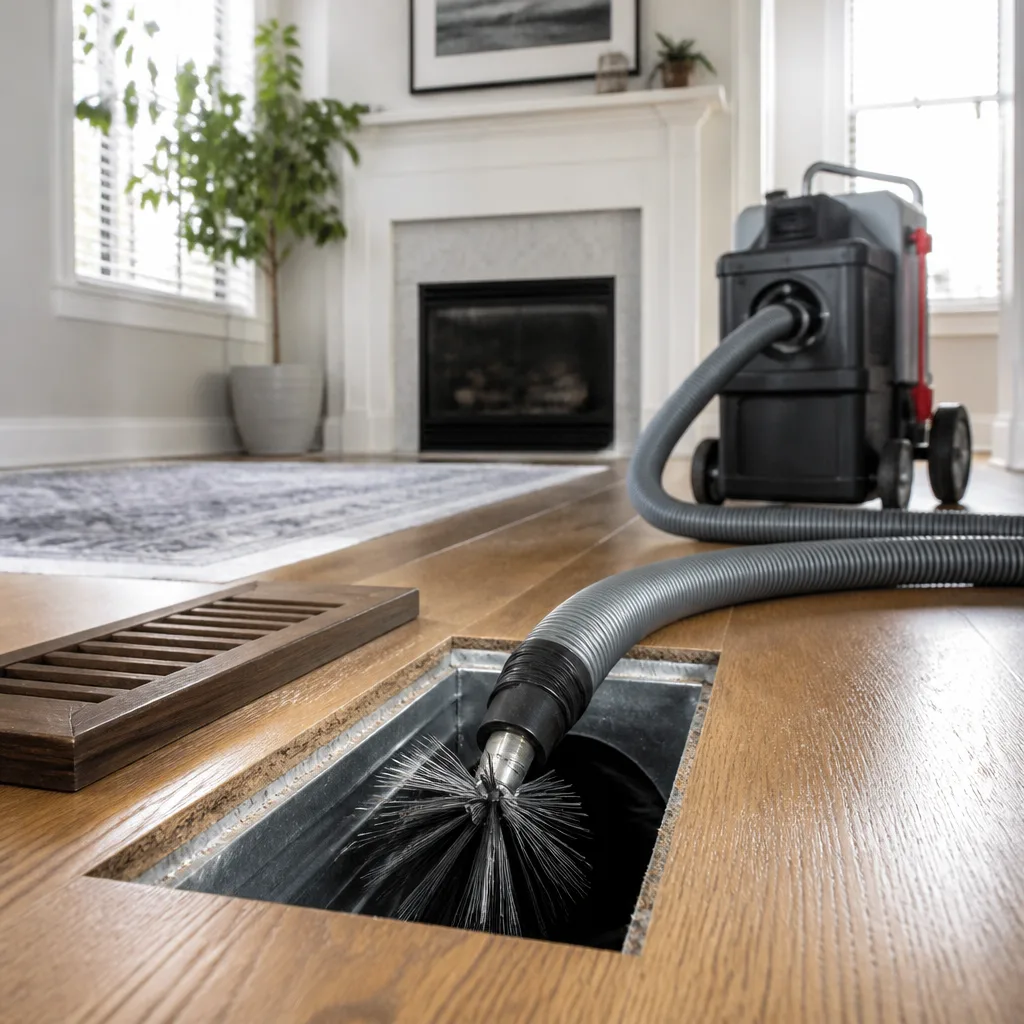 Whole-home duct cleaning
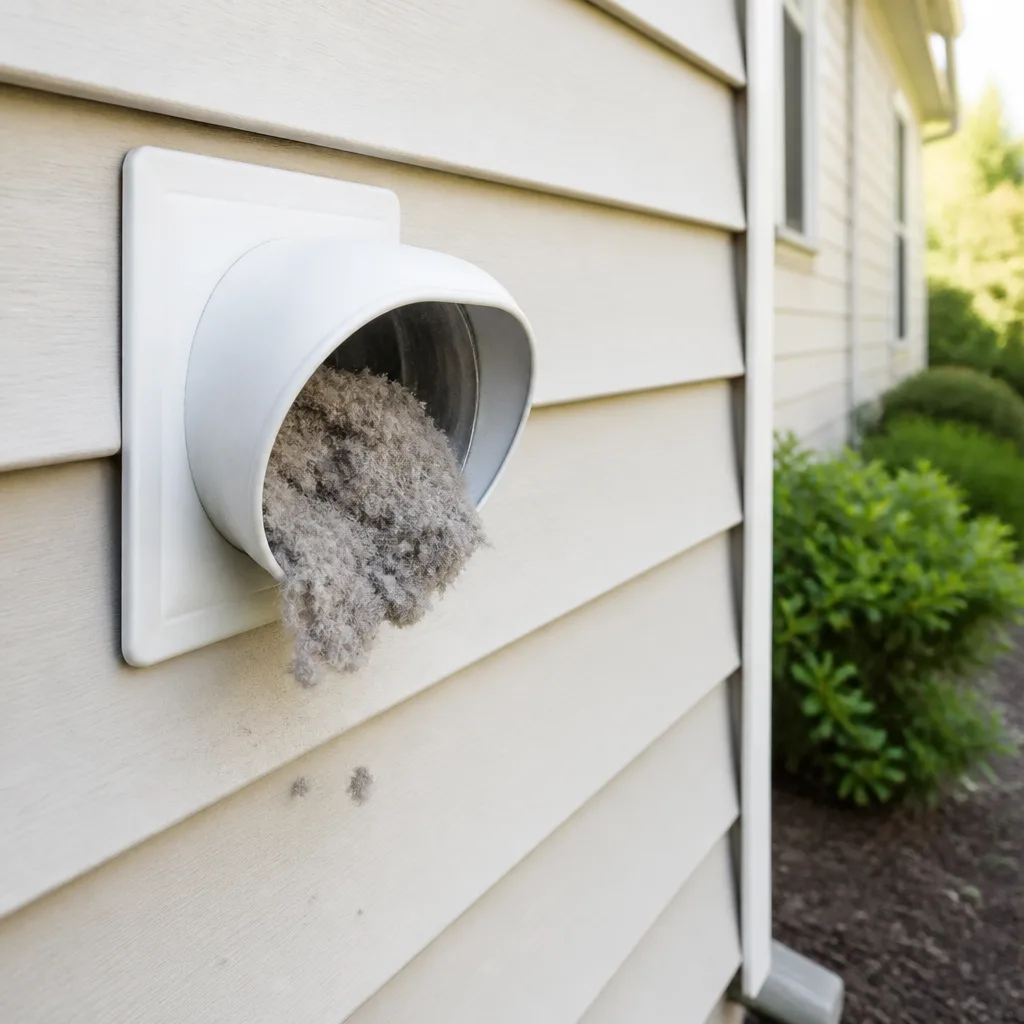 Dryer vent cleaning
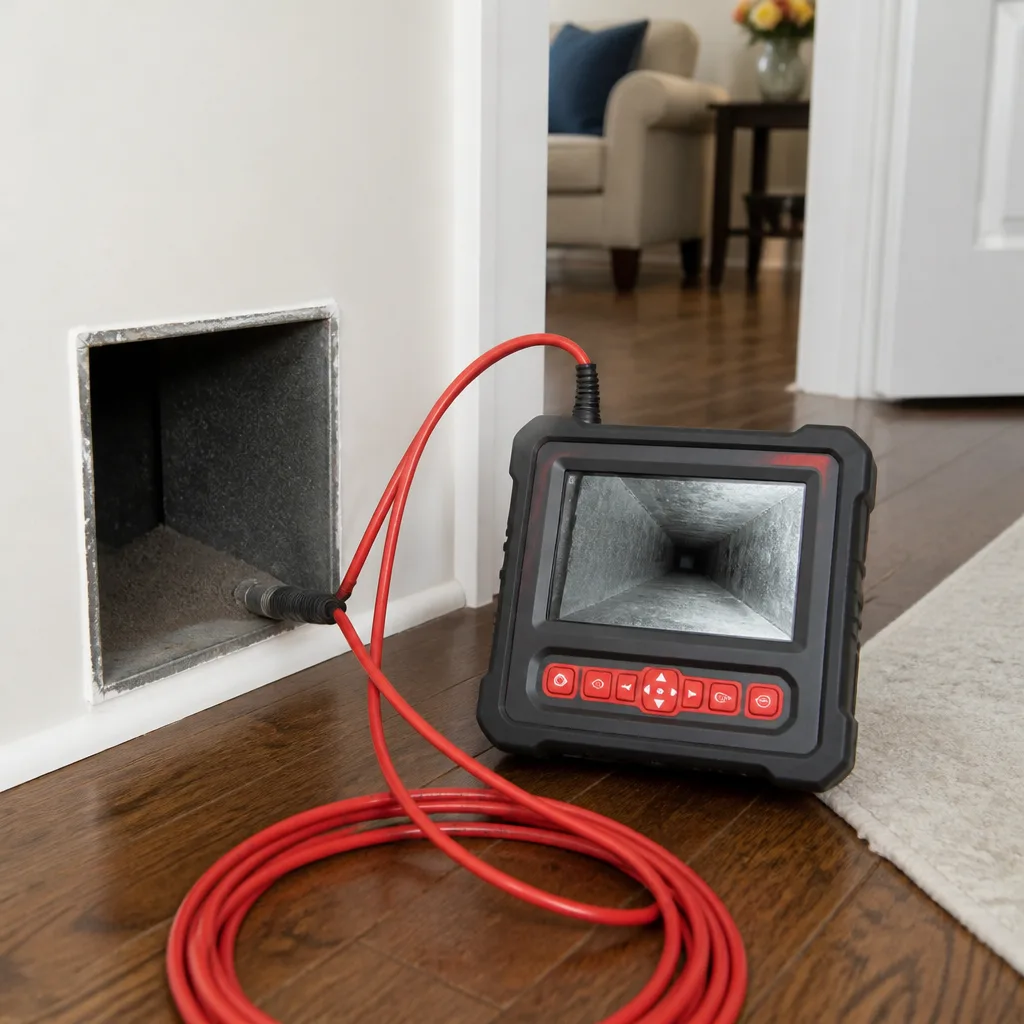 Camera inspection
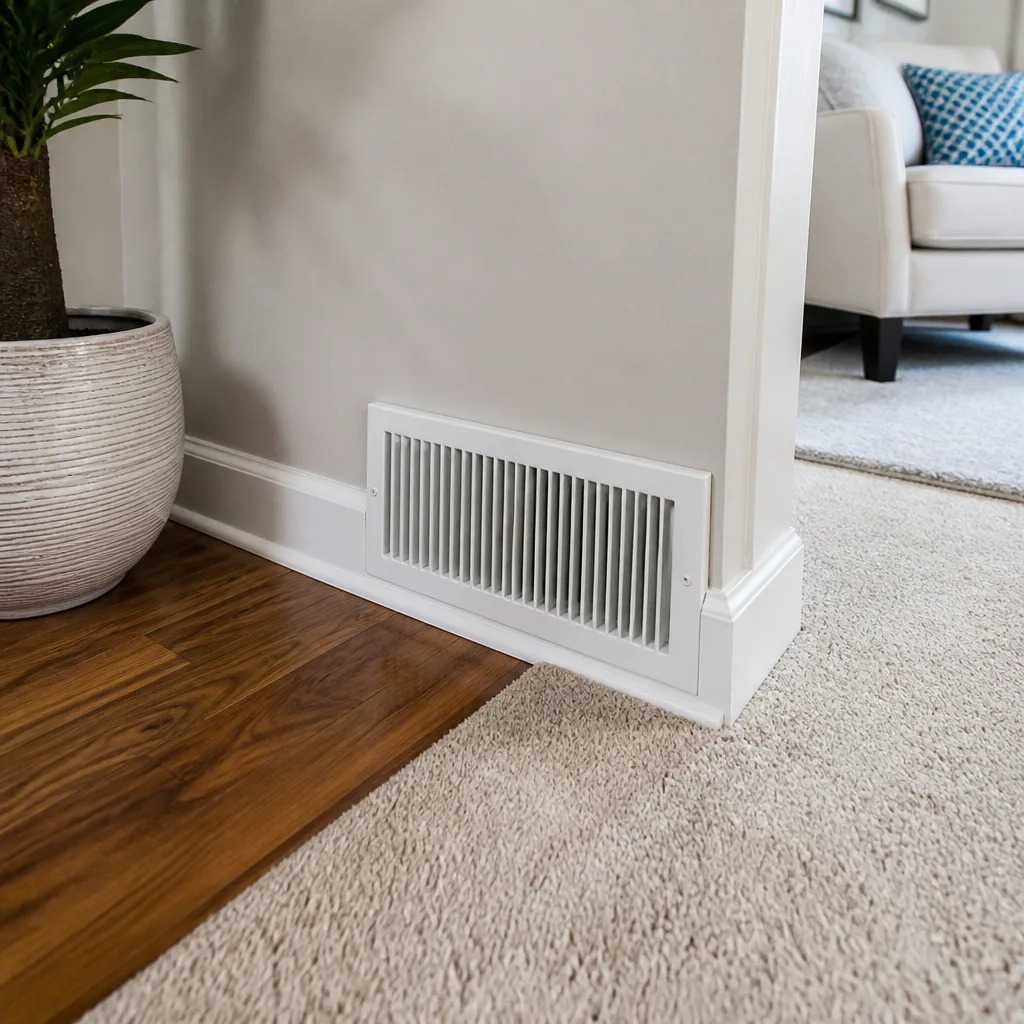 Sanitizing & deodorizing
Whole-system duct and dryer vent check with before-and-after photos - you see exactly what came out of your vents
That "$99 whole-house special" is a bait ad - the real number appears once they are in your hallway, or the "clean" is a shop-vac at the register. We photograph the inside of your ducts before and after instead.
Air Duct Cleaning Maintenance Checklist for San Bernardino Homeowners
A clogged return grille in a San Bernardino home during a Santa Ana event doesn’t just drop air quality. It can force your HVAC system to operate at static pressures that shorten equipment life by years. The checklist most homeowners use misses this entirely. It tells you to change a filter and call it done. This guide is built differently. It structures maintenance around the actual intervals that matter in San Bernardino’s climate, gives you observable checkpoints you can track between professional service visits, and shows you what a real technician with professional-grade equipment checks that you physically cannot check yourself. By the end, you’ll have a documentation system that protects both your air quality and your HVAC investment.
Quick Answer
An effective air duct maintenance checklist for San Bernardino homeowners has two tiers: monthly homeowner tasks like grille inspection, filter checks, and visual register documentation, plus annual or event-triggered professional services like our Air Duct Cleaning services with Rotobrush or Nikro equipment, dryer vent cleaning, and air duct repair. In this specific climate, the triggers that matter most are post-Santa Ana wind events, post-wildfire smoke exposure, and post-renovation dust. Between professional visits, you should document duct condition with phone photos at accessible registers and track filter changes, service dates, and symptoms like odors or uneven airflow in a written log.
Styles & brands we work with
- Whole-home duct cleaning
- Dryer vent cleaning
- Camera inspection
- Sanitizing & deodorizing
Table of Contents
- Why San Bernardino’s Climate Demands a Different Maintenance Approach
- The Monthly Homeowner Checklist: What You Can Actually See
- The Annual Professional-Level Checklist: What a Technician Checks That You Cannot
- San Bernardino-Specific Triggers That Require Immediate Inspection
- How to Document Duct Condition Over Time Using Phone Photos
- The Printable Maintenance Log: Tracking What Matters
- Beyond Cleaning: When Ducts Need Repair, Not Just Service
- Dryer Vent Maintenance: The Fire-Safety Piece Most Checklists Skip
Why San Bernardino’s Climate Demands a Different Maintenance Approach
San Bernardino sits at the base of the San Bernardino Mountains, where the geography creates two conditions most generic duct checklists ignore. First, the Santa Ana winds that sweep down through the Cajon Pass carry fine particulate matter that settles into your ductwork faster than in coastal communities. Second, the dry, dusty summers mean your HVAC system pulls in air loaded with fine silt that accumulates on blower fans, coils, and duct interiors. We’ve seen systems in San Bernardino homes near the foothills accumulate a visible dust coating inside return ducts within six months of a professional cleaning. That’s not a sign of a bad cleaning. It’s the reality of living where the wind blows dust through every window seal and door gap.
Most maintenance lists were written for generic suburban homes in humid climates. They assume dust falls out of the air within days. In San Bernardino, the opposite happens. Dust stays suspended longer because of the arid conditions, which means your HVAC filter works harder and clogs faster. When a filter clogs, static pressure rises. When static pressure rises, your blower motor runs hotter, your evaporator coil freezes more easily, and your system’s lifespan drops. We’ve replaced more coils in San Bernardino homes that ran dirty filters than in any other single scenario. The maintenance approach here has to account for dust loading that’s measurably higher than in Orange County or the Inland Empire’s western edge.
The Monthly Homeowner Checklist: What You Can Actually See
This is the part of maintenance that belongs to you. It’s not difficult, but it requires consistency. Set a phone reminder. The first Saturday of every month works well because San Bernardino’s utility bills tend to arrive around then, which makes it easy to build the habit. Here’s the exact sequence we recommend:
- Check the filter. Hold it up to a light. If you cannot see light through the filter media clearly, it’s done regardless of how many days it’s been in place. In San Bernardino’s dust season, meaning roughly April through November, check it twice a month. A 1-inch filter in a home with pets or near a dirt road can clog in three weeks.
- Inspect every visible return grille. Look for a gray film or visible dust matting on the grille face. This is your early warning system. If the return grille is coated, the duct behind it is carrying the same particulate. Wipe the grille with a damp microfiber cloth, and note in your log whether the dust reappeared quickly.
- Walk the supply registers. Put a tissue against the slats while the system is running. Note whether each room has roughly equal airflow. A weak register that was strong a month ago points to a duct separation or a crushed flex run, not a dirty filter.
- Smell the air. Turn the system on and stand near a supply register. A musty or burnt-dust odor right at startup is normal after a long idle period. If the odor persists more than five minutes into the cycle, you have moisture in a duct or accumulated debris on the heat exchanger. Log it.
- Look at the floor below return vents. In San Bernardino homes with dark flooring, you’ll often see fine dust outlined on the floor around a return before you notice it on the grille itself. This is called shadowing, and it’s a reliable indicator that the return side of your system is pulling more particulate than the filter can handle.
None of this requires opening a duct or touching anything dangerous. It’s observational work that gives you a baseline. The real diagnostic work happens once a year, and it requires tools you don’t own.
The Annual Professional-Level Checklist: What a Technician Checks That You Cannot
Here’s where we need to be direct about the difference between a homeowner maintenance pass and a professional service. When a Lionheart technician arrives at a San Bernardino home with a Rotobrush or Nikro system, the equipment isn’t just moving air through a duct. It’s mechanically agitating the duct walls to break the bond between dust and the interior surface. You cannot replicate this with a shop vacuum and a drill attachment. And we’ll explain why in a moment.
During a professional air duct cleaning, here’s what gets checked and addressed that never appears on a homeowner checklist:
- Full duct interior inspection. This means every accessible run from the plenum to the register, looking for liner damage, moisture staining, pest evidence, or collapsed sections. A camera inspection catches problems a flashlight through a register never will.
- Static pressure measurement. This is the single most important diagnostic in HVAC maintenance, and it’s almost never mentioned on consumer checklists. High static pressure tells us the system is working against resistance: a dirty coil, a collapsed duct, a restrictive filter, or a blower wheel caked with San Bernardino dust. We measure it before and after cleaning, and the before-and-after numbers are part of what you’re paying for.
- Plenum and coil inspection. The return plenum is where dust collects that never reaches the duct itself. In homes that have gone years without service, we’ve removed packed dust from the base of return plenums that filled a five-gallon bucket. Your filter doesn’t catch everything, and the plenum is where the rest lands.
- Blower wheel evaluation. A dust-loaded blower wheel loses airflow capacity and vibrates. It’s also a fire risk in extreme cases of dust accumulation on the motor housing. We check it because visual access usually requires removing panels most homeowners never touch.
- Leak check at every accessible joint. Duct tape fails. Mastic cracks. In San Bernardino attics, temperature swings from near-freezing winter nights to 120-degree summer afternoons accelerate this. We find and seal gaps that leak conditioned air into the attic, and that’s repair work most duct cleaners never mention.
Some of this work happens as part of a cleaning. Some of it falls under Air Duct Repair in Rialto territory, which is a standalone service for a reason. Cleaning equipment passes through a duct. Repair equipment fixes what’s broken inside it.
San Bernardino-Specific Triggers That Require Immediate Inspection
Beyond the monthly and annual rhythms, San Bernardino’s environment creates specific events that should trigger a professional inspection before your next scheduled service window. These aren’t optional if you want to keep your system operating safely and efficiently. For Air Duct Cleaning Permits, Codes & Inspections in CA: What You Need to Know, check local requirements. Here are the four triggers we tell every San Bernardino homeowner to watch for:
- Post-Santa Ana wind event. The winds that rip through the Cajon Pass push fine silt and ash particulate through every gap in your home’s envelope. If you live in the foothill neighborhoods near Highway 330 or 18, you’re in the most exposed zone. After a sustained Santa Ana event, check your filter. If it’s gray or reddish-brown within two weeks of replacement, your ducts have taken on particulate loading that a standard filter swap won’t fix. Schedule an inspection.
- Post-wildfire smoke exposure. When smoke from the San Bernardino National Forest or fires to the east settles into the valley, your HVAC system is pulling that smoke through the return side. Smoke particles are extremely fine, meaning they pass through standard filters and deposit deep in your ductwork. They also leave a residual odor that can persist for months. If your home sat under a visible smoke layer for more than a couple of days, the ducts need professional attention, not just a filter change.
- Post-renovation dust. Drywall sanding, flooring removal, plaster work. If you’ve done any of it in a San Bernardino home with the HVAC system running, the ducts have pulled in whatever was airborne. Construction dust is heavier and more abrasive than household dust. It coats blower wheels and coils fast. The trigger here is simple: any renovation that produced visible dust means a duct inspection once the work is done.
- Pest activity. Rodents in San Bernardino attics are common, especially in older homes near the base of the mountains. Droppings, nesting material, and the animals themselves find their way into duct runs. If you’ve had a pest control treatment, if you’ve heard scratching in the ceiling, or if you’ve found droppings near a register, the ducts need inspection and likely full cleaning with containment. This is an air quality issue and a health issue, and it’s not something a filter addresses.
How to Document Duct Condition Over Time Using Phone Photos
Your phone is the cheapest diagnostic tool you own, and most homeowners never use it for maintenance logging. Here’s the method we recommend. It takes ten minutes a month and gives you a visual record that catches deterioration before it becomes a repair bill.
Stand at each accessible register with your phone camera. Take a photo looking into the register while the system is off. Hold the phone steady, and try to angle the lens so the flash illuminates a few inches into the duct. Do the same for every return grille in the house. Name each photo by register location and date, or create a dedicated album in your phone so the photos stay organized. What you’re watching for, in order of concern:
- Gradual gray or brown coating on the duct walls. This tells you how fast dust is accumulating in your specific home and neighborhood. A home near the 215 corridor will load dust faster than a home on a cul-de-sac in North Park.
- Visible debris at the register boot. Pet hair, construction debris, or large dust clumps near the opening signal that the duct interior is holding material that’s breaking loose.
- Moisture staining or discoloration. Any dark, watermarked staining inside a duct suggests condensation or a leak. In San Bernardino’s dry climate, this is less common indoors but still occurs in homes with evaporative coolers or plumbing runs near ductwork.
- Changes between photos. Compare month to month. If a duct that was clean in January shows a visible coating in March, you’ve learned something about your home’s dust loading rate. That data tells you whether an annual cleaning is enough or whether you need twice-yearly service.
When a professional technician from Lionheart arrives, you can show them these photos. It gives them a baseline that speeds up diagnosis and gives them context about what your home’s specific conditions look like between service visits. Documentation like this is the difference between guessing and knowing.
The Printable Maintenance Log: Tracking What Matters
If you’re going to maintain your ductwork properly, you need a written record. Here’s the log format we recommend, which you can copy into a notebook or a spreadsheet. Track four categories: filter changes, professional service dates, observed symptoms, and photo documentation.
- Filter changes. Record the date, the filter brand, the MERV rating, and the visual condition at replacement. If a filter lasted six weeks instead of three months, that’s data. If it lasted eight weeks but looked terrible, that’s data too. San Bernardino’s dust loading is variable, and your log tells you your home’s real schedule.
- Professional service dates. Note the date, the company, the equipment used, and what was found. A one-line entry like “Rotobrush cleaning, heavy dust in return plenum, static pressure reduced from 0.8 to 0.4” tells you more than “ducts cleaned.” If your technician doesn’t provide before-and-after static pressure numbers, ask why.
- Observed symptoms. When you notice odors, uneven airflow, a whistling register, or a thermostat that struggles to hold temperature, write it down with the date. Patterns emerge over time. A symptom that appears every August points to a seasonal issue. A symptom that appears randomly points to an intermittent fault.
- Photo documentation. Note when you took register photos and what changed. Six months of consistent photos is usually enough to establish your home’s baseline dust accumulation rate.
Keep this log somewhere you’ll actually look at it. Taped inside a kitchen cabinet door, stored as a note on your phone, or kept in a binder near the HVAC system. The format matters less than the consistency.
Beyond Cleaning: When Ducts Need Repair, Not Just Service
One of the least understood aspects of duct maintenance is that cleaning and repair are separate services. A cleaning removes the contamination inside your ducts. It does not fix a duct that’s torn, disconnected, crushed, or poorly sealed. In San Bernardino attics, where summer temperatures regularly exceed 130 degrees, duct materials degrade faster than in cooler climates. Flex duct outer jackets break down. Tape adhesive fails. Metal duct sections separate at the seams.
Signs that your ducts need repair rather than just cleaning include: a register with little or no airflow regardless of filter condition, a hissing sound from the register during operation, heated or cooled rooms that never reach the setpoint, and visible damage in the attic if you’ve been up there. A professional with repair capability will find these problems during a cleaning visit and address them. A cleaning-only company will clean the duct as-is and leave the leak or the separation intact. That’s the difference between Lionheart Air Duct Cleaning home being a full-service provider and a company that just runs a brush through a system. If the duct is broken, cleaning it is incomplete work.
The Rotobrush and Nikro systems we use are designed for professional duct cleaning, not for repair. But they reveal the damage that needs attention. We find separation at the plenum connection, crushed flex runs under attic insulation, and register boots that have pulled away from the floor. These are repair items. They get documented, quoted, and fixed, often on the same visit. That’s what separates a real duct specialist from a truck with a vacuum.
Dryer Vent Maintenance: The Fire-Safety Piece Most Checklists Skip
Most air duct maintenance checklists ignore the dryer vent entirely. That’s a mistake, and in San Bernardino it’s a dangerous one. Lint buildup in dryer exhaust ducts is a leading cause of residential structure fires according to the U.S. Fire Administration. The combination of San Bernardino’s dry climate and homes with longer vertical dryer vent runs makes the risk more severe here than in many other regions. Lint that stays dry and sits in a long run is exactly the fuel load a fire needs.
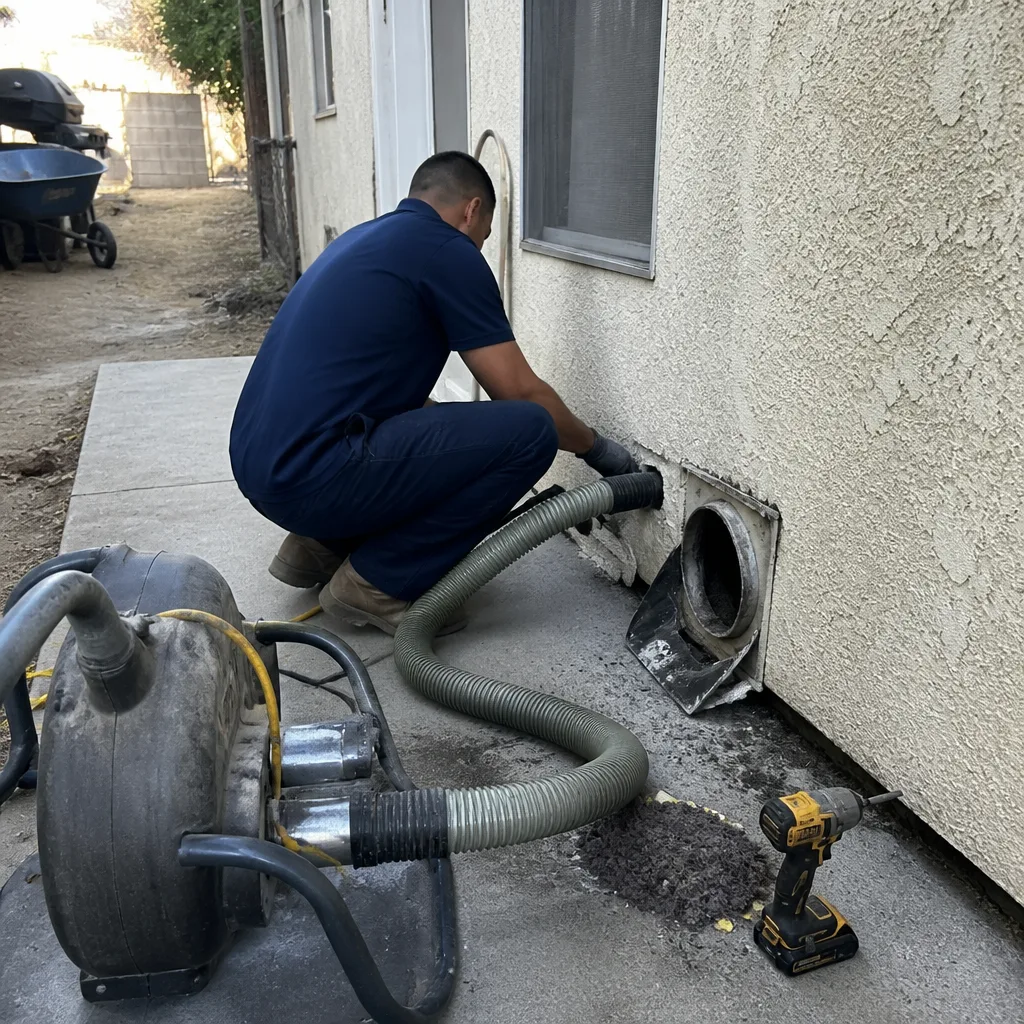
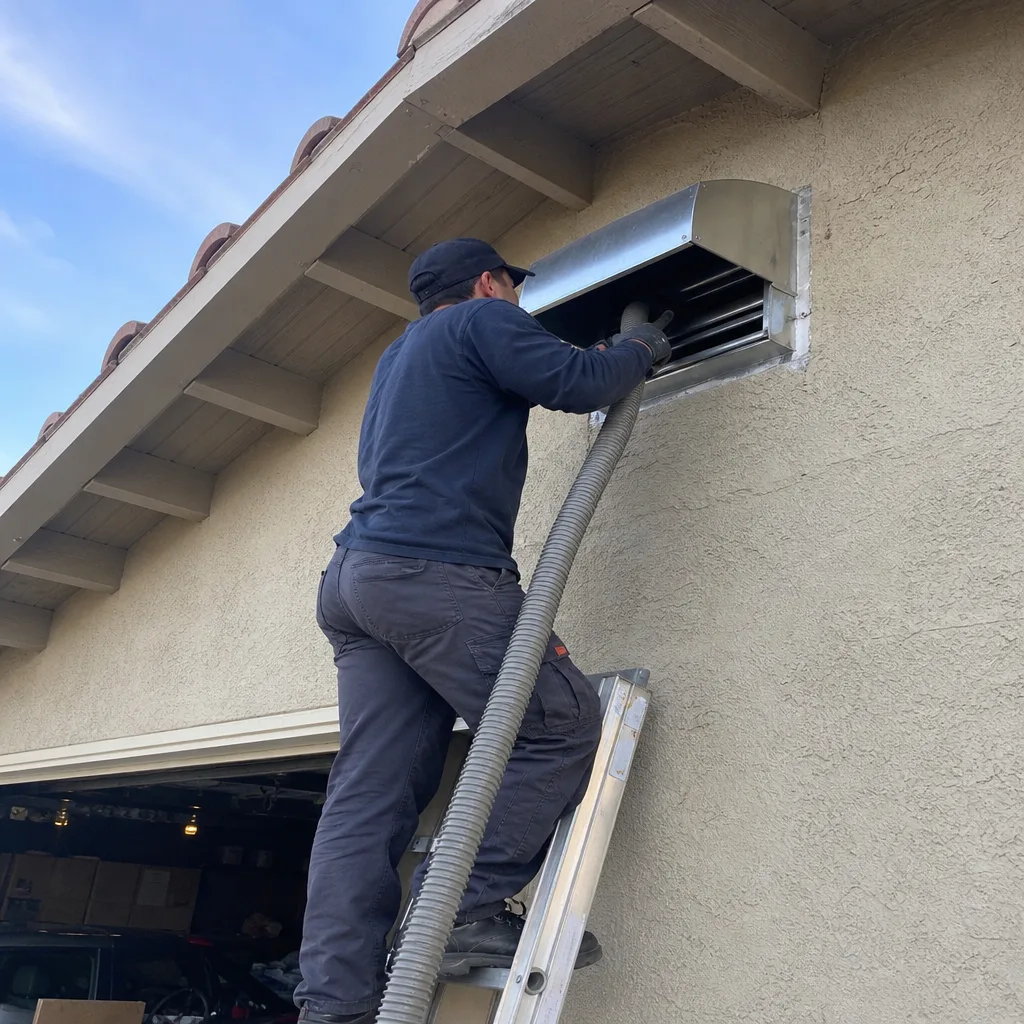
Dryer Vent Cleaning in Rialto is a fire-safety service. It is not an optional upsell to a duct cleaning. If your dryer takes longer than one cycle to dry a normal load, if the exterior vent flap doesn’t open fully during operation, or if you can see lint built up at the exhaust point outside the house, the vent needs professional cleaning. The National Fire Protection Association recommends annual dryer vent cleaning for most households, and more frequently for households with large families, pets, or longer vent runs.
You can check the exterior vent yourself. It’s usually a plastic or metal flap on an outside wall, often near the ground on the side of the home. With the dryer running, go outside and check that the flap is opening and air is flowing. If it’s not, you have a restriction. That restriction is most often lint accumulation, and it’s building backpressure into your dryer, which shortens the dryer’s life and increases fire risk. Clean the lint trap after every load, but understand that the trap only catches about 80% of lint. The rest goes through the duct, and over years it accumulates.
Common Mistakes to Avoid
- Using a higher-MERV filter than your system can handle. A MERV 13 filter in a system designed for MERV 8 raises static pressure and reduces airflow. In San Bernardino’s dust-heavy conditions, many homeowners think a high-MERV filter solves everything and instead create a system that runs hot and inefficiently. Match the filter to the system’s design specifications.
- Replacing filters on a calendar schedule instead of a condition schedule. “Every 90 days” ignores San Bernardino’s dust season. We’ve pulled filters from homes near the foothills that were completely loaded in three weeks during a windy period. Check by condition, not by date.
- Attempting DIY duct cleaning with a drill attachment. This deserves a direct warning. Consumer drill attachments with spinning brushes can tear flex duct liners, especially in older systems where the liner is already degraded from heat. What starts as a $30 DIY project becomes a $500 duct repair. Some liner damage cannot be repaired and requires duct replacement.
- Cleaning the ducts without addressing the source. If you clean the ducts but don’t fix the filter rack that’s letting air bypass the filter, or don’t seal the return leak pulling attic dust into the system, the ducts will be dirty again within months. Source control comes before cleaning or the cleaning won’t hold.
- Ignoring the return side of the system. Homeowners focus on supply registers where they see dust blowing out. The return side is where dust enters the system. A dirty return plenum means the system pulls contaminated air across the coil and into every room every cycle.
- Treating dryer vent cleaning as optional home maintenance. It’s a fire-safety service. Skip it at your own risk. The cost of cleaning is a fraction of the cost of a fire that starts in the wall behind your dryer.
See the difference
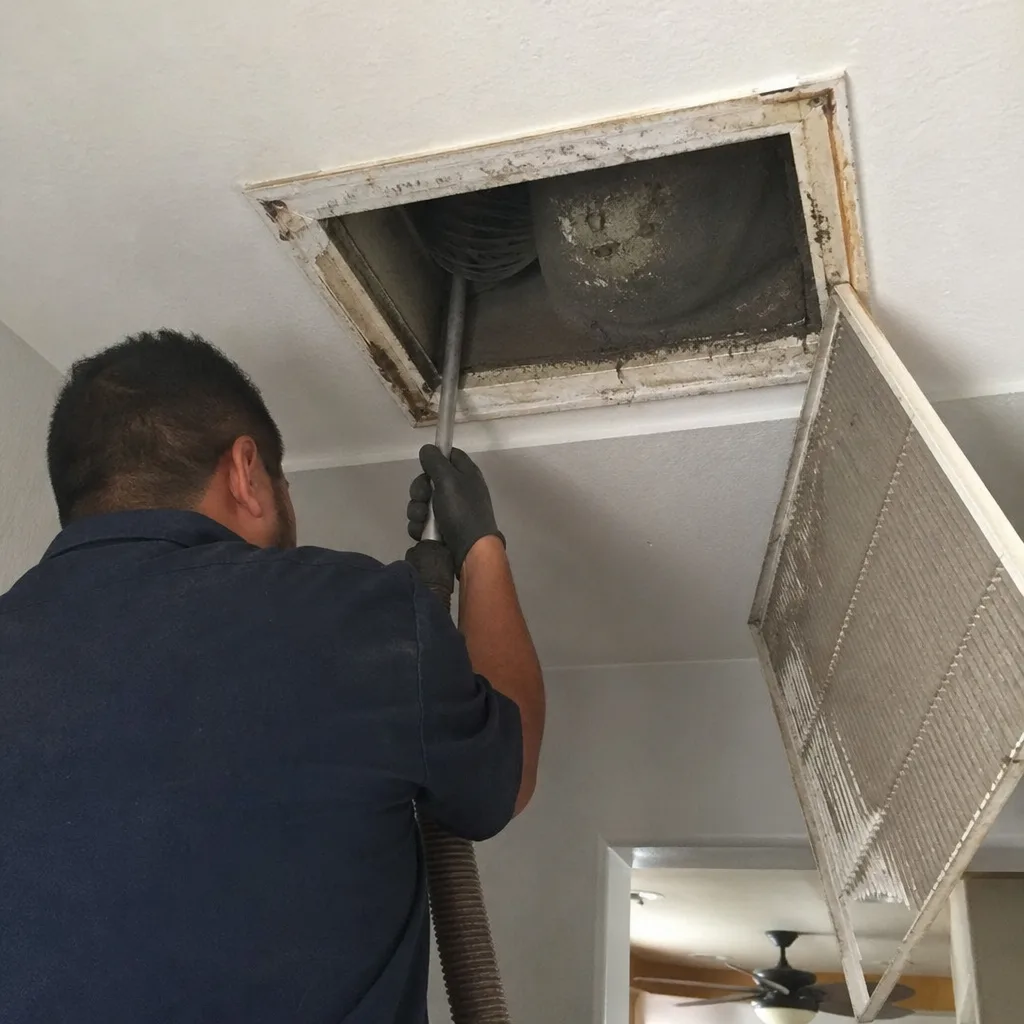 Before
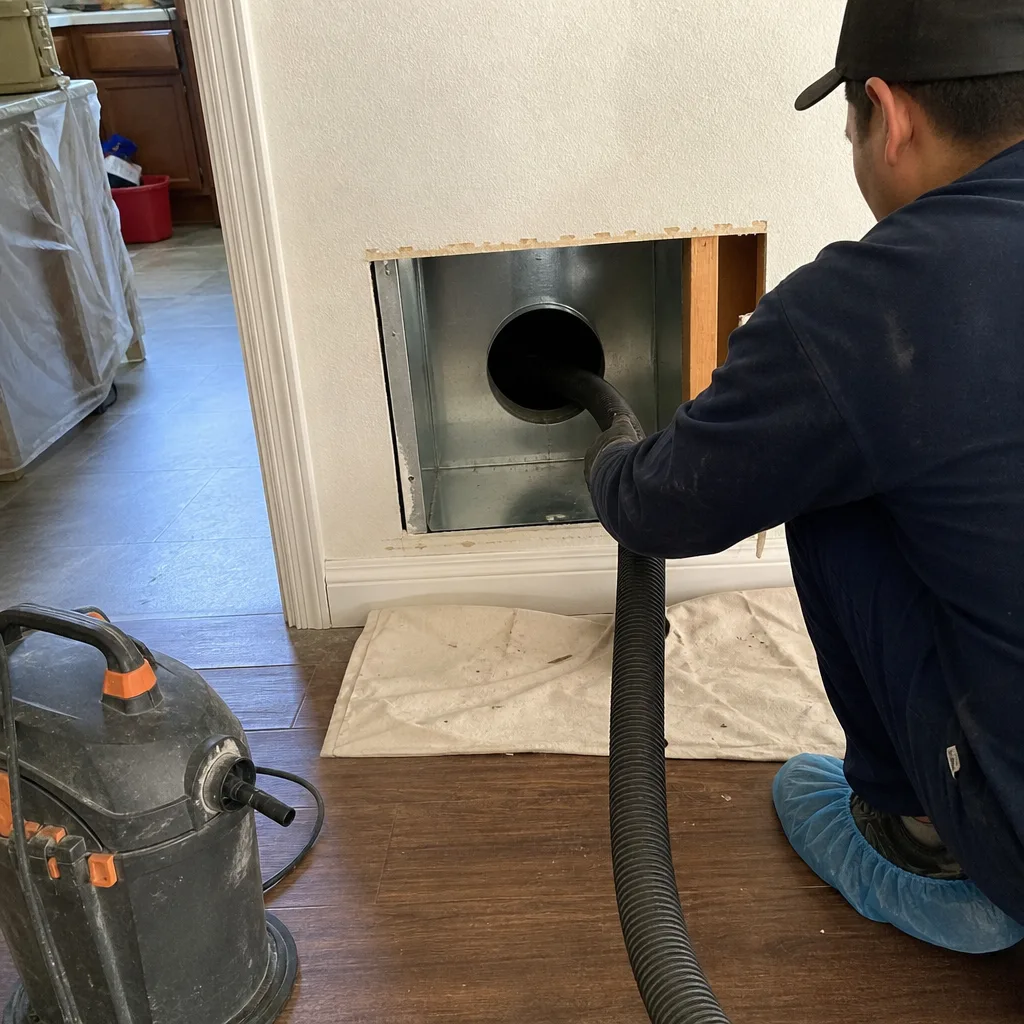 After
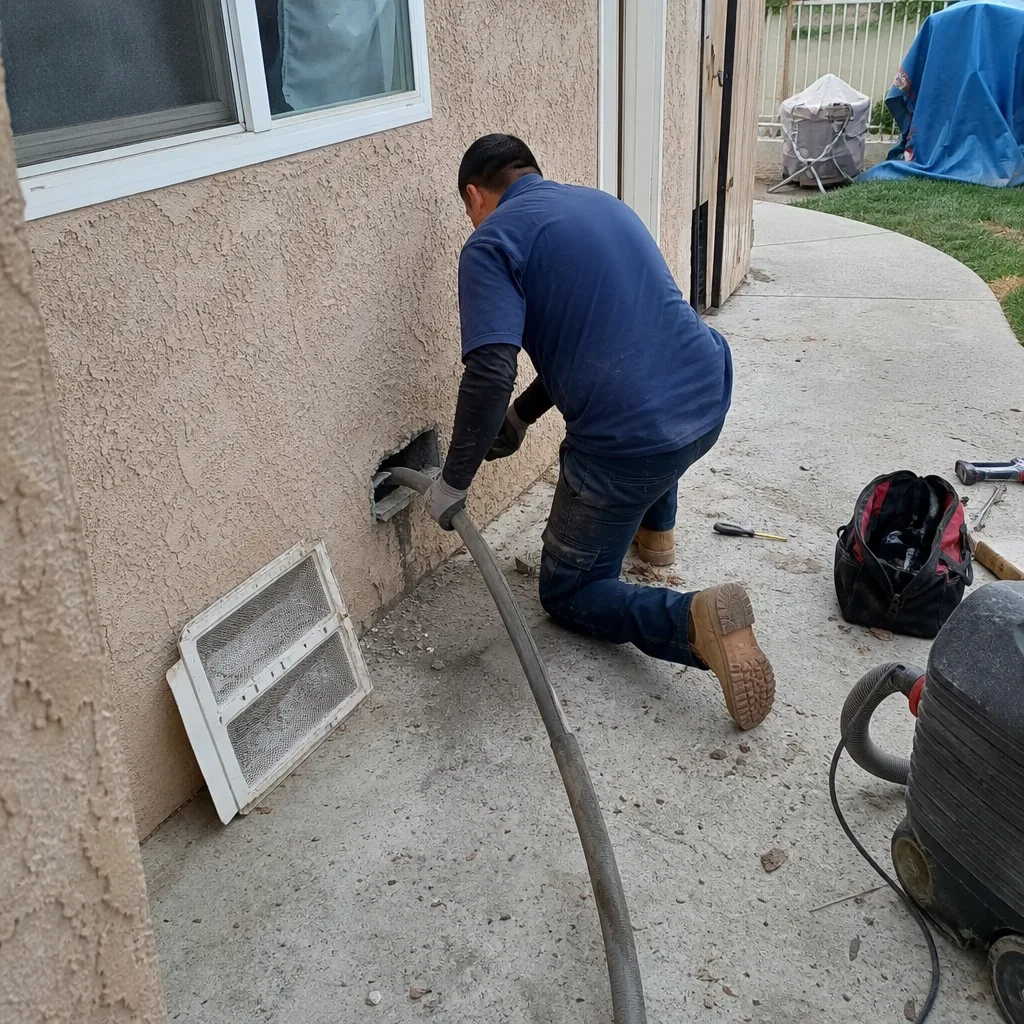 Before
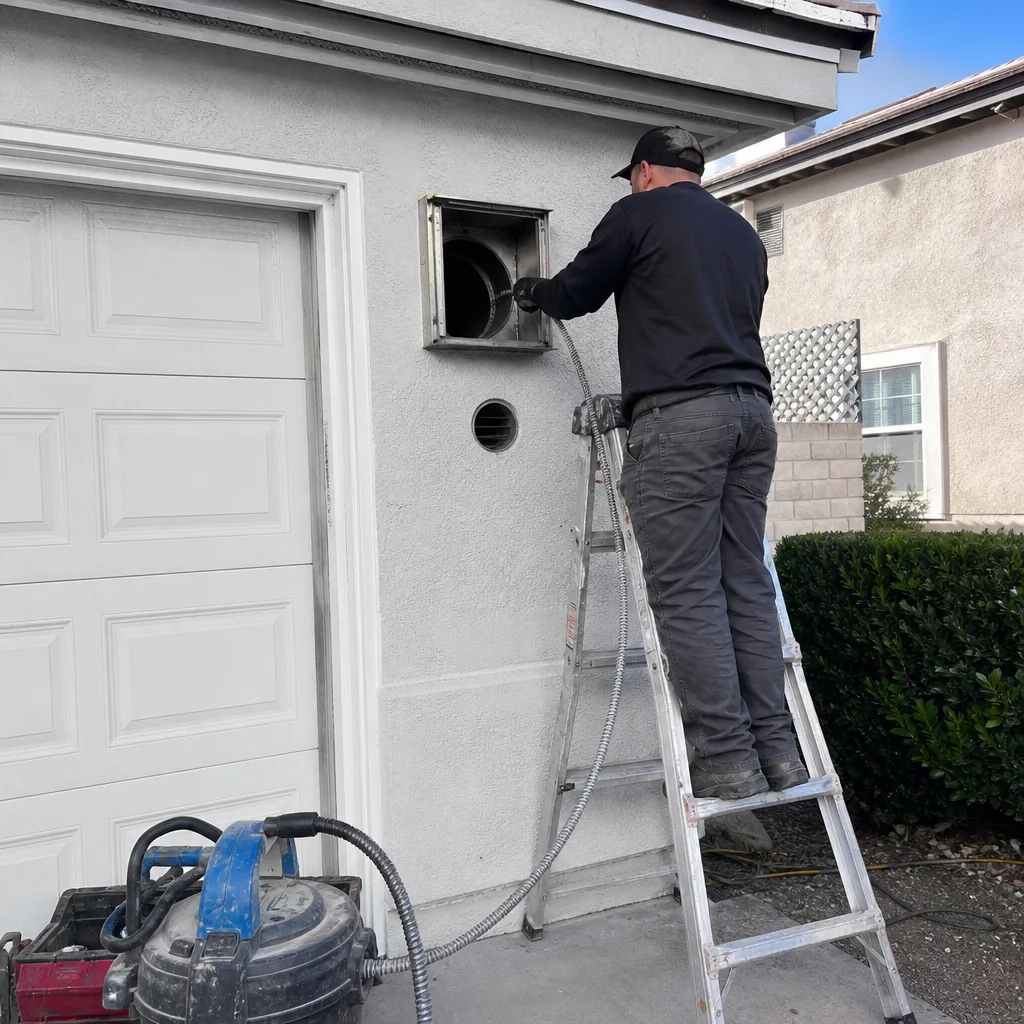 After
 Before
 After
When to Call a Professional
You know your home better than any technician ever will, which means you’re the first line of detection. Call a professional when you see dust buildup on registers returning within weeks of cleaning them, when airflow from one or more rooms drops noticeably, when you smell musty or burnt-dust odors that persist (Air Duct Cleaning Troubleshooting: Common Problems and How to Fix Them can help identify causes), when your energy bills climb without a change in usage, or when you’ve had any of the event triggers we outlined: post-Santa Ana, post-smoke, post-renovation, or post-pest activity.
You should also call if you’ve moved into a San Bernardino home and have no service history for the ductwork. Previous owners rarely leave maintenance records. A professional inspection establishes a baseline and catches problems while they’re still inexpensive to fix. Lionheart Air Duct Cleaning offers free estimates in San Bernardino. Call (855) 356-4382 to schedule an inspection.
Frequently Asked Questions
For most San Bernardino homes, professional air duct cleaning every 2 to 3 years is appropriate, with annual cleaning recommended for homes near the foothills, homes with pets, homes with residents who have allergies or respiratory conditions, and homes that sit under Santa Ana wind exposure regularly. Homes in neighborhoods closer to the mountains, where windborne dust loading is heavier, may need annual service to keep static pressure and air quality in check. Call (855) 356-4382 for an honest assessment of your home’s specific condition.
A homeowner can inspect grilles, check filter condition, monitor airflow at registers, and document visible dust accumulation with phone photos. A professional with Rotobrush or Nikro equipment measures static pressure, inspects duct interiors with cameras, evaluates blower wheel condition, checks plenum and coil for dust loading, and identifies leaks or damage throughout the system. The professional assessment catches problems that are invisible from the register opening.
Low-cost duct cleaning quotes typically come from operations using consumer-grade equipment, often a shop vacuum attached to a basic brush. This equipment lacks the agitation power to remove bonded dust from duct walls and cannot perform the diagnostic work a real cleaning requires. The result is a visual clean of the register openings with the duct interiors left coated. Professional-grade systems like Rotobrush and Nikro cost more to operate because they actually remove the contamination you’re paying to have removed.
Ask for before-and-after photos of the duct interiors, including the return plenum and main trunk line. Ask for static pressure readings before and after service. A reputable company will provide both. You can also inspect your registers immediately after the service: the duct walls visible from the register opening should be visibly cleaner, not just dusted. Before-and-after photo documentation of your own registers, taken with your phone, gives you verification that’s hard to fake.
Yes, professional air duct cleaning removes accumulated allergens from the air distribution system, including pollen, dust mite debris, pet dander, and mold spores that circulate every time the HVAC runs. In San Bernardino’s wind season, when outdoor allergens are at their peak, clean ducts mean the air in your home isn’t adding to the allergen load. For allergy sufferers, the combination of a properly matched filter and clean ducts produces measurable improvement in indoor air quality.
A Rotobrush technician checks the entire internal duct surface with the system’s agitation and vacuum working together, and uses the inspection camera to evaluate liner condition, moisture staining, pest evidence, and separation at joints. The technician also measures static pressure across the system, which requires access to the plenum and professional instrumentation. Most importantly, the technician can see liner damage before it becomes a full duct failure, and can recommend repair rather than attempting to clean a duct that’s already compromised. Trying to replicate this with a consumer drill attachment often causes the liner damage in the first place.
The Bottom Line
Duct maintenance in San Bernardino is a two-tier responsibility. You handle the monthly observations: filter checks by condition, grille inspection, register airflow, and photo documentation. A professional handles the annual or event-triggered work: full duct interior cleaning with professional-grade equipment, static pressure measurement, plenum and coil evaluation, leak detection, and repair when needed. The triggers specific to this climate, including Santa Ana wind events, wildfire smoke exposure, and renovation dust, mean you cannot set a calendar reminder and forget about it. Your home’s dust loading rate is measurable, and once you understand it, you can schedule service that actually matches your conditions. For more guides & resources on protecting your home, explore our blog. That’s the difference between maintenance theater and maintenance that protects your equipment and your air.
Written by the team at Lionheart Air Duct Cleaning, serving San Bernardino since 2013.